Field note
Updated Sep 30, 2026
Vehicle appraisal software that keeps up with CarMax
Vehicle appraisal software gives a trade-in customer a fair price range in about 90 seconds, so you stay in the deal before CarMax makes its offer.

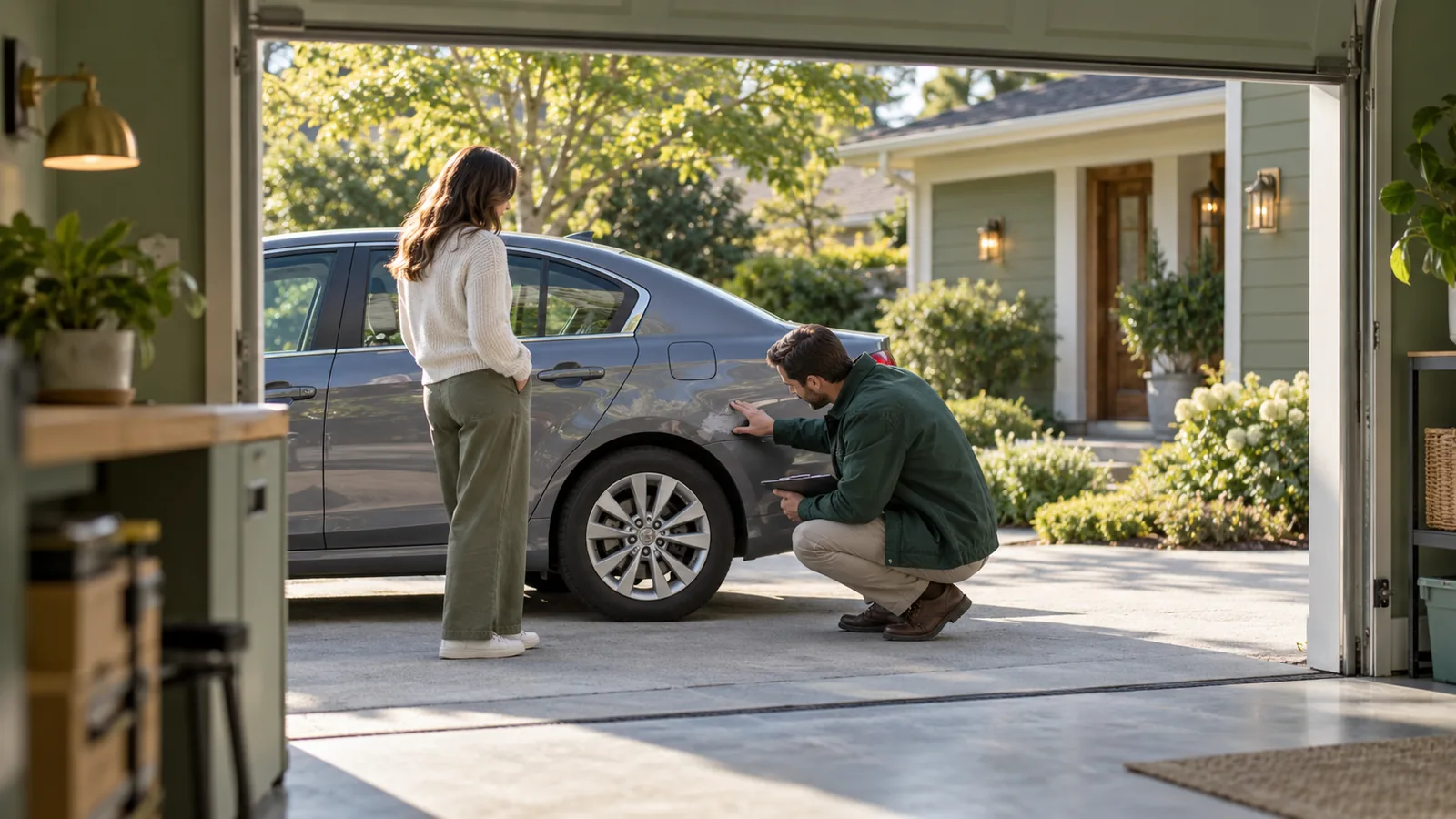
Vehicle appraisal software gives a trade-in customer a fair price range in about 90 seconds, from a VIN and five photos. That speed keeps a seller from taking the CarMax offer while your appraiser is still busy, and your appraiser still walks the car before the final number. I build this AI trade-in valuation layer as part of my AI automation for independent used-car dealers work.
What CarMax's instant offer actually does (and does not) do
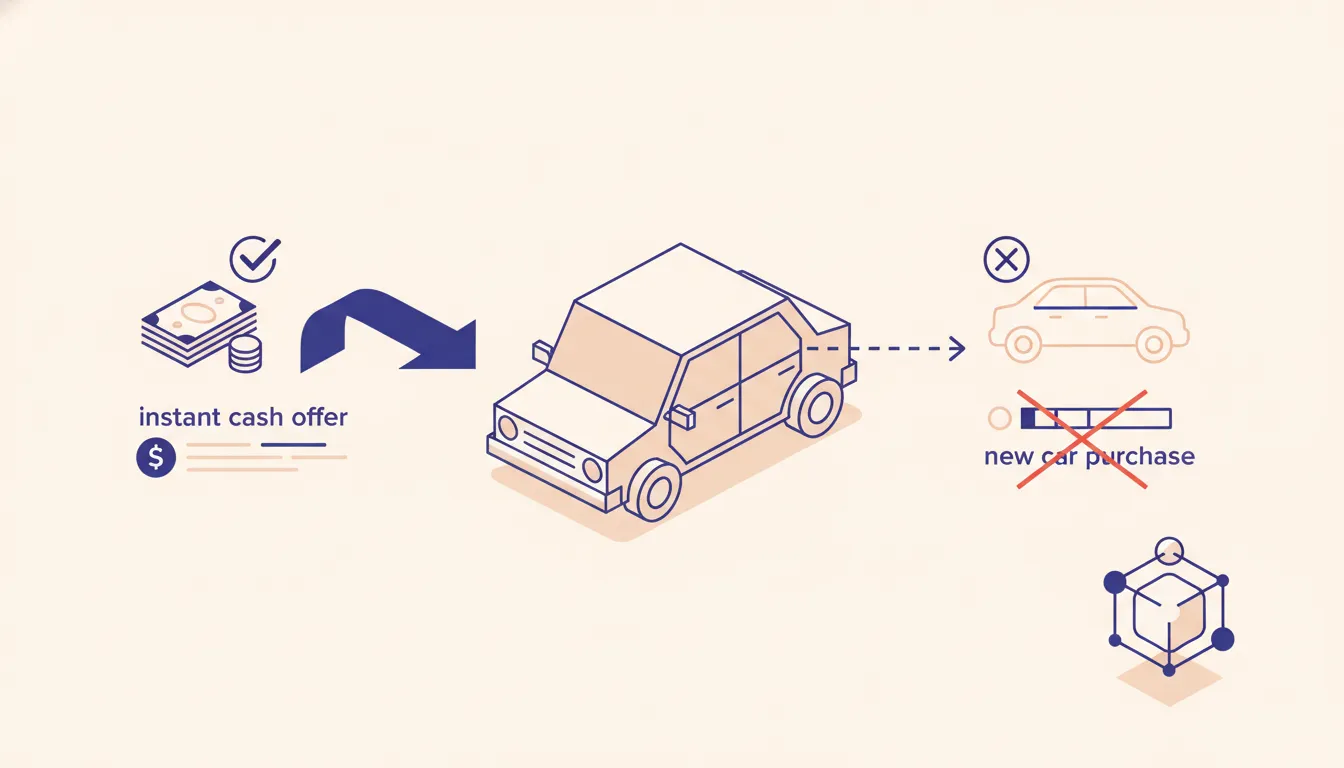 CarMax's instant offer is not a price advantage. Internal and third-party analyses have repeatedly shown that CarMax offers are conservative, often several hundred to over a thousand dollars below what a well-run independent lot would pay for the same vehicle. CarMax prices for certainty and volume, not maximum acquisition value. They can afford to lose deals on price because they win on process.
What CarMax actually sells is speed and psychological closure. A customer who wants to sell their car submits a VIN and answers a few condition questions. In roughly 90 seconds they have a number in hand. That number is real, it will not change on them, and they can act on it today. Compared to the alternative, which is submitting a trade-in inquiry to your website and waiting two days for a callback, the CarMax offer feels like the obviously better experience even when it is not the better price. Customers do not leave because CarMax pays more. They leave because you made them wait.
Why your appraisal process loses deals even when you would pay more
 The typical independent dealer trade-in workflow looks like this. Customer finds the contact or trade-in form on your site and submits their information. The form submission hits an email inbox or CRM record that someone checks when they have time. A callback is scheduled. The appraiser needs to either see the car in person or at minimum receive photos through a separate back-and-forth. The appraiser checks comps, thinks about lot mix, and produces a number. That process takes 24 to 48 hours at most well-run lots and considerably longer when the appraiser is busy or unavailable.
By the time your appraiser's number lands in the customer's inbox, the customer already has the CarMax offer. Not because they preferred CarMax. Because CarMax was there first. Your $800 better price arrives into a conversation that has already effectively ended. The customer took the CarMax offer not because they wanted to but because they had certainty in hand and nothing from you yet. This is the core insight behind the 60-second lead response pattern that wins deals before the first human conversation.
The problem compounds with online trade-in shoppers specifically. Someone selling a car to fund a purchase somewhere else is not loyal to your lot. They are shopping the offer the same way they would shop a car price. Whoever gives them a number first gets the first-mover advantage that is very hard to overcome.
How a 90-second trade-in appraisal tool works
The build has four layers. None of them require custom machine learning. All of them use either free public APIs or dealer-tier subscriptions you likely already have.
VIN decode. The NHTSA vPIC API is free and returns make, model, year, trim, engine, and body style from any 17-character VIN in under 200 milliseconds. For higher-volume use or richer spec data, VinAudit's paid tier adds accident history integration and more detailed configuration data. The VIN decode is the foundation. Every downstream comp query depends on accurate year/make/model/trim.
Market comps. Three data sources cover the market from different angles. Kelley Blue Book via their B2B API gives consumer-facing trade-in and private-party ranges, which is useful because your customer has likely already looked at KBB themselves. NADA via J.D. Power gives clean retail and rough trade values, the industry standard for floor planning and bank financing. Manheim Market Report (MMR) via your Manheim dealer subscription gives you actual recent auction sale prices for that vehicle at your regional auction, which is the truest reflection of what you will pay wholesale. Running all three in parallel takes under two seconds with async API calls.
Claude's condition review. The customer uploads five photos: driver front three-quarter, passenger front three-quarter, driver rear three-quarter, interior from driver door, and dashboard. Claude's vision input receives those photos alongside a structured prompt that instructs it to flag specific condition signals: visible body damage including scrapes, dents, and paint issues; tire tread depth estimation from the wheel well shots; interior wear on the driver seat bolster and headliner; and any visible dashboard warning lights including check engine, ABS, and TPMS. Claude's vision capabilities are well-suited for this because the task is pattern recognition against a defined checklist, not open-ended interpretation. The output is a structured condition assessment that feeds directly into the range calculation.
Range output. The three comp sources plus Claude's condition flags feed into a simple range formula. The floor is the MMR wholesale number adjusted downward for flagged condition issues. The ceiling is the KBB trade-in value adjusted upward for clean condition. The output to the customer is not a single number. It is a range with a call to action attached.
Why the output should be a range, not a number
Giving the customer a range instead of a firm offer does two things. First, it makes a commitment that you will buy the car at some price within that range, which is enough to keep them from going to CarMax. Second, it leaves room for your appraiser to land anywhere in that range based on the in-person walkaround, which is where the actual judgment happens.
A firm number at first contact is risky. If the customer shows up and the car has more wear than the photos suggested, you are now renegotiating down from a number you already gave them. That conversation is uncomfortable and sometimes loses the deal. A range sets the expectation correctly: the final number depends on what your appraiser sees on the walkaround. Your message to the customer might read: "Your 2020 Civic LX with 58,000 miles is worth between $14,200 and $15,800 depending on condition. Send us 30 seconds of video walking around it and we can lock in the exact number today." That message is honest, it gives them a real anchor, and it moves the conversation forward.
What Claude reviews in the photos
The condition prompt is where most of the judgment lives. Claude is not estimating a dollar value from photos. It is producing a structured flag list that the valuation formula uses to adjust the comp range. The prompt instructs Claude to assess each of five specific condition signals.
Body damage is the most consequential flag. Claude looks for visible scrapes, dents, paint fade, and panel misalignment in the exterior shots. Even minor paint scuffs reduce the wholesale floor because auction buyers price in reconditioning cost. A car with a quarter-panel scrape loses $300 to $600 at auction depending on size. That adjustment has to flow into your range.
Tires are readable from a wheel well photo taken at the right angle. Deep tread is worth noting because it is a genuine condition positive that many appraisers forget to credit. Worn or uneven tread is a deduction because the next buyer will see it immediately.
Interior wear concentrates on the driver seat bolster, which is the first visible sign of high-use miles regardless of what the odometer says. A blown-out bolster on a 40,000-mile car tells a different story than the odometer does. Headliner staining and rear seat wear round out the interior assessment.
Dashboard warning lights visible in the dashboard photo are an automatic flag. A check engine light visible in a customer photo means the car has an unresolved fault code that will surface at inspection. That is not a minor adjustment. That is a reason to widen the range floor significantly or to ask the customer to address it before valuation.
Integrating with your existing lead flow
The build wires into your existing trade-in form with an n8n webhook. Customer submits VIN plus five photo uploads. The form POST hits an n8n webhook. n8n fires the VIN decode, the three comp API calls, and the Claude vision call in parallel. Total elapsed time from submission to AI output is typically 30 to 60 seconds depending on photo upload size and API latency. The range and condition summary write back to your CRM record alongside the raw photos and the AI-generated notes.
The customer receives an SMS and email with the range and the video request. Your salesperson gets a CRM notification with the full AI summary, the comp data, and the flagged conditions. When the salesperson calls to confirm the appointment, they are not starting from zero. They have the same data the customer has plus the underlying comp detail. The AI does not close the deal. It puts your team in a position to close the deal within the first two hours instead of the first two days.
The compliance angle
The range output from an AI valuation system is a preliminary estimate, not a binding appraisal or purchase offer. That distinction matters legally and practically. Your customer disclosure should make clear that the range is based on submitted photos and third-party market data, that the final offer is contingent on an in-person inspection, and that no purchase commitment is made until a signed offer is issued by the dealership. This is standard language that any automotive attorney can draft in an hour. Do not position the AI output as a binding appraisal in any customer-facing copy.
Most state dealer regulations already contemplate the concept of a preliminary estimate versus a written offer. The AI range fits naturally into the estimate category. Where dealers get into trouble is when marketing copy describes the AI output as an "instant offer" or "guaranteed price" in terms that mirror CarMax's language. Stay accurate. Call it an estimate or a range. The customer understands that distinction and it protects you when the final number is different from the range floor.
When to use AI valuation vs an in-person appraiser
AI valuation handles first contact. The appraiser handles final offer. Those are two different jobs and they should stay separated.
The AI's job is to give the customer a credible number within the first hour of their inquiry, before they have a chance to drive to CarMax or accept an offer from another source. The AI has no skin in the game on the final number and no relationship with the customer. It is a data retrieval and photo review layer. It is fast and consistent and available at 11pm on a Sunday when your appraiser is not.
The appraiser's job is to walk the car, catch the things the photos missed, make the judgment calls that comp data cannot make, and produce a final number the dealership can stand behind. An experienced appraiser will find things Claude cannot see: frame damage, suspension noise, transmission shudder, windshield delamination. The appraiser is not replaceable by a photo review. The 24-hour wait between first inquiry and appraiser callback is replaceable. That is the only gap AI valuation is designed to close.
Want this wired into your trade-in flow? Run the AI Operations X-Ray and see what it would take to build at your lot.
If you would rather read first, my used car dealer page, linked just below, covers everything I build for independent lots.
FAQ
Frequently asked questions
01Does this replace our human appraiser?
No. The AI produces a range in the first 60-90 seconds to keep the customer engaged. Your appraiser still walks the car before any final offer is made. You are replacing the 24-hour wait, not the judgment call.
02What happens if the customer's photos show damage we later can not see?
The range accounts for photo-flagged condition issues. If the in-person walkaround surfaces additional damage not visible in photos, your appraiser adjusts the final number. The AI output is a range, not a binding appraisal, which gives you room to move.
03How accurate is a Claude-adjusted valuation range?
Accuracy depends on market data freshness and photo quality. With current MMR comps and clear photos, ranges typically land within 8 to 12 percent of final appraised value. The purpose is not precision at first contact. The purpose is keeping the customer in the conversation long enough to get to the actual walkaround.
04Can this handle vehicles over 100K miles?
Yes. KBB and NADA both have high-mileage comp data. Claude's condition prompt includes a mileage-adjustment instruction that widens the range when mileage deviates significantly from segment averages. The range just gets wider, not unreliable.
05What if the customer has a CarMax number already?
That is the best scenario. Ask for it. If your range overlaps or exceeds their CarMax offer, you now have a concrete reason for them to stay. If your range is lower, your appraiser has a target to beat or a data point to explain honestly. Either way, you are in the conversation instead of watching them drive to CarMax.
06Can a small lot really compete with CarMax instant offers?
Yes, on speed. CarMax prices for certainty and volume, so its offer is often conservative. A fast, honest range from your lot keeps the seller talking long enough for your appraiser to make a better number. The range just has to arrive before their CarMax offer does.
07Should we call the range an instant cash offer?
No. An instant cash offer for dealers usually means a firm number, and this output is a range built from photos and market data. Call it an estimate or a range, and say the final offer depends on an in-person inspection. That wording is accurate and it protects you when the final number is different.