Field note
Updated Sep 30, 2026
Should you replace your BDC with an AI BDC?
An AI BDC takes triage off your team, from the first reply to sorting hot buyers and 30-day follow-up. Here is what it replaces and what stays human.

--
An AI BDC does the triage work of a business development center. It reads every new lead, sends a specific first reply, sorts hot buyers from browsers and alerts a salesperson when someone is ready to talk. So should you replace your BDC with AI? Replace the triage layer, not the people who sell. I build this for independent lots as part of my AI automation for independent used-car dealers work.
AI BDC vs in-house BDC: cost and speed
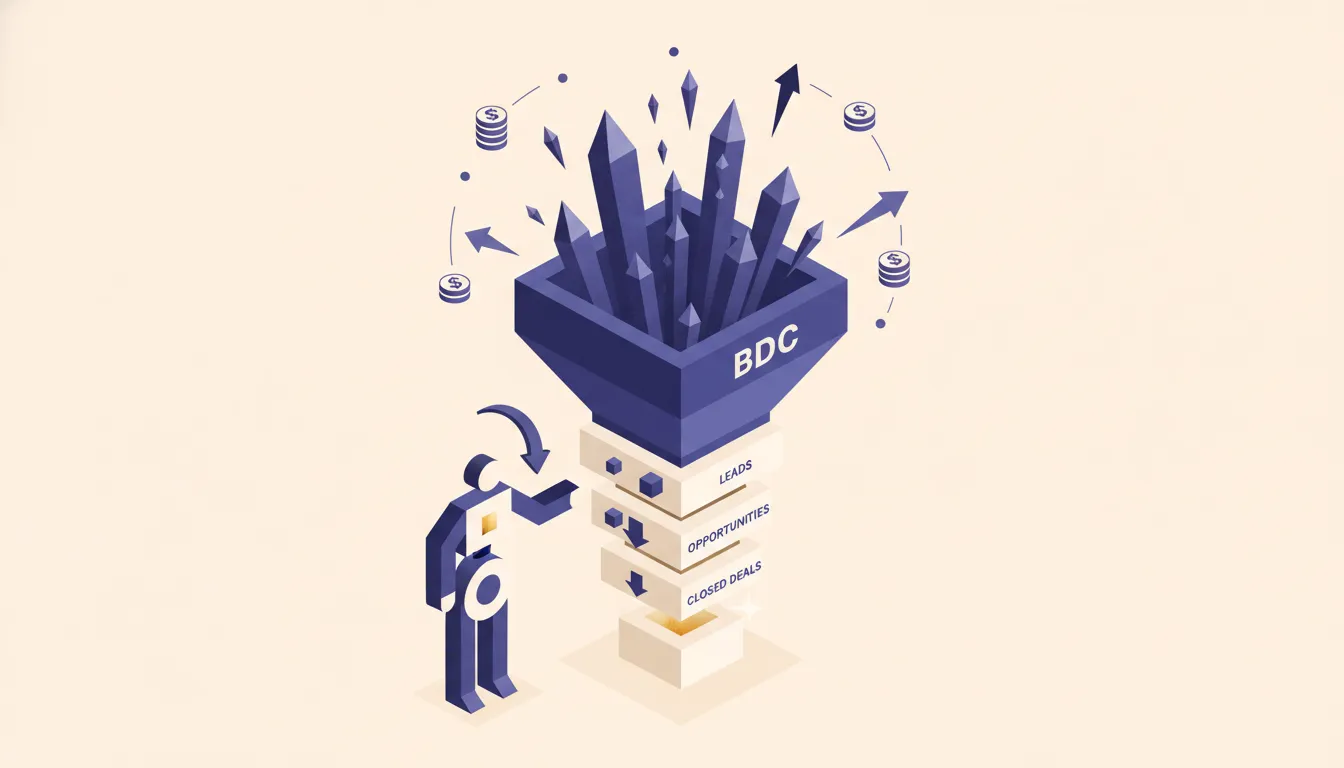 A fully loaded BDC seat at an independent lot costs between $35,000 and $60,000 per year. That is salary, benefits, training, turnover, and the management overhead to keep the seat filled. For a 30-unit-per-month lot, that is often one or two seats handling maybe 80 to 150 inbound leads per week.
The cost is not the biggest problem. The speed is.
Industry data from NIADA and third-party benchmarks consistently put average lead response time at 45 to 90 minutes for dealerships using human BDC teams. A Harvard Business Review analysis found that companies contacting leads within an hour were 7 times more likely to have a meaningful qualifying conversation than those who waited longer. Other research from MIT and InsideSales puts the conversion lift for a sub-5-minute response at 9 times higher than a 30-minute response.
The buyer who submitted a lead on a 2021 Camry at 7:43 PM on a Thursday is still looking at other options. If your BDC does not reply until 9:15 AM Friday, that buyer has already test-driven two other cars.
That is the gap this build closes.
What a 60-second AI response actually looks like
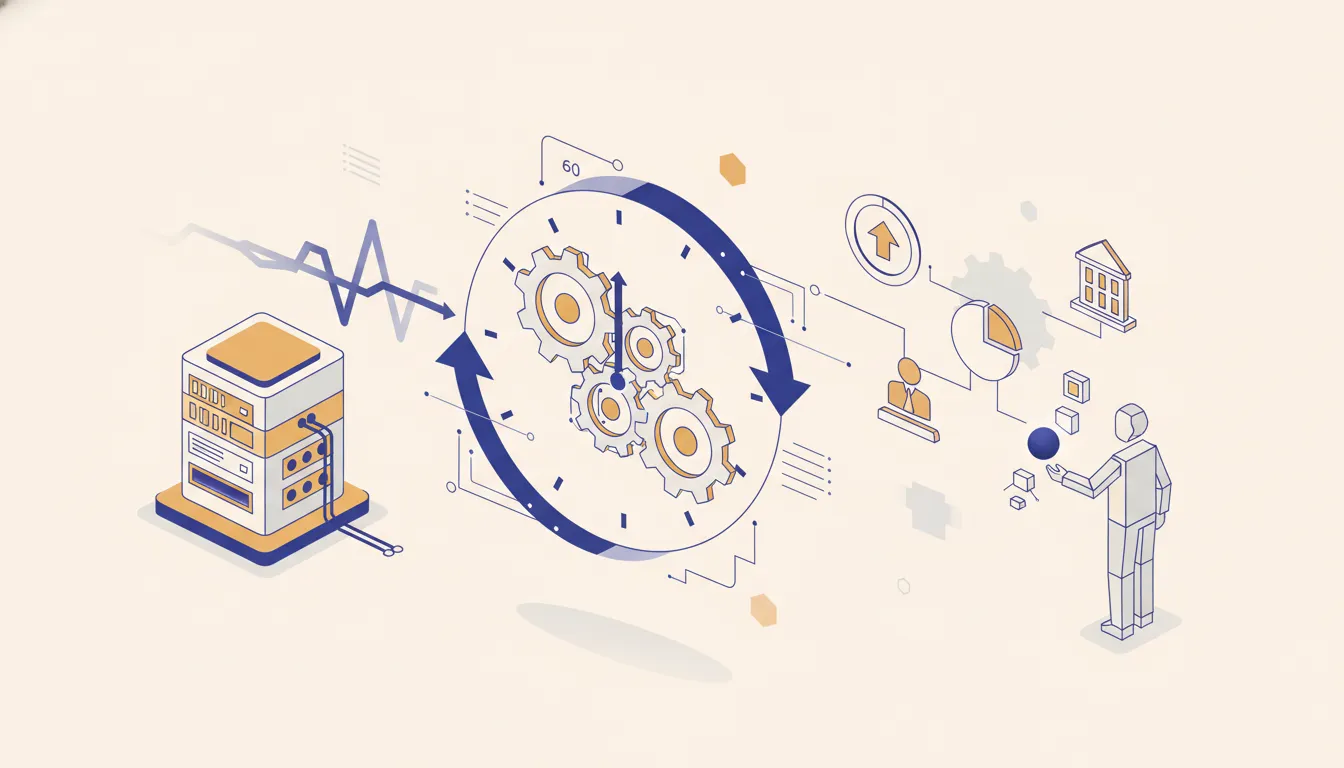 The lead submits a form on your website or through a third-party listing. Within 60 seconds, they get an email and an SMS. Not a generic "thanks for your inquiry" template. A message that names the specific vehicle they asked about, acknowledges the question they asked, and tells them what happens next.
For example: "Hi Marcus, thanks for reaching out about the 2020 Ford F-150 XLT you saw on Cars.com. You asked about financing options. I pulled the listing details and a member of our team will call you within the next 20 minutes to walk through what we can do. If that timing does not work, just reply here and we will set something up."
That is not a chatbot response. It is a first-touch message with the lead's actual context inside it. The buyer cannot tell it was automated, because it is specific to them.
The response goes out while the lead is still on their phone. That is the window.
The architecture: webhook to Claude to routing
Every lead source fires a webhook or produces a structured payload when a form is submitted. Your n8n instance receives that payload at a dedicated webhook endpoint. n8n is the automation layer that connects your sources, runs the classification logic, and routes the output.
When the webhook fires, n8n passes the lead data to Claude via the Anthropic API. Claude reads the lead name, the vehicle of interest, the stated question, the source platform, and the time of day. It returns a classification, a confidence score, and a suggested first-response message already written.
n8n then does three things simultaneously: it sends the first-response email and SMS to the lead, it writes the lead record into your CRM with the classification and timestamp, and it fires a Slack or SMS alert to the on-duty salesperson if the lead is classified as hot.
The whole sequence from webhook to lead response takes under 60 seconds at normal API latency. There is no human in the loop for the first touch. The human enters when the lead is already warm and expecting a call.
That is the architecture. Webhook receives. Claude classifies and drafts. n8n routes and sends. Human follows up on the right tier.
What Claude scores for (intent tiers)
Not every lead deserves a phone call in the next 20 minutes. Claude classifies each lead into one of seven tiers, and each tier triggers a different response path.
Hot: Buying this week. Language like "ready to buy," "coming in this weekend," "just sold my car," or "how quickly can I get this one." Triggers immediate salesperson alert plus first-response message.
Warm: Buying this month. Has a specific vehicle in mind, asking about availability or current price. Triggers first-response plus a follow-up scheduled for 24 hours out.
Financing question: Asking about credit, down payment, or monthly payment before discussing a specific vehicle. Triggers a response that acknowledges the question and sets an appointment to discuss options with context.
Trade-in lead: Primary interest is getting an offer on their current vehicle. Different response template, different internal routing to whoever handles trade valuations.
Browse: No urgency language, asking general questions, may list multiple vehicles. Gets the first response plus enters the 30-day nurture sequence.
Service question: Looking for oil changes, tires, or warranty work, not a purchase. Gets routed to service scheduling, not the sales floor.
Spam: Junk submissions, test leads, or obvious bot traffic. Gets logged and archived with no outbound contact.
Each tier has its own response template that Claude drafts and n8n sends. The templates are editable in your n8n workflow without touching code.
Lead source integrations that matter
The sources your leads actually come from each require a slightly different integration pattern.
Cars.com and Autotrader both deliver leads via email notification and, for higher-tier accounts, via lead delivery API or ADF/XML format. n8n has a native email trigger that can parse incoming ADF leads from either platform into structured fields.
CarGurus delivers leads similarly, via email or API depending on your account level. The email parser approach works for all three until you want real-time API delivery.
Your own website form is the cleanest integration. A simple form webhook posts directly to your n8n endpoint. No parsing layer needed.
Google Local Service Ads (LSA) delivers lead data through Google's LSA management interface and can be polled via the Google Ads API. For most independent lots, polling the LSA dashboard on a 5-minute interval via n8n is sufficient.
Facebook and Meta lead ads deliver leads through the Meta Lead Ads webhook, which n8n supports natively. Once the connection is authenticated, new form submissions from any Meta ad fire directly into your workflow.
For dealers still receiving leads as email notifications rather than structured webhooks, n8n's Gmail or IMAP trigger parses incoming lead emails and extracts the structured fields before passing to Claude. It is a workaround, but it works.
Nurture for cold leads: the 30-day loop
Browse-tier and non-responsive warm leads enter a 30-day automated sequence. This is not a drip campaign with generic "still interested?" messages. Each touch references the specific vehicle or question from the original lead.
The sequence runs 4 to 6 touches over 30 days: day 1, day 4, day 10, day 18, and day 30. Message length and tone shift across the sequence. Day 1 is immediate and specific. Day 4 acknowledges they may still be shopping. Day 10 offers new inventory if it is relevant. Day 18 and 30 are low-pressure check-ins.
Every touch is generated by Claude using the original lead context. You approve the templates once. They personalize themselves per lead at send time.
If a cold lead replies or re-engages at any point during the 30 days, the workflow catches the reply, re-classifies the lead with the new context, and escalates to the hot-lead path. A browser who replies on day 18 asking about availability gets a salesperson alert within minutes. The lead does not fall through because the nurture sequence saw it.
After 30 days with no engagement, the lead is archived. You have the record and the send history for any future re-engagement.
What you still need a human for
This is not a full BDC replacement. It is a triage layer that handles everything before the meaningful conversation starts.
Humans close deals. Test drives require a person on the lot. Financing close involves judgment calls about what a buyer will accept and what the desk will approve. Trade-in walkarounds require eyes on the car. Negotiation requires relationship. None of that is automated by this build, and it should not be.
What humans should not be doing is reading every lead form at 9 AM to decide if it is real, sending the first generic reply, and manually logging it into the CRM. That work takes time, it is inconsistent across team members, and it is the most delay-prone layer in the funnel. That is what this build removes.
Your salespeople spend their time on leads that are already expecting a call and have already received a response that was specific and fast. The triage is done before they touch it.
What this costs to run
The ongoing infrastructure cost for this build is vendor API fees. Claude token cost for a lead classification and a short draft message is fractions of a cent per lead at Anthropic's current pricing. At 150 leads per week, the monthly Claude cost is under $5. SMS delivery via Twilio or a similar provider runs $0.01 to $0.015 per message. Email delivery is near zero at these volumes.
BDC automation at this level has no SaaS seat cost for the AI layer itself. You are not paying for a "BDC software" subscription. You are paying for compute and message delivery at commodity rates.
n8n is self-hosted or cloud-hosted. The self-hosted version is open source. The cloud plan for a lot at this scale runs $20 to $50 per month depending on executions.
The build cost is scoped per dealer as a fixed-fee automation build, based on your lead sources, CRM, and response requirements. To scope it for your lot, run the AI Operations X-Ray.
A dealership-sized example
A 30-unit-per-month independent lot typically sees 80 to 150 inbound leads per week across all sources. With a human BDC responding in 45 to 90 minutes on average, the industry conversion rate for independent lots sits in the 3 to 5 percent range from lead to sold unit.
Response-time research is directionally consistent: a lead contacted in under 5 minutes is 9 times more likely to convert than one contacted after 30 minutes. That does not mean a 60-second response doubles your close rate overnight. It means you stop losing buyers who are ready to talk and do not want to wait.
If a 30-unit lot moves from a 4 percent lead-to-sold rate to a 6 percent rate on the same lead volume, that is roughly 3 to 4 additional units per month. The value of those units is dealership-specific. The mechanism is not: respond faster, lose fewer buyers to other lots that respond faster.
Want this mapped for your lot? Run the AI Operations X-Ray and see which layer of your lead funnel has the most money on the table.
For context on why the tools built for franchised stores often create more problems than they solve for independent lots, see why big dealer AI tools don't fit independent lots. My used car dealer page, linked just below, covers the broader picture for independent lots building this kind of AI layer.
FAQ
Frequently asked questions
01What percentage of leads convert with a 60-second response vs a 45-minute response?
A Harvard Business Review study found companies that contact leads within an hour are 7 times more likely to have a meaningful conversation. The MIT/InsideSales research puts it higher for the first 5 minutes. No study matches your exact lot, but the directional signal is overwhelming.
02Does this replace my BDC manager or my BDC reps?
Neither, immediately. It replaces the triage work your reps do manually. Reading every lead, deciding if it is real, sending the first message. Your manager still owns quality control, escalation rules, and the human touches that close deals.
03What happens if Claude misclassifies a hot lead as cold?
You catch it two ways. First, the cold-lead nurture sequence is still branded and specific, so a hot buyer will often reply, which re-triggers classification. Second, your salesperson Slack alert fires on any re-engagement within 24 hours, regardless of original tier.
04Do I still need Cars.com and Autotrader if I have this?
Yes. This system processes leads from those platforms faster. It does not replace the traffic source. Think of it as a faster front door for leads you are already paying to generate.
05How do I prevent the AI from sending something a customer would find creepy?
Keep the first response factual and short. Reference the vehicle they asked about and their stated question. Do not infer demographics, finances, or urgency they did not volunteer. The prompt instructs Claude to stay inside what the lead form actually said.
06Should I replace my BDC with AI?
Replace the triage work first, not the people who sell. An AI BDC handles the first reply, the sorting and the 30-day follow-up, and your salespeople take the buyers who are ready to talk. If you have one or two BDC seats today, those people can spend their day on calls and appointments instead of reading lead forms.