Field note
Updated Sep 30, 2026
Why big car dealership AI tools don't fit 30-vehicle lots
Most car dealership AI tools are priced and built for franchise groups with a BDC team. Here is why they rarely pay off at a 30-unit independent lot.

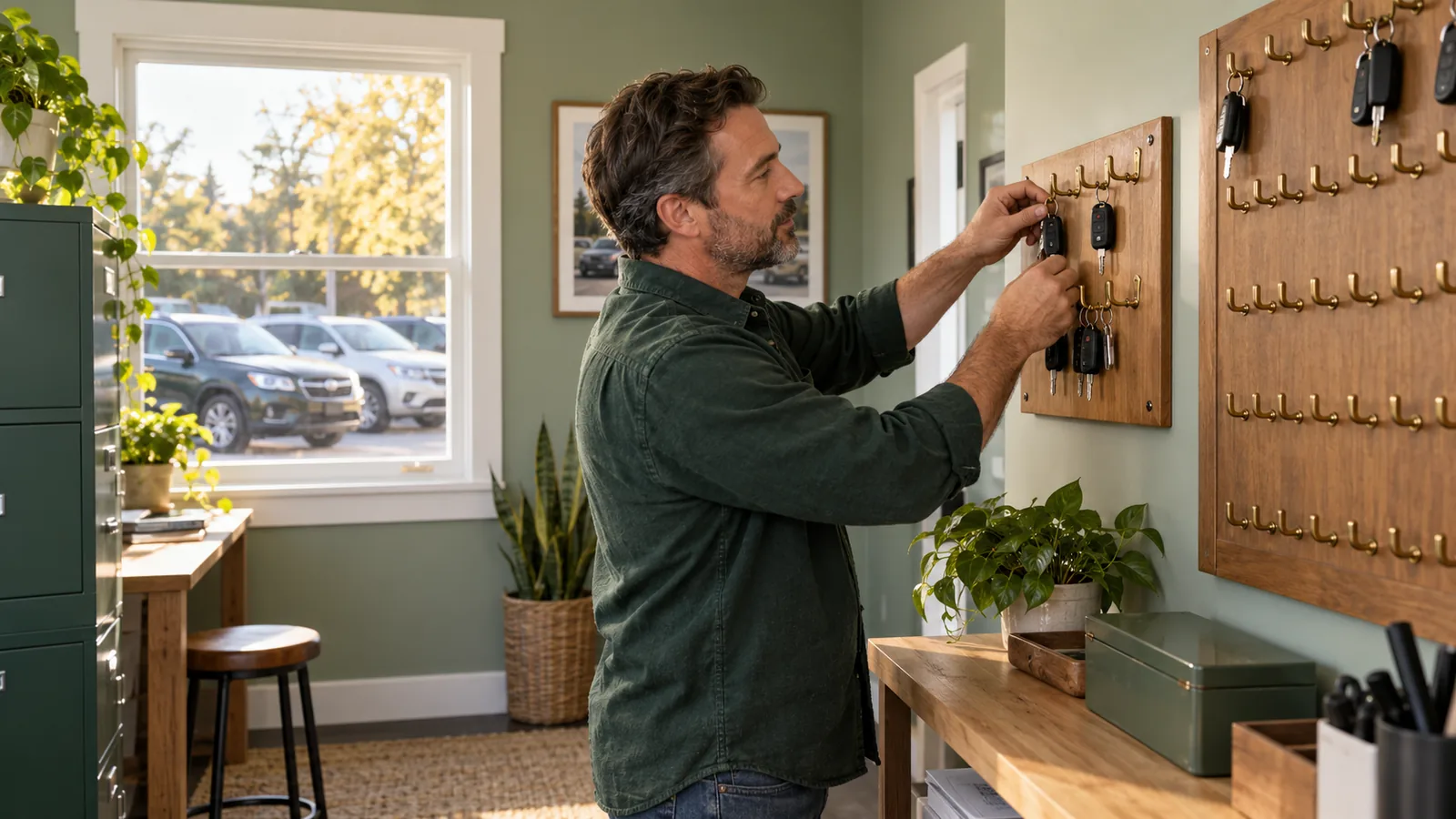
Car dealership AI tools like Numa, Toma, Matador AI and DealerAI are good products, built for franchise stores with a BDC team and a franchise DMS. At a 30-unit independent lot, the price, the integrations and the workflow rarely fit. I cover what a small lot should build instead on my used car dealer page.
What the big dealership AI tools actually do well
 Before I talk about fit, it is worth being straight about what these products actually do.
Numa is a voice AI platform built for automotive. It handles inbound service and sales calls, answers questions, books appointments, and routes callers without putting them on hold. For a franchise service department taking 200 calls a day, it is a genuine operational fix.
Toma is a conversational AI layer for automotive sales. It handles lead follow-up, appointment scheduling, and customer communication across text and voice. Built explicitly for franchise stores with high lead volume and a BDC team to hand off to.
Matador AI covers conversational AI for both sales and service, with a texting-first approach that fits how modern buyers want to communicate. The product has traction with franchise groups running multiple rooftops.
DealerAI takes a broader approach, adding AI to CRM functions, customer engagement, and reporting on top of the conversational layer.
These are real products solving real problems. The companies behind them are not trying to rip off independent dealers. They built tools for the franchise buyer. That buyer just is not you.
Why "works for franchise" is not the same as "works for independent"
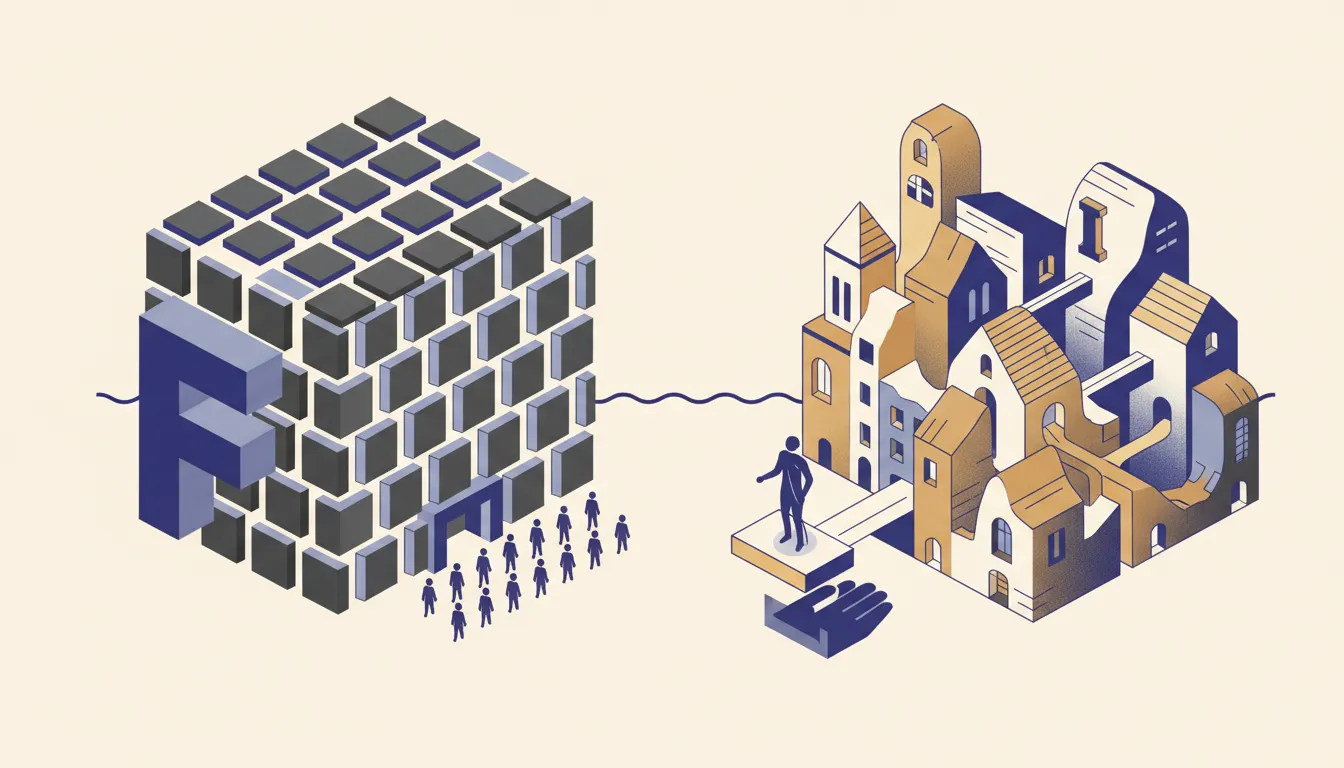 A franchised dealership running 200 units per month has a specific operational shape. They have a dedicated BDC team of three to eight people. They have a franchise DMS. They have a service department taking hundreds of calls per week. They have a fixed-ops manager, an internet sales manager, and usually a dedicated IT or vendor-management contact. The AI tool plugs into that structure.
An independent lot at 30 units per month has one or two people wearing four or five hats each. The person answering phones is often the same person managing inventory, handling title work, and closing deals on the floor. There is no BDC to feed. There is no IT contact to manage the integration. The process the franchise tool was designed to enhance often does not exist at all.
NIADA consistently finds that independent dealers operate with leaner teams, lower average transaction prices, and tighter margins than their franchise counterparts. The tools built for the franchise buyer assume resources that most independents simply do not have.
The lead sources are also different. Franchise stores lean heavily on OEM-generated traffic, conquest lists, and certified pre-owned programs. Independent lots lean on Cars.com, Autotrader, CarGurus, Facebook Marketplace, and their own website. The AI tools that integrate natively with DMS platforms and OEM lead systems do not always know what to do with a CSV export from Frazer.
The pricing mismatch
Franchise-focused AI tools typically run $300 to $2,000 per month per rooftop. Some charge by seat, some by rooftop, some by feature tier. The exact number varies by vendor and contract, but the range is consistent across the category.
For a franchise store selling 200 units per month at an average gross of $3,500 per vehicle, that is $700,000 in gross per month. A $1,000 monthly SaaS fee is 0.14 percent of gross. It barely shows up. For a 30-unit independent lot at $2,500 average gross, that same $1,000 fee is 1.3 percent of gross. That is not rounding error anymore. That is a meaningful percentage of what you clear, and it compounds across every monthly tool you are paying for.
The per-unit math only works when the volume is there to amortize it. Below roughly 50 sold units per month, the economics flip, and a custom build almost always wins over 36 months, even accounting for the upfront build cost.
The integration mismatch
The franchise AI tools were built with specific DMS integrations in mind. CDK Global, Reynolds and Reynolds, and Dealertrack are the big three. These platforms run most franchised rooftops and provide APIs, certified partner programs, and structured data formats that the AI vendors plug into. The integration works because both sides built toward a shared standard.
Most independent lots are not on any of those systems. Frazer is the dominant DMS for independent dealers in the US. Wayne Reaves is strong in the Southeast. DealerSocket Independent tier and Autosoft cover much of the remaining market. None of them are in the standard integration libraries for Numa, Toma, Matador AI, or DealerAI.
When you ask a franchise-focused vendor about Frazer compatibility, the answer is usually some version of CSV export. You pull a report from Frazer, upload it somewhere, and the AI tool consumes it. That is not an integration. That is a manual step dressed up as one. Real-time inventory sync, automatic lead-to-DMS write-back, and automatic status updates do not work over CSV import.
The result is a tool that is supposed to know what you have in stock, what leads have already been contacted, and what deals are in the pipeline, but actually knows whatever was in the last CSV you uploaded. For a fast-moving independent lot where inventory turns in days, that lag matters.
The workflow mismatch
The big AI tools are designed to feed a BDC team. They triage inbound leads, score intent, draft responses, and hand off the conversation to a human rep. The assumption baked into the product is that there is a rep on the other end ready to take the handoff.
At a franchise store with a BDC of five people, that assumption is correct. At an independent lot where the owner is also the closer, the intake specialist, and the F&I manager, there is no one waiting for the handoff. The tool generates a queue of prioritized leads. The queue sits there until someone has time to look at it. That could be three hours. The speed advantage the AI was supposed to create disappears.
What an independent operator actually needs is an AI layer that acts as the team for the first-contact triage, not a tool that prepares work for a team that does not exist. The architecture has to be different. The AI needs to respond to the lead directly, qualify intent autonomously, book appointments without human intervention, and only escalate when there is a live buyer on the hook asking to speak to someone now.
That is not how the franchise tools are built. They are built to assist a team. Independent lots need the AI to cover the role entirely for that first layer, and then alert a human only when it is worth their time.
What custom solves that SaaS cannot
A custom-built AI layer connects directly to your actual workflow. If you are on Frazer, the automation reads your Frazer exports on a scheduled interval and keeps its knowledge of your inventory current. If you are posting on Facebook Marketplace, the automation listens for new messages in real time. If your leads come in as email notifications from Cars.com or Autotrader, the automation parses those emails and starts the response workflow before any human opens their inbox.
You own your data. The conversation history, the lead records, the intent scores, and the outcome data all live in your own database, not in a SaaS vendor's cloud where you lose access the moment you stop paying. If you want to train a better model later, or switch automation providers, or pull your lead history into a new CRM, you can do that because the data is yours.
The economics also scale differently. A custom automation build has a one-time build cost and ongoing infrastructure costs that are proportional to usage. Claude API tokens cost fractions of a cent per lead processed. SMS delivery runs about $0.01 per message. At 150 leads per week, the monthly operating cost for the AI layer itself is under $20. There is no per-seat tax, no per-rooftop fee, no upsell to a higher tier to unlock features you need.
For dealers already on Cars.com, Autotrader, and CarGurus, a custom build works with those accounts directly. You do not replace your lead sources. You build a faster and smarter front door for the leads you are already paying to generate.
The switching story
If you are already paying for Numa, Toma, Matador AI, or a similar tool, the question is not whether the product is good. The question is whether it is paying back at your actual unit volume.
The calculation is straightforward. Take what you paid last month. Divide it by the number of leads the tool actually processed. Compare that per-lead cost to your current lead-to-sale close rate improvement since adding the tool. If you cannot point to a clear before-and-after in closed units, the tool may be running but not producing. Features that light up on a demo do not always translate to outcomes at independent lot scale.
The switching decision is ultimately a math question, not a loyalty question. If the tool is producing, keep it. If you are paying $800 per month and cannot point to the revenue it is protecting, that budget builds and runs a custom layer for three years. The switching cost is real but finite. The ongoing cost of a tool that does not fit your scale compounds every month.
When franchise dealer AI is the right answer
If you are a franchise group running multiple rooftops at 150 or more units sold per month each, the SaaS economics flip. The per-rooftop cost becomes rounding error against gross. The franchise DMS integrations work the way they are supposed to. You have a BDC team to feed. The tool was built for you.
If you are an independent lot that has scaled past 80 sold units per month and your team has grown to match, you may be reaching the point where franchise-tier tooling fits. The right question at that scale is whether your DMS and workflow actually match the assumptions the vendor made when they built the integration. If you are still on Frazer with a three-person team, you are probably still better served by a custom build. If you have moved to a franchise DMS and added a BDC coordinator, the picture changes.
This post is not about those tools being wrong. It is about matching tools to the scale and structure they were actually built for. A 30-unit independent lot is a specific business with specific economics. It deserves tools that were designed with that business in mind.
Not sure which fits your lot? Run the AI Operations X-Ray. It reads your site and tells you where custom beats SaaS and where it does not. For a broader look at how independent lots are building AI into their operations, see my used car dealer page, linked just below. If you are evaluating whether to replace your current lead-response process entirely, the BDC replacement breakdown linked above covers what the custom build actually looks like. If your DMS is Frazer or Wayne Reaves, my note on DMS integration without the $15K setup shows how to get the data out.
FAQ
Frequently asked questions
01I'm already paying for Numa. Should I cancel?
Not automatically. First run the math. Divide what you pay per month by how many leads the tool actually processed last month. If the per-lead cost is higher than what a custom build would cost to run, that is your answer. If it is working and you are closing deals because of it, that is also your answer.
02Are these tools actually bad, or just a bad fit?
They are not bad. Numa, Toma, Matador AI, and DealerAI are well-built products solving real problems. The problem is that the problems they were built to solve belong to franchise stores with 150+ units per month and full DMS integrations. That is a different business than a 30-unit independent lot.
03What's the unit-volume threshold where SaaS becomes the right choice?
Roughly 50 to 80 sold units per month per rooftop, assuming you also have a franchise DMS like CDK or Reynolds. Below that threshold, the per-unit SaaS cost eats into margin in a way that a custom build does not.
04If my DMS is Frazer, can any of these SaaS tools even talk to it?
Most cannot connect natively. Frazer and Wayne Reaves are not in the standard integration libraries for franchise-focused AI tools. Some vendors offer CSV import as a workaround. That is manual data transfer dressed up as an integration, not a real-time connection.
05Do custom builds get support after launch?
That depends entirely on who builds it and what you agree to upfront. The right answer is yes, with documented escalation paths, a monitoring layer, and a retainer or hourly arrangement for changes. Ask before you sign.
06Are AI tools for dealerships worth it for small car lots?
Some are, but usually not the franchise-tier ones. Below roughly 50 sold units a month, the per-rooftop fee eats into margin, and the integrations often do not reach an independent DMS like Frazer. A small build that answers leads and reads your DMS export usually pays back faster.