Field note
Updated Sep 30, 2026
How to choose an n8n automation consultant
How to choose an n8n automation consultant: judge ownership, failure handling, proof of results and the handoff, then run one paid acceptance test.


To choose an n8n automation consultant, judge what they leave behind, not the demo. The right one leaves you a business process that runs, fails visibly, and can be owned by someone other than the person who built it.
I cover this as part of my n8n consulting work.
The workflow canvas matters, but it is not the product. A neat row of nodes can still move the wrong record very efficiently. I have built enough of those diagrams to know they always look innocent in screenshots.
My buying rule is simple: hire for the operating outcome and the recovery path, not the demo. The consultant should be able to explain which system is authoritative, what the workflow may change, how exceptions surface, how the destination is checked, and what your team does when a dependency fails.
On one client build, I inherited an n8n sync that ran every six hours and took about three hours to finish. It moved membership records between two business systems. The workflow used a batch size of nine to stay inside the limits of both systems, and the source's incremental date path did not behave reliably.
A green execution was not enough. I checked named records in the destination, corrected field mapping, and watched the live run for missing people and wrong membership states. That delivery changed how I judge automation work. Transport success is not business proof. If the operator cannot verify the promised result, the workflow is still a guess with good posture.
Start with the operating promise
Before discussing nodes, credentials, or hosting, define one sentence the workflow must make true.
Examples:
- Every approved lead reaches the CRM once, with the right owner and source.
- Every paid invoice updates the account record and produces a reconciliation entry.
- Every maintenance request becomes a work order or a visible exception.
- Every qualified candidate reaches the recruiter with the evidence used to classify the record.
That sentence becomes the acceptance boundary. It tells the consultant what to map and gives the operator something concrete to verify.
I use business process automation to map the records, owners, approvals, and exceptions around the workflow before deciding how n8n should fit. If the process is unclear, adding automation only gives the confusion a schedule.
A useful discovery should identify:
- The trigger and the source record.
- The authoritative system for each important field.
- The action the workflow is allowed to take.
- The conditions that require human review.
- The destination result that proves completion.
- The owner who responds when the promise breaks.
A consultant who starts by asking which apps you use may be gathering useful information. A consultant who never asks what must be true at the end is collecting logos.
Judge the architecture, not the node count
A larger workflow is not automatically more valuable, and a shorter workflow is not automatically safer. The right structure depends on volume, execution time, failure isolation, authentication, and the cost of replaying work.
For a small contained process, one workflow with a clear error route may be enough. For a long-running sync, I usually want smaller subworkflows so completed work can be released from memory and failed work can be retried without replaying the whole batch.
n8n documents queue mode as a design that separates the main instance from workers. That matters when execution load grows, but the buyer question is not “does it use queue mode?” The buyer question is “what happens when ten times the expected work arrives?”
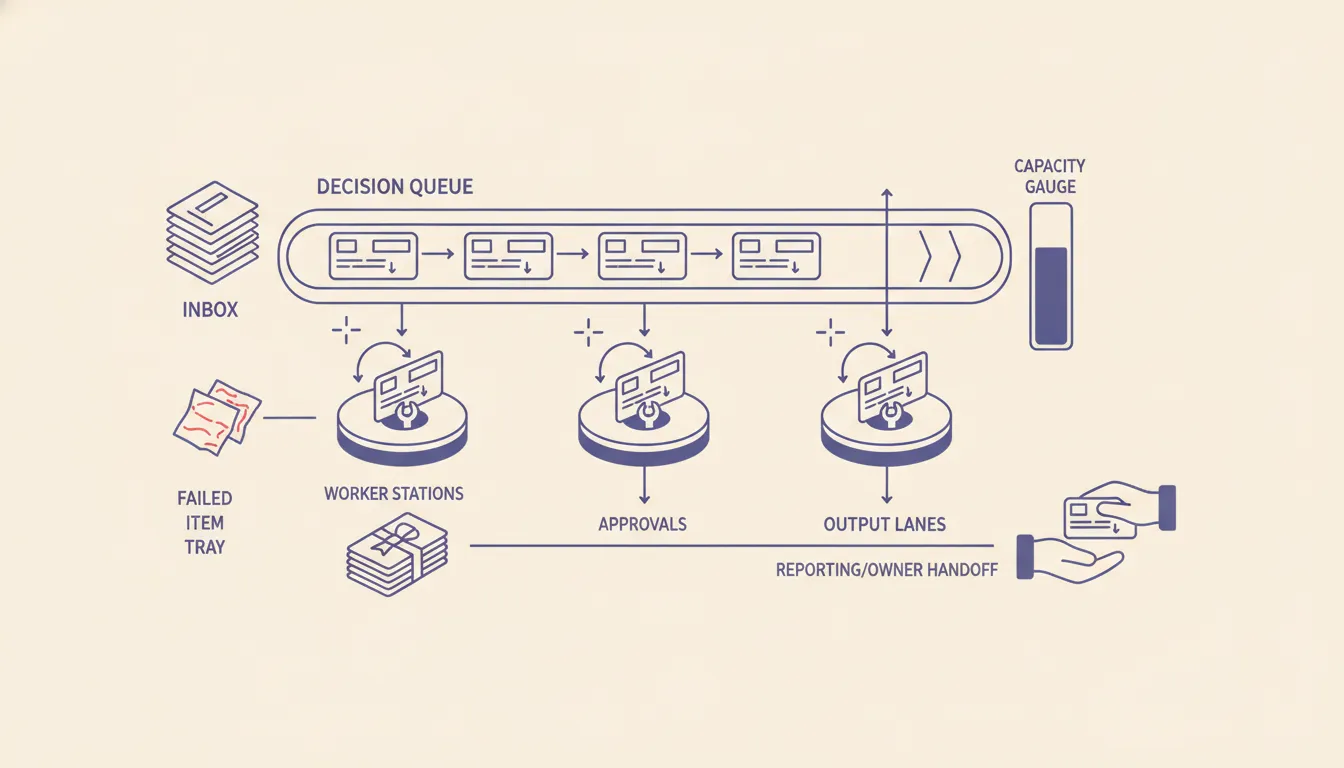
I would ask the consultant to show:
- The expected daily and peak execution volume.
- The longest normal execution time.
- The rate limits for every important dependency.
- The concurrency and batch strategy.
- The largest payload the workflow accepts.
- The point where the current design needs another worker or a different architecture.
The n8n architecture pattern for a tenfold spike goes deeper on this test. You do not need enterprise machinery for a modest workflow, but you do need an honest capacity boundary.
Require visible failure and safe recovery
Every external API will eventually time out, reject a credential, change a field, or return something malformed. The consultant's job is not to promise that failure will disappear. The job is to make failure contained, visible, and recoverable.
n8n supports error workflows that can run when another workflow fails. I expect an error path to preserve enough context for an operator to answer:
- Which business record failed?
- Which step failed?
- What had already changed?
- Is a retry safe?
- Who owns the next action?
- How will we prove recovery?
A generic alert saying “workflow failed” is not an operating alert. It is a scavenger hunt. The alert should name the affected record in human terms, explain what did not happen, and point to the next safe action.
Retries also need rules. A read request may be safe to retry automatically. A create, payment, message send, or status update may create a duplicate. I want idempotency keys, destination checks, or a review step around actions where replay has a business cost.
This is also where you set what an AI workflow is allowed to do. Define what the workflow may read, prepare, change, send, and spend. n8n can execute the action. It does not decide whether the business should allow it.
Test destination proof, not execution history
Execution history tells me what n8n believes happened. The destination tells me what the business received. Both matter.
For each operating promise, define a proof check:
| Workflow promise | Useful destination proof |
|---|---|
| Create a CRM contact | Read the contact back and verify owner, source, and dedupe key |
| Sync an account status | Compare expected and actual states for the affected records |
| Send an approved message | Preserve provider message ID and delivery response |
| Create a work order | Read back work-order ID, priority, assignee, and source request |
| Generate a report | Verify the file exists, opens, and contains the required sections |
This is the difference between technical completion and operational acceptance. I have seen workflows run for hours and finish green while a source quirk quietly left the destination incomplete. My opinion is firm: a consultant has not finished the job until the business result has been checked where the business uses it.
Settle security and ownership before you hire
Self-hosting gives you more control, but it also gives you more responsibility. n8n's hosting guidance says self-hosting requires technical knowledge, and its security guidance covers controls a deployment owner needs to consider.
Before hiring, decide who owns:
- The n8n account or server.
- Cloud and database accounts.
- API applications and OAuth credentials.
- Encryption keys and environment secrets.
- Domain names, tunnels, and certificates.
- Backups, updates, monitoring, and incident response.
- Workflow exports and any custom code.
My preference is that the client owns the infrastructure, code, data, and credentials. I should be able to build and support the system without becoming the lock that keeps it running.
My n8n consulting work is built around that ownership line. If a proposed arrangement leaves the consultant's private account as the only route to production, treat that as a dependency that needs to be removed before acceptance.
Run a paid acceptance test
The market is full of offers for free audits and quick workflow builds. The n8n community forum has posts like one from a consultant offering a contained working test before a larger commitment and another separating pre-automation decisions from post-build verification.
The structure is sensible. I would still make the acceptance test paid, narrow, and owned by the buyer. Free work can distort the scope and encourage a polished sample instead of a production handoff.
Use one real process and require five demonstrations:
- Normal path: a valid record reaches the correct destination.
- Bad input: an incomplete or malformed record becomes a visible exception.
- Dependency failure: a failed API call stops safely and alerts the owner.
- Replay: a retry does not create a duplicate or repeat an irreversible action.
- Load: a realistic spike completes inside the agreed operating window.
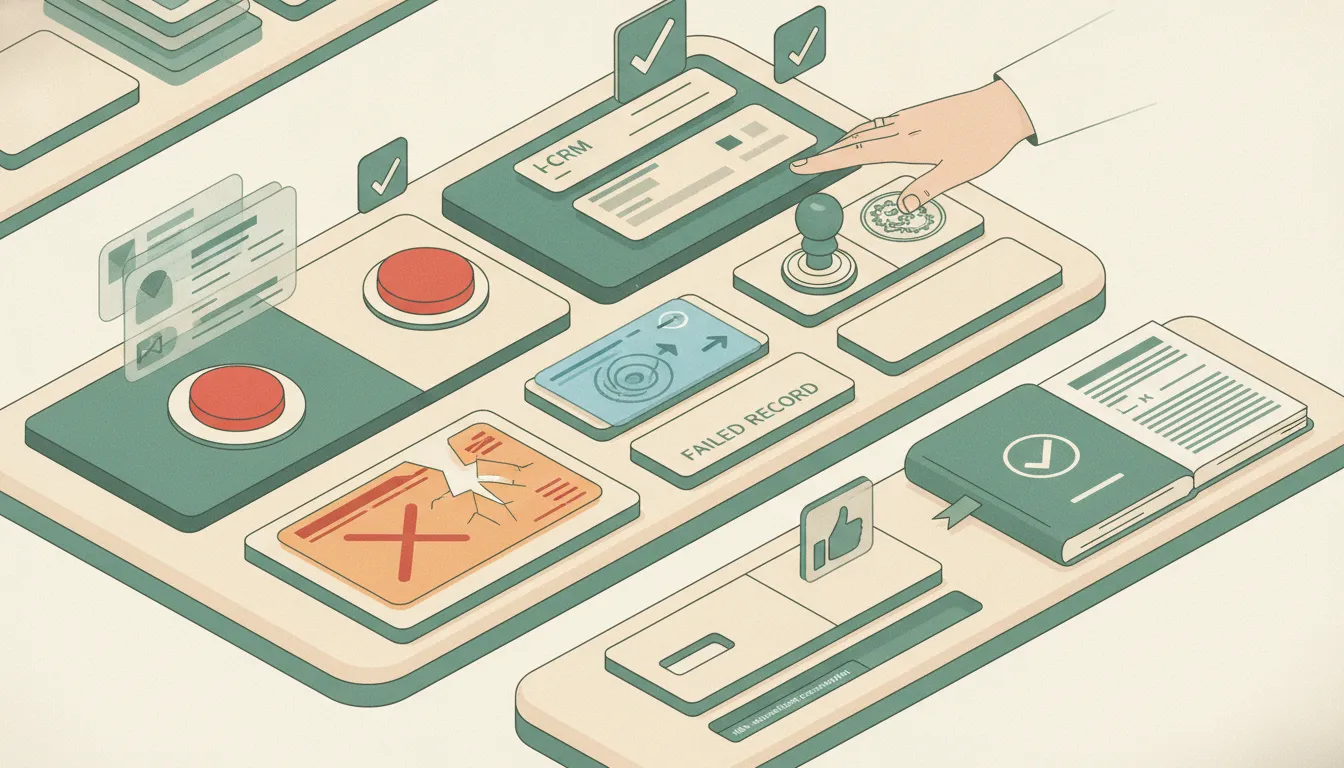
Acceptance should end with a destination check, a recovered failure, and a second person following the runbook. A screen recording is useful evidence, but it is not a substitute for the operator proving the system.
Demand a handoff another operator can use
A good handoff includes more than a workflow export. It should cover:
- A plain-language process map.
- Workflow names, triggers, and dependencies.
- Source-of-truth and field-mapping decisions.
- Credential ownership and rotation steps.
- Environment and deployment instructions.
- Expected volume, schedules, and rate limits.
- Error routes, retry rules, and duplicate controls.
- Monitoring and alert destinations.
- Backup and recovery steps.
- Known limitations and deferred risks.
- Acceptance evidence and test records.
Then ask somebody other than the builder to operate it. Can they pause the workflow, find a failed record, understand what changed, replay it safely, and verify the destination?
That person becomes part of how you manage the workflow day to day. The consultant can deliver the system, but a named internal owner still has to manage changes, permissions, incidents, and business outcomes.
When not to hire me for n8n
You do not need me when the workflow is a low-risk connection between two well-supported apps, the volume is small, and your team can own the setup. Use a native integration or a simple hosted workflow and keep the operating burden proportionate.
You also should not hire an n8n consultant when the real problem is an undecided process. If two managers disagree about which record is authoritative or who approves the action, I cannot solve that disagreement with nodes. Make the management decision first.
Hire specialist help when the workflow crosses several systems, handles sensitive records, runs at meaningful volume, needs custom APIs or code, controls customer-facing action, or cannot afford silent failure.
Scope also changes with authentication, data quality, authority, testing, deployment, and support. The AI automation consultant cost frame explains why I do not price a serious build by counting boxes on a canvas.
My final selection test
I would choose an n8n automation consultant who can make one operating promise testable from trigger to destination. They should define ownership, authority, capacity, failure behavior, proof, and recovery before asking you to trust the build.
The winning consultant is not the fastest person in the canvas. It is the person who leaves your operator able to answer three questions without calling them: what happened, what failed, and what do we do next?
If you want to run that test on me, start with one real process and hold me to the same five demonstrations.
More on this: n8n cloud pricing vs self-hosted: real cost breakdown.
FAQ
Frequently asked questions
01What does an n8n automation consultant do?
A strong consultant maps the operating process, designs the workflow boundary, connects systems, handles exceptions, tests the result, deploys it, and leaves the operator with documentation and recovery controls. The job is larger than arranging nodes on a canvas.
02How do I choose an n8n automation consultant?
Ask for a process map, source-of-truth decisions, authority limits, error handling, load testing, destination verification, ownership terms, and a complete handoff. Then test those promises on one contained workflow.
03Should I self-host n8n?
Self-host when control, data location, custom code, or execution economics justify the operating burden. Use n8n Cloud when your team does not want to own updates, backups, security, monitoring, and recovery.
04How much does an n8n consultant cost?
The scope depends on integration depth, authentication, data quality, execution volume, approval boundaries, testing, deployment, and support. I scope the work from the operating lane, not from a guessed node count.
05What should an n8n handoff include?
It should include workflow exports, credentials ownership, environment documentation, data contracts, error routes, retry rules, expected volumes, monitoring, a recovery runbook, and proof that a second operator can run the system.
06What should I check before I hire an n8n expert?
Ask them to show the capacity limit, the error path for a failed record, and how they prove the result landed in the destination. Then run one paid acceptance test on a real process, including a bad input, a failed API call and a safe replay. An n8n expert who passes that test is worth more than one with the busiest canvas.