Field note
Aug 9, 2026
Quote automation from specs: the operator control test
Quote automation from specs should extract trusted facts, expose unknowns, route compatibility and margin exceptions, and keep the final customer commitment behind human approval.


Quote automation from specs should not jump from a PDF to a customer email.
It should turn messy source material into a controlled quote record, show what it knows, expose what it does not know, and keep the final commercial commitment with a person who has authority to make it.
That distinction matters in equipment sales. A request may include a product sheet, an old quote, a handwritten note, an attachment list, a model number, job conditions, delivery requirements, and a customer deadline. The quote desk still has to decide which revision is current, whether the units match, whether the requested combination is compatible, which price is valid, and who can approve the exception.
I learned this on an equipment and environmental services build where a rep could describe the work in normal language and move it into a structured quote process. The natural-language input was useful, but the real value came after it. The system converted field knowledge into reviewable commercial fields before anything moved forward.
After building more than 500 production-grade workflows, my rule is firm: speed is not the first control. A trustworthy record is.
Start with a spec-to-quote promise
Before I automate anything, I write the operating promise the quote desk must protect.
For this workflow, I would use:
Every customer quote uses the current approved specifications, exposes missing or conflicting facts, preserves margin and compatibility review, and leaves with a named human approval.
That promise gives the build a boundary. It also prevents the team from treating document extraction as the whole job.
My broader equipment dealer automation model covers intake, daily operations, quote and document generation, system glue, and inbound triage because quoting depends on all five. A clean quote cannot emerge from an unowned request, disconnected records, or an exception buried in somebody's inbox.
I want six answers before the first prompt is written:
- Which quote family is being automated first?
- Which documents and systems are allowed to supply facts?
- Which fields are required before a draft can exist?
- Which conflicts or unknowns stop the normal lane?
- Who approves compatibility, price, margin, freight, and terms exceptions?
- What proves the approved quote reached the customer and the follow-up queue?
If those answers are unclear, the first project is process definition, not quote generation.
Build a specification record before a quote document
A PDF is not a database record. It is a container that may hold useful facts, footnotes, old revisions, tables, images, exclusions, and ambiguous labels.
I turn source material into a specification record first. That record should preserve:
- Source document name and revision.
- Product, model, serial range, or configuration identity.
- Dimensions and units.
- Capacity, power, pressure, flow, weight, or other relevant operating limits.
- Requested attachments, options, accessories, or service scope.
- Compatibility evidence and unresolved questions.
- Availability, lead time, and location when those fields affect the quote.
- Price source, effective date, currency, and cost basis.
- Delivery, setup, installation, and training assumptions.
- Customer-specific terms and required approvals.
The extraction can prepare those fields. It should not flatten uncertainty into a confident answer.
If one document says 2,500 pounds and another says 2,500 kilograms, the workflow has not found a specification. It has found a conflict. The NIST guidance on SI units is a useful public reference for keeping measurement names and symbols consistent. If the attachment code appears without a supported model range, the workflow has not proven compatibility. It has found a review item.
That is the distinction I make in automated quoting for equipment dealers: the output is a quote, but the operating system underneath is intake, source lookup, rule checks, approval routing, and proof.
Use three states for every extracted fact

I do not let extracted values enter the quote as one undifferentiated list. Every material fact needs one of three states:
- Confirmed. The value came from an approved source and passed the required format or rule check.
- Conflicting. Two approved-looking sources disagree, or the value does not match another constraint.
- Missing. The quote lane requires the value, but the available source material does not provide it.
A fourth label, inferred, can be useful for internal preparation, but I do not treat it as confirmed. An inferred value should carry the reason, source context, and person required to accept it.
This is where AI systems need governance rather than confidence theater. The NIST AI Risk Management Framework treats governance, mapping, measurement, and management as connected parts of risk work. My operator version is simple: show the source, preserve uncertainty, name the owner, and keep a stop control.
A quote-desk reviewer should be able to open one record and see:
- The extracted value.
- The exact source document and revision.
- Whether a deterministic check passed.
- Whether another source disagrees.
- Whether the value affects price, safety, fit, delivery, or customer expectations.
- Who can resolve the exception.
- What changed after review.
Without that visibility, the system creates faster retyping with less accountability.
Separate extraction from compatibility
A specification can be extracted correctly and still produce the wrong quote.
Compatibility is a business rule, not a reading task. A document may accurately say that an attachment has a certain width, pressure requirement, or coupler type. That does not prove it belongs with the machine, application, delivery setup, or customer expectation in the current request.
I separate the workflow into two decisions:
- What does the approved source say?
- Does that fact satisfy the rules for this quote?
The first decision can use document extraction, table parsing, and structured validation. The second may require a product rule, inventory lookup, service bulletin, manager judgment, or manufacturer confirmation.
This is why I do not force every equipment quote into a rigid configurator. My field note on when CPQ software is the wrong first fit explains the sequence: use configuration rules where the lane is stable, and use an operator workflow where missing fields, aging records, and human exceptions still dominate.
The workflow should stop when:
- The product revision is unknown.
- Units are absent or inconsistent.
- A requested option is not listed for the selected model range.
- The machine, attachment, or application record is incomplete.
- Two price sources have different effective dates.
- Freight or setup assumptions are missing.
- The customer request exceeds a documented operating limit.
- The rule library has no approved answer.
A stop is not a failure. It is the system doing its job.
Put price and margin behind a separate gate
Correct specifications do not create an approved price.
The quote record may still need base price, cost, freight, setup, installation, tax treatment, financing assumptions, discount authority, trade context, and expiration rules. Those records can come from different systems, and they can age at different speeds.
I keep specification readiness and commercial readiness separate. A quote can be technically complete but financially blocked. It can also be financially attractive but technically uncertain. The customer should not receive either one.
My ownership opinion does not change here: the operator should own the accounts, source records, pricing rules, credentials, logs, documentation, and approval trail. AI can assemble and explain the draft. It should not invent a price, hide stale cost data, or decide that margin policy does not apply this time.
The Backlot service is relevant because quote and document generation belongs inside a dealer-controlled operations layer. The point is not a magic document button. The point is a quote desk that can see why a draft is ready, blocked, or waiting on a decision.
Design the human approval packet
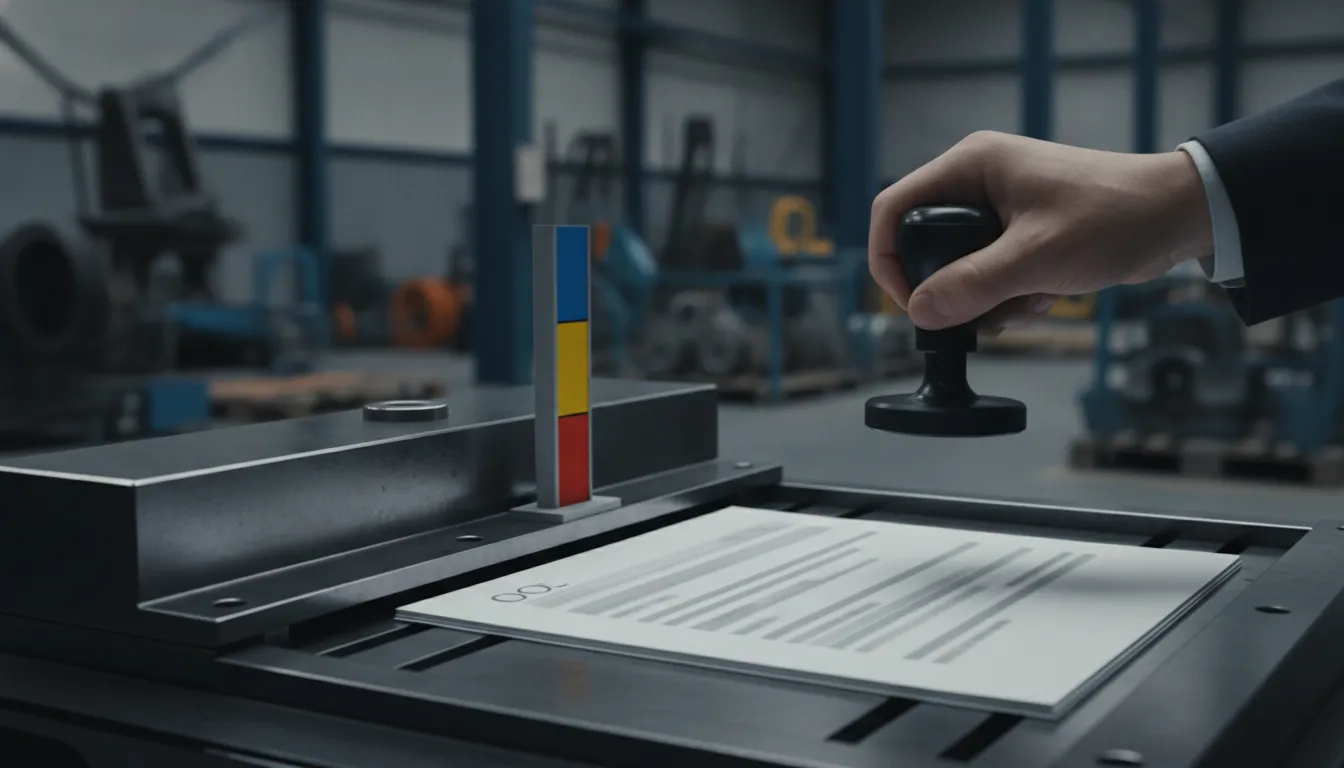
I want the reviewer to receive an approval packet, not a vague notification.
The packet should include:
- Customer request and deadline.
- Quote family and current owner.
- Confirmed specifications with source references.
- Missing, conflicting, or inferred fields.
- Compatibility checks and unresolved exceptions.
- Price source dates and commercial assumptions.
- Margin or discount threshold result.
- Draft quote version.
- Required approver and allowed actions.
- Follow-up task that will be created after send.
The approver should be able to accept, reject, or return the quote with a reason. The workflow should preserve that reason and prevent an old draft from becoming the sent version.
This is workflow management built for operators. A status such as waiting for approval is not enough. The team needs a reason, an owner, a due time, an allowed decision, and proof of closure.
Test the workflow with bad source material
A clean product sheet proves very little.
Before rollout, I test the uncomfortable conditions:
- Two PDFs use the same model name but different revisions.
- A table loses its unit during extraction.
- A scan is rotated, blurred, or missing one page.
- An old quote contains a price that is no longer valid.
- The customer requests an attachment by nickname rather than product code.
- A compatible option has a delivery constraint that the main sheet omits.
- Inventory and the pricing file disagree.
- The manager changes one field after the draft is prepared.
- Approval arrives after the source document changes.
- The send step fails and is replayed without creating a duplicate quote or email.
- A rep tries to bypass a required compatibility review.
- The original owner leaves while exceptions remain open.
For each test, I want the original evidence preserved, the reason visible, one owner assigned, and a safe replay path.
The most dangerous failure is not always an error message. I have seen an automation keep running while a logic problem stopped a client's usage from being assigned correctly. The issue appeared at month end, and the business had to absorb a full month of usage because there was no honest way to reconstruct the missing amount.
That is why I care about silent correctness in quoting. A system can produce a polished PDF and still carry the wrong revision, unit, price, or option. The quote desk needs reconciliation, not just generation.
When not to hire us for quote automation from specs
Do not hire us for quote automation from specs when the business cannot identify the approved source documents, required quote fields, compatibility owner, pricing owner, or send authority.
I would also pause when:
- Every quote is a one-off engineering decision.
- Product revisions are not controlled.
- Pricing lives only in personal memory.
- The same model code means different things across locations.
- Nobody owns missing specifications.
- The team wants automatic sending before it can run a recovery drill.
- Leadership expects AI to resolve technical uncertainty without review.
In those conditions, I would start with a quote-desk map and one controlled template. An operations X-Ray can identify the first leaking handoff before anyone commits to a larger build.
The first useful version should be narrow. Pick one quote family. Define its approved sources. Extract the required facts. Label conflicts and missing values. Check compatibility. Apply commercial rules. Route the approval packet. Save the final version. Prove the send and follow-up. The FTC advertising and marketing guidance is also a practical reminder that customer-facing claims need an honest basis. Automation does not remove that responsibility.
Quote automation from specs earns a wider rollout only after the operator can trust the record under bad source conditions. Until then, the correct output is sometimes a draft, sometimes a question, and sometimes a hard stop.
FAQ
Frequently asked questions
01What is quote automation from specs?
Quote automation from specs extracts approved facts from specification sheets, drawings, emails, and product records, converts them into a structured quote record, checks required rules, and prepares a draft for human review.
02Can AI create a quote directly from a PDF?
It can prepare a draft, but it should not send the quote until required fields, document revision, units, pricing sources, compatibility, margin rules, and approval status are verified.
03What should equipment dealers automate first?
Start with one repeatable quote family that has stable source documents, known required fields, documented pricing rules, and a clear approval owner.
04When should quote automation stop for review?
It should stop when a required specification is missing, documents conflict, units are unclear, compatibility is uncertain, pricing is stale, or the quote crosses an approval threshold.