Field note
Sep 4, 2026
AI marketing automation tools: an operator buying test
AI marketing automation tools should connect channels, records, approvals, and proof. Use this operator test before buying another disconnected platform.

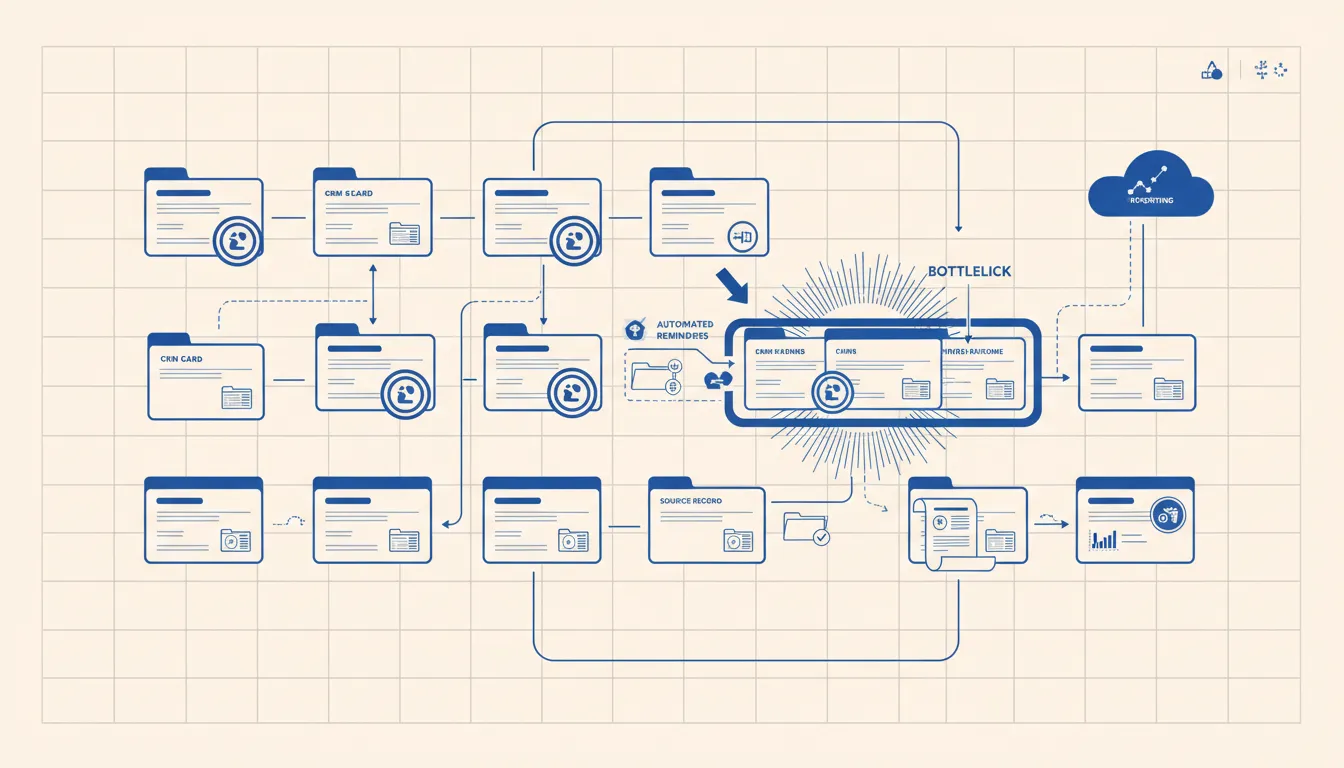
AI marketing automation tools should help a team turn market signals into controlled action and verified outcomes. They should not give the team one more place to log in, one more score to admire, and one more export to repair on Friday. I have built enough connectors to know that a new tab is not the same thing as progress.
On one advertising operations proposal, the team had six people covering 100 accounts. They were good at keeping campaigns running, but the volume left little time to identify trends or decide what to do differently. The useful answer was not another dashboard. It was a recurring analyst brief that gathered the evidence, named the changes, and put the decision in front of the team.
That experience hardened my view: the best marketing tool is the one that closes an operating loop. Features matter after the loop is clear.
Start with the marketing promise
Before I compare products, I write one sentence describing what must happen reliably.
A useful marketing promise might be:
- Every qualified inbound lead reaches the correct owner with enough context to act.
- Every campaign change has an approved goal, a recorded owner, and a measured result.
- Every customer signal updates the customer record once, not differently in three tools.
- Every published claim follows the approved source and review boundary.
- Every weekly report explains what changed, why it matters, and who owns the next decision.
This is the same process-first test I use for business process automation services. Marketing is not exempt from operating design just because the screens are colorful.
If the team cannot agree on the promise, software selection is early. The real problem may be attribution, ownership, offer clarity, or an undefined handoff. Buying automation at that point usually makes the disagreement run faster.
Separate the four jobs tools are being hired to do
Most AI marketing automation tools fit into four operating jobs. A single platform may cover more than one, but I still evaluate the jobs separately.
Channel execution
These tools change bids, budgets, audiences, placements, sends, or publication schedules inside a channel.
Google says Performance Max uses AI across bidding, budget, audiences, creative, and attribution, guided by the goals and inputs the advertiser provides. That last part matters. Channel automation can make thousands of small decisions, but the operator still defines the conversion, budget, exclusions, assets, and business goal.
I keep spending authority and publication authority explicit. A system may recommend a budget change without applying it. It may draft an ad without publishing it. It may pause a clearly broken campaign but route an ambiguous case to a person.
Customer and workflow records
These tools move leads, contacts, consent, lifecycle stages, tasks, and handoffs between the website, CRM, inbox, calendar, and delivery systems.
This is where duplicates and quiet disagreement become expensive. If a form says qualified, the CRM says new, and the email platform says customer, the AI does not have context. It has three conflicting records and enough confidence to make the conflict look deliberate.
I name one authoritative record for each consequential fact. Then I define which systems may propose, update, or only read that fact.
Content and creative production
These tools research, draft, adapt, review, and distribute copy or creative.
The buyer question is not how many assets the system can generate. It is whether every asset can be traced to an approved brief, claim source, audience, channel, and owner. More output is useful only when the review burden does not grow at the same rate.
My rule is to automate repeatable transformation before taste. Turning an approved long-form source into channel-specific drafts is a stable lane. Inventing a new market position from a blank prompt is not.
Reporting and decision support
These tools collect performance data, reconcile metrics, detect exceptions, and produce a brief for a person who owns the decision.
This is where I see the biggest gap between a feature and an operating system. A dashboard stores observations. A decision brief says what happened, why it matters, what is uncertain, and who should act.
My report automation scorecard starts with that difference. If nobody can explain what decision a report changes, automating the report is mostly faster decoration.
Build the control map before the tool stack
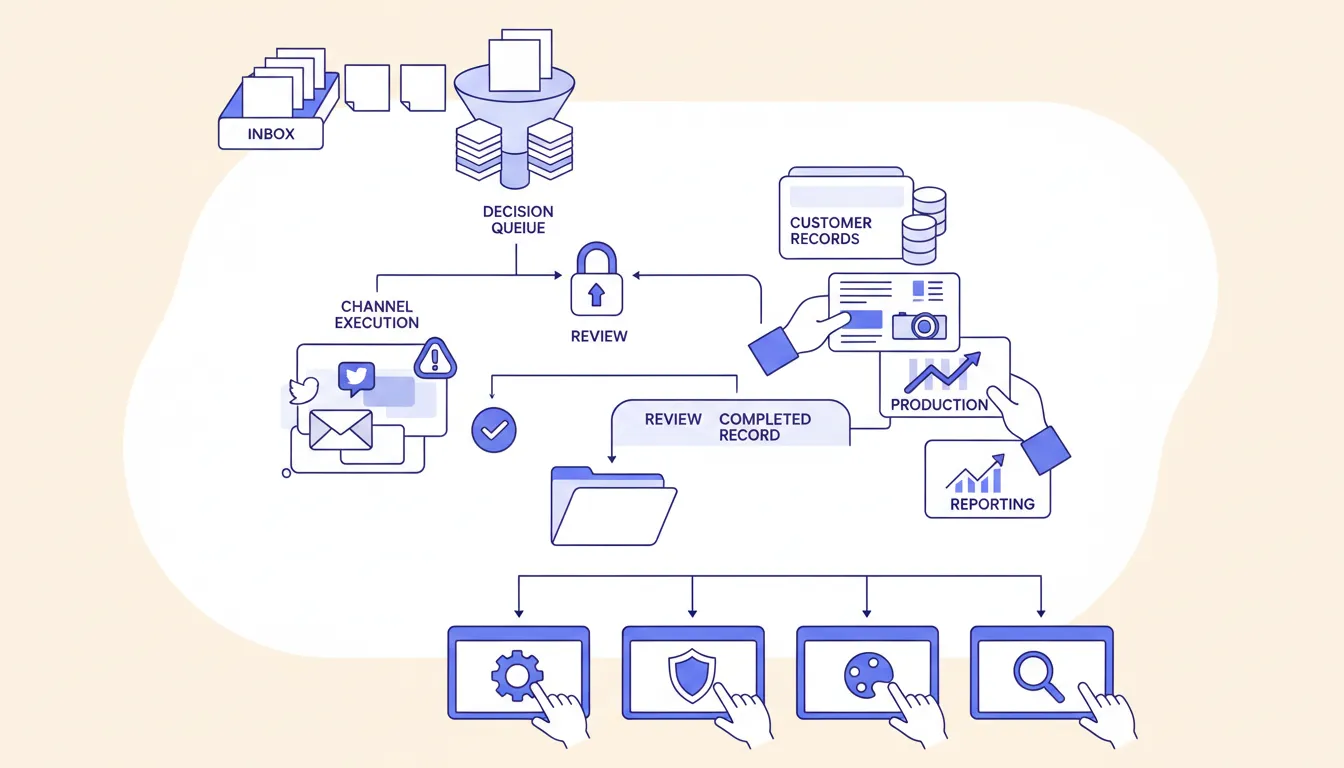
I use a compact control map before I let product demos set the architecture.
| Question | What I need to see |
|---|---|
| Business promise | The event or outcome the lane must produce |
| Trigger | The signal that starts the work |
| Source of truth | The system that owns each consequential fact |
| Authority | What the automation may recommend, draft, change, spend, or publish |
| Exception owner | The person who decides when the rules do not fit |
| Proof | The record showing that the promised event happened |
| Stop path | The way an operator can pause the lane without dismantling it |
| Recovery | The method for correcting and safely replaying failed work |
The operator authority test for AI workflows is especially important in marketing because tools can affect spend, public claims, customer communication, and compliance at the same time.
I prefer a system the business owns. Code, data, credentials, operating rules, and documentation should remain accessible without a permanent dependency on the builder. That does not mean every company should self-host everything. It means the operator should know what can be exported, stopped, replaced, and recovered.
Make measurement part of the design
A marketing automation cannot prove itself with its own activity log.
If the promise is qualified-lead routing, proof lives in the accepted CRM record and the ownership timestamp. If the promise is booked revenue, proof lives in the sales and payment records. If the promise is campaign learning, proof includes the conversion definition, spend window, change history, and enough context to separate a real signal from noise.
Google's guidance makes the dependency plain: website conversion measurement needs a connected data source, such as a site tag or linked analytics property. The campaign tool cannot repair a conversion definition that the business never settled.
I use reconciliation instead of trusting a green status. Expected leads versus accepted leads. Published assets versus approved assets. Recorded conversions versus authoritative business events. Every mismatch becomes an owned exception.
This is also why I like the pattern in the sales intelligence reporting system case study. Intake and campaign data become more useful when they meet in one report built around the operator's question, not when each source gets a separate chart.
Test one live lane before expanding
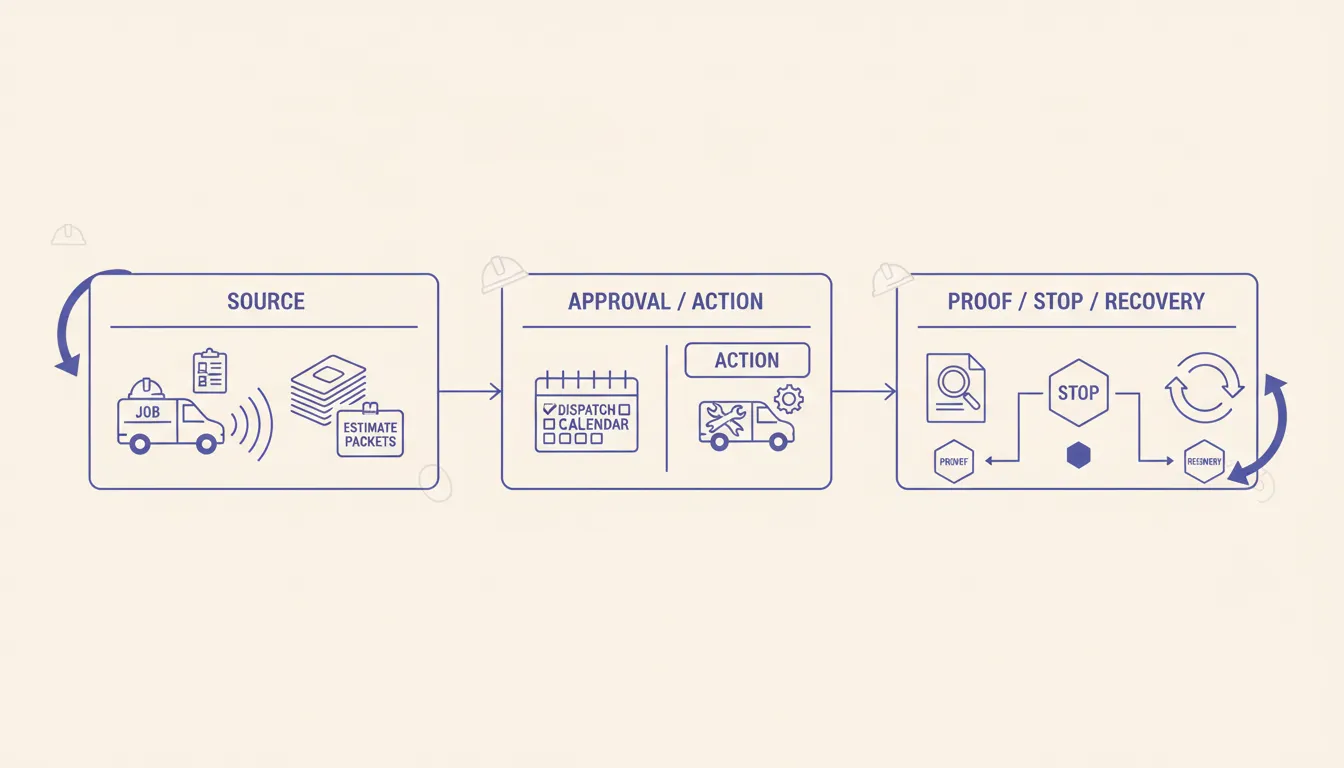
A vendor demo proves that a feature can run under demo conditions. It does not prove that the tool fits your records, authority, exceptions, or team habits.
I test one live lane:
- Choose one repeated marketing event with visible value.
- Define the source record and promised outcome.
- Assign a business owner and a technical owner.
- Set the authority boundary and exception rules.
- Run real records through the lane.
- Compare expected and actual outcomes.
- Test the stop and recovery paths.
- Review whether the lane changed a real decision or reduced a real delay.
The broader business automation software buying test uses the same principle. A narrow production lane tells me more than a long feature matrix because it exposes the actual integration and ownership cost.
NIST's AI Risk Management Framework treats trustworthiness as something organizations incorporate into the design, development, use, and evaluation of AI systems. I apply that as an operating habit. Risk review is not a document created after launch. It is part of choosing what the system may do and how the team will know when it is wrong.
When not to hire us for this
You do not need a custom build when one channel's native rule can keep the promise, the data already agrees, and a named owner can manage the exceptions. Use the native feature and keep the lane small.
You also should not hire us when the team wants AI to settle an unresolved strategy argument. Automation can route a lead, draft a variation, and assemble evidence. It cannot decide which customer the business wants, which promise it can keep, or which claim leadership is willing to defend.
A custom operating layer becomes useful when the promise crosses tools, the records disagree, the authority needs control, or the proof has to be assembled from several systems. In that case, the right automation service is not a replacement for the marketing team. It is the owned lane that gives the team reliable evidence and more room to make the decisions only they can make.
Frequently asked questions
What are AI marketing automation tools?
They are software systems that use AI to assist or automate marketing work such as campaign execution, content production, lead routing, personalization, reporting, and exception detection.
Which AI marketing automation tool should I choose first?
Choose the tool that closes the most expensive proven gap in one live operating lane. Start with the promised outcome, source record, owner, authority boundary, and proof before comparing product features.
Can AI marketing automation replace a marketing team?
It can remove repetitive collection, routing, drafting, and reporting work. People should still own strategy, claims, brand judgment, budget authority, and consequential exceptions.
How do I measure whether marketing automation works?
Measure the business event the lane promises, then reconcile it against the authoritative record. Track missing events, duplicates, exceptions, operator time, and the time between signal and action.
When should I not buy another marketing automation tool?
Do not buy one when the current problem is unclear ownership, inconsistent data, an undefined conversion, or a process that changes every week. Fix the operating boundary first.
FAQ
Frequently asked questions
- 01What are AI marketing automation tools?
- They are software systems that use AI to assist or automate marketing work such as campaign execution, content production, lead routing, personalization, reporting, and exception detection.
- 02Which AI marketing automation tool should I choose first?
- Choose the tool that closes the most expensive proven gap in one live operating lane. Start with the promised outcome, source record, owner, authority boundary, and proof before comparing product features.
- 03Can AI marketing automation replace a marketing team?
- It can remove repetitive collection, routing, drafting, and reporting work, but people should still own strategy, claims, brand judgment, budget authority, and consequential exceptions.
- 04How do I measure whether marketing automation works?
- Measure the business event the lane promises, then reconcile it against the authoritative record. Track missing events, duplicates, exceptions, operator time, and the time between signal and action.
- 05When should I not buy another marketing automation tool?
- Do not buy one when the current problem is unclear ownership, inconsistent data, an undefined conversion, or a process that changes every week. Fix the operating boundary first.