Field note
Jun 8, 2026
AI operating system for operators
An AI operating system is not one more chatbot. For operators, it is the control layer that connects records, decisions, approval gates, and proof of work.

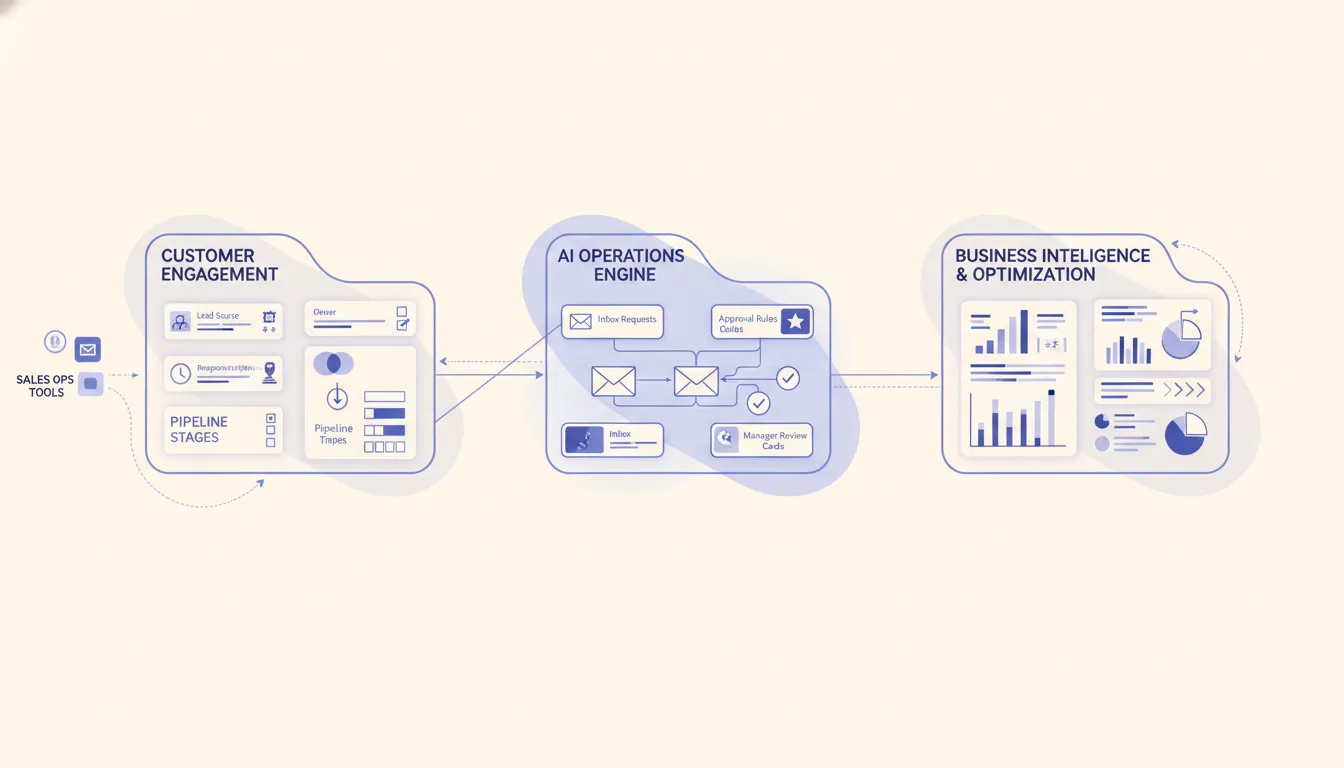
Most AI operating system conversations start in the wrong place.
They start with model names, agent frameworks, browser control, prompt libraries, tool calling, and vendor demos. That may matter to the build team later. It is not the first question for an owner, operator, or revenue leader.
The operator question is simpler and harder: can this layer help the business keep promises across messy systems without creating a new place for confusion?
A growing company already has an informal operating system. Leads arrive through forms, ads, referrals, inboxes, texts, and marketplaces. Work moves through CRMs, spreadsheets, project boards, calendars, accounting tools, shared drives, and group chats. Managers carry missing context in their heads. Exceptions get handled by whoever notices first.
Adding AI to that environment can help. It can also make the mess faster.
Moore IQ treats an AI operating system as a governed control layer, not a magic replacement for the tools a team already uses. The layer should read from the systems of record, prepare decisions, route exceptions, draft next actions, and record proof. Before recommending a build, the AI Operations X-Ray looks for the places where source-of-truth rules, ownership, and approvals are already weak.
The AI operating system is the layer between records and decisions
A useful AI operating system does not begin as one giant agent that runs the company. It begins as a narrow layer between records and decisions.
The records might live in a CRM, scheduling tool, project board, inbox, applicant tracking system, ticketing system, or finance platform. The decisions might be ordinary daily calls:
- Which lead needs a response now?
- Which job is blocked by missing information?
- Which candidate is ready for scheduling?
- Which vendor missed the service window?
- Which customer promise is at risk?
- Which message needs manager approval before it goes out?
The AI layer should make those decisions easier to see and safer to handle. It should not hide the source record, invent status, or pretend every exception can be automated.
That is why workflow management for operators is the better starting point than a platform comparison. If the team cannot define where work enters, who owns the next action, and what proves completion, the AI layer has no stable operating model to support.
The first version can be boring and valuable. It can watch stale records, summarize account context, classify incoming requests, prepare draft replies, open manager review queues, and show the reason an item is blocked. Those jobs reduce daily drag without giving AI unchecked authority.
The source-of-truth map comes before the agent map
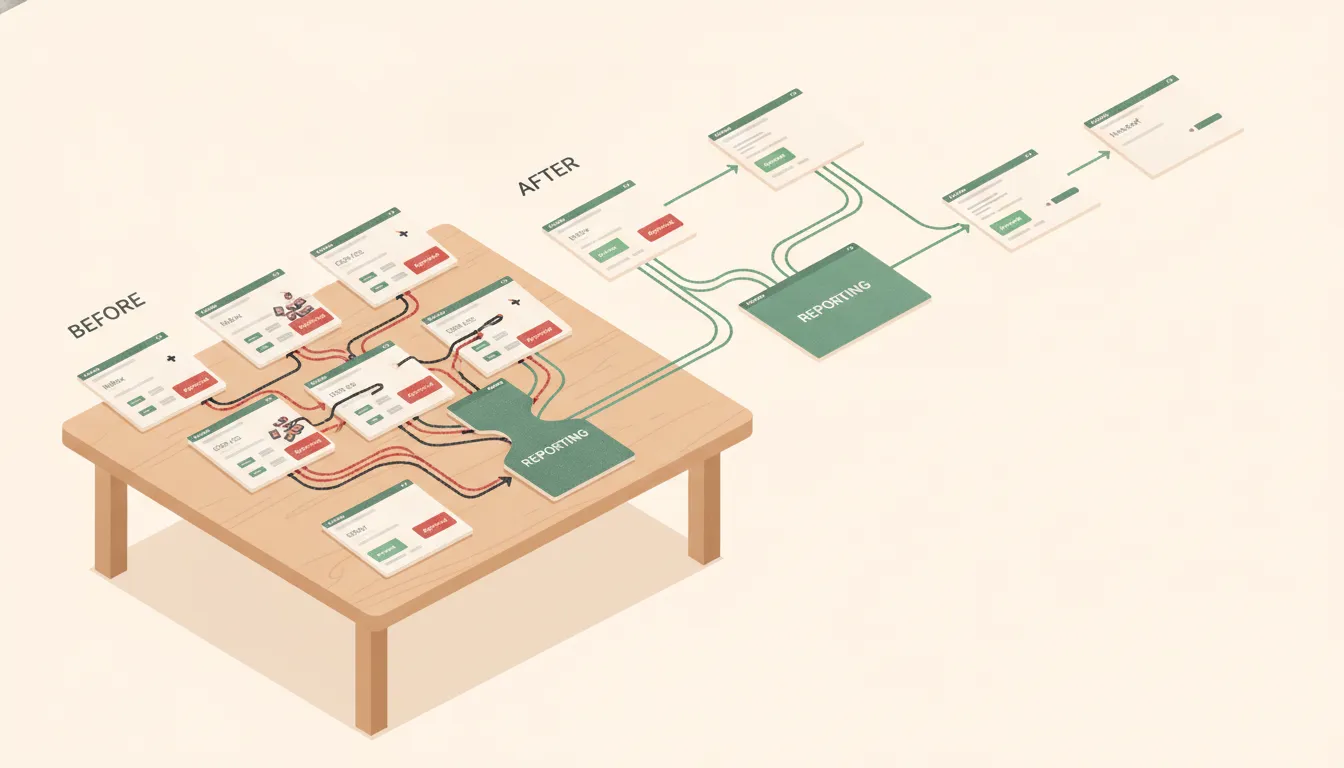
Many AI operating system projects fail because the team maps agents before it maps records.
That order is backwards.
The business needs to know which system owns each kind of truth. The CRM may own the relationship. The project board may own job stage. The scheduling tool may own appointments. Accounting may own invoice readiness. The inbox may own customer communication. A human manager may own exceptions above a certain risk threshold.
The AI layer should respect those boundaries.
This is similar to the control thinking behind the NIST AI Risk Management Framework: the organization needs to know where risk appears, who governs it, and how the system is measured before it is trusted with broader action.
If AI updates a CRM status based on a project note, which system wins when the two disagree? If AI drafts a customer reply from an old message thread, where does it find the latest promise? If AI summarizes a job as complete, what field proves the work was actually done?
Those are operating design questions. They are not prompt-engineering questions.
The best companion to an AI operating system plan is a business process architecture for operators map. It should show systems, owners, handoffs, exception triggers, and proof fields. Only then should the team decide which AI assistants, automations, or integrations belong in the flow.
When the work needs durable queues, retries, and system-to-system handoffs, a workflow tool may sit underneath the AI layer. That is where n8n consulting can be useful, especially when the goal is not a flashy demo but a reliable operating path that survives missed fields, API limits, and real employee behavior.
The buyer risk is uncontrolled action, not weak intelligence
Most leaders worry that AI will be too dumb. The more common operating risk is that AI is allowed to act before the business has defined control.
A draft is different from a sent message. A recommendation is different from a stage change. A summary is different from proof. An exception flag is different from an approval.
An AI operating system should make those boundaries explicit.
The same idea shows up in quality systems such as ISO 9001, where repeatable work depends on responsibilities, evidence, and improvement loops rather than good intentions alone.
A practical governance model separates four levels of authority:
- Observe: AI reads records and reports what changed.
- Prepare: AI summarizes context, drafts messages, or proposes next actions.
- Recommend: AI scores urgency, risk, or priority for manager review.
- Act: AI changes records, sends messages, creates tasks, or moves work forward.
Most companies should spend more time in levels one through three than they expect. That is not slow. It is how the team learns which decisions are routine, which need approval, and which are too risky to automate.
The workflow optimization scorecard is useful here because it forces the business to rank broken handoffs before buying or building a wider system. If the biggest problem is missing ownership, AI action will only move the confusion faster. If the biggest problem is stale visibility, an observer and review queue may create value before any autonomous action is approved.
Design the weekly review before the daily automation
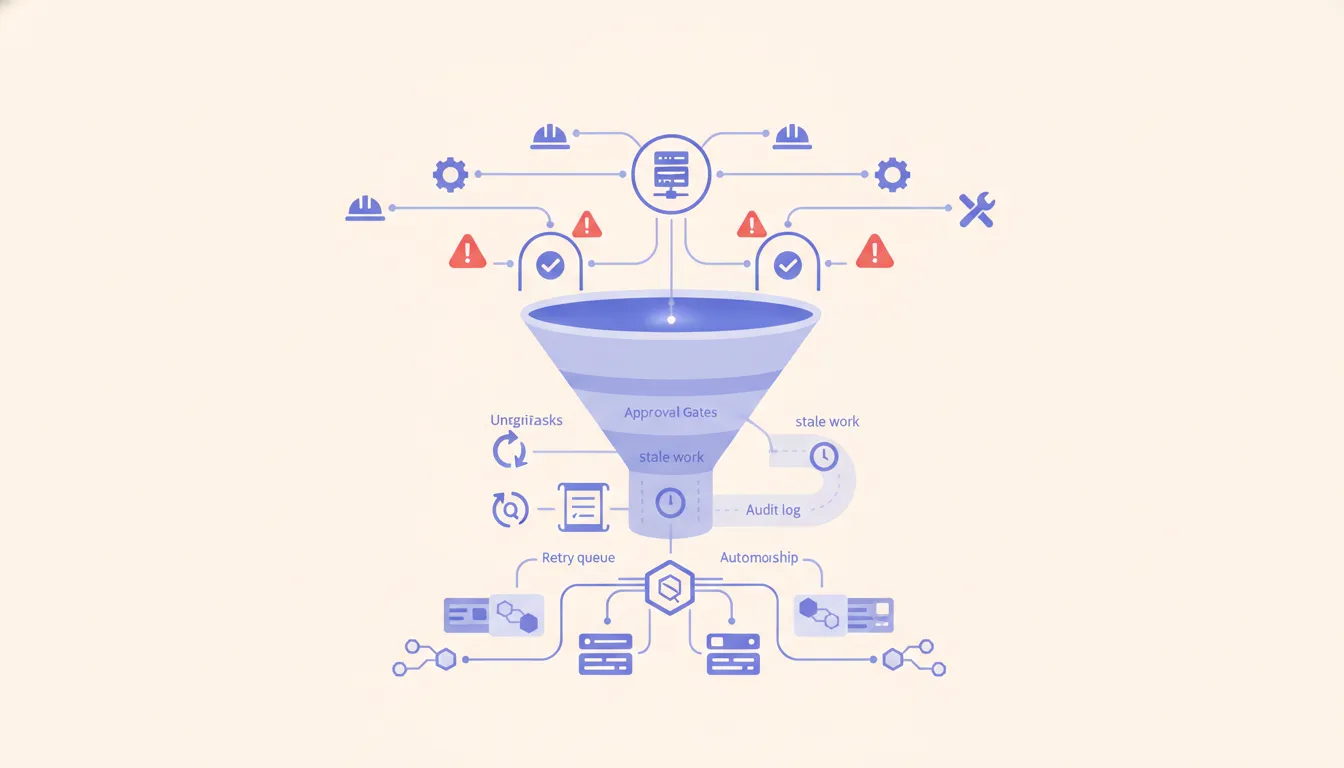
An AI operating system should have a weekly review habit before it has broad autonomy.
The review does not need to be complex. It needs to answer the questions that expose whether the system is helping operations or just producing more activity:
- Which stale items did AI catch before a customer or candidate complained?
- Which drafts were approved, edited, rejected, or escalated?
- Which records disagreed across systems?
- Which exceptions had no clear owner?
- Which automations failed because source data was missing or unreliable?
- Which decisions are safe enough to move from prepare to recommend, or from recommend to act?
This is where the AI operating system becomes a management system. It creates a feedback loop between daily work and operating design.
Without that loop, teams tend to add more prompts, more agents, and more notifications. With the loop, they improve the rules. They clarify ownership. They remove bad triggers. They tighten approval gates. They find the next narrow workflow worth automating.
For leaders evaluating AI in customer, employee, or operational processes, the OECD AI principles are a useful reminder that accountability and transparency are operating requirements, not legal language to add after launch.
The same principle applies to role design. An AI assistant should have a job, memory, review cadence, and boundaries. The agentic coworker pattern is a useful frame because it asks what the assistant owns, what it remembers, where it reports, and when a human should intervene.
What to build first
The safest first build is not a company-wide AI operating system. It is one operating promise with a visible control loop.
Good first promises include:
- Every qualified lead gets a same-day response or manager-visible exception.
- Every candidate handoff has a next owner and aging threshold.
- Every job closeout has proof before billing is triggered.
- Every dispatch issue has a clear escalation lane.
- Every customer message with risk language gets human review before sending.
The build should include five pieces:
- Intake: the exact events, messages, or records that enter the system.
- Source of truth: the system that owns the live record.
- Decision rule: how AI classifies, prioritizes, or prepares the next step.
- Approval gate: what AI may draft, recommend, or act on.
- Proof: the field, note, timestamp, file, or status that confirms the promise was handled.
That is enough to create value and learn safely. It also gives leadership something concrete to judge. Did response time improve? Did exceptions surface earlier? Did managers spend less time chasing context? Did fewer promises depend on memory?
If the answer is yes, expand the operating system one promise at a time. If the answer is no, the issue is usually not the model. It is the operating design around the model.
When not to hire us or build this yet
An AI operating system is not worth automating when the team cannot name the owner of the current workflow.
That is a sign to pause. If every exception already depends on a founder, office manager, or senior dispatcher interpreting the situation from memory, AI will not fix the operating gap by itself. It will create faster summaries of unclear work.
Moore IQ would rather start with the source-of-truth map, aging rules, and weekly review habit than sell a wider build into a process nobody owns. In some cases, the best first project is not automation. It is deciding which system owns the record, which human owns the next action, and what proof closes the loop.
The Moore IQ point of view
AI operating systems will keep getting more capable. That does not remove the need for operator discipline. It raises the stakes.
The companies that win will not be the ones with the most agents. They will be the ones that know which records matter, which decisions need approval, which handoffs break revenue, and which proof points leadership can trust.
If your team is considering an AI layer across sales, recruiting, service, dispatch, or back-office operations, start with the operating map before the vendor shortlist. If you want help finding the safest first promise to automate, book a consultation and bring the messy workflow. The mess is the point.
FAQ
Frequently asked questions
01What is an AI operating system for a business?
For operators, an AI operating system is a control layer that reads from the systems where work already happens, helps route and prepare decisions, keeps approval gates clear, and records proof of completion. It is not just a chatbot or a collection of disconnected automations.
02Should an AI operating system replace existing software?
Usually no. The safer first move is to keep the CRM, inbox, project system, and finance tools in place while adding a governed layer for intake, exceptions, follow-up, reporting, and manager review. Replacement only makes sense after the source-of-truth rules are proven.
03Where should a company start with an AI operating system?
Start with one promise that already matters, such as lead response, candidate follow-up, job closeout, dispatch escalation, or billing readiness. Map the record owner, next-action owner, exception triggers, approval rules, and proof fields before adding automation.
04What makes an AI operating system risky?
Risk rises when AI can change records, send messages, approve exceptions, or summarize status without clear ownership and audit trails. The system should make human approval easier before it is allowed to act on its own.