Field note
Jun 5, 2026
Workflow management for operators
Workflow management should give operators clear ownership, exception lanes, and proof of completion before it turns into another task board.

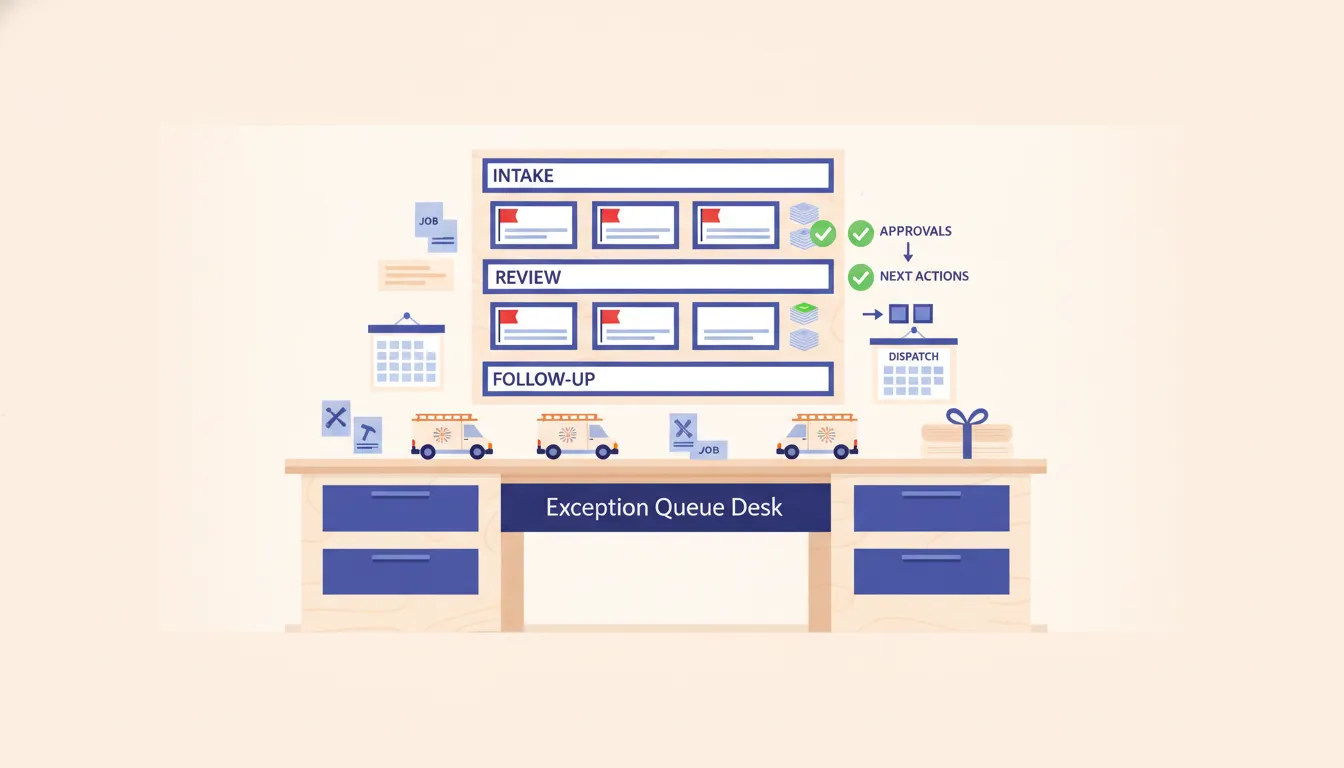
Workflow management is often treated as a software category. That is where many teams get stuck.
A manager sees work scattered across inboxes, spreadsheets, CRMs, calendars, project boards, and group chats. The obvious response is to search for a better workflow management tool. The harder and more useful question is whether the business has a workflow management model at all.
The model should answer the questions software cannot answer by itself:
- Where does work enter?
- Which system owns the truth?
- Who owns the next decision?
- What happens when the normal path breaks?
- What proves the work finished?
Without those answers, the new system becomes a cleaner place for old confusion. Tasks move around, notifications increase, and leadership still finds out about problems through customer complaints, missed follow-ups, or end-of-week spreadsheet reviews.
Moore IQ looks at workflow management as an operating discipline first and an automation project second. The AI Operations X-Ray is built around that idea. Before recommending a tool, integration, or AI assistant, we want to see where ownership, records, and exception paths are breaking.
Start with one business promise
Workflow management becomes practical when it starts with a promise the business already makes.
A contractor promises that estimate requests will not sit untouched. A recruiting team promises that qualified candidates will not disappear between screening and scheduling. A service team promises that urgent customer issues will reach the right person before the window closes. A home builder promises that job details, selections, change orders, and client communications will not live in four disconnected places.
That promise is the workflow boundary. Formal workflow notation such as BPMN can help when teams need detailed maps, but operators should not confuse notation with the decisions that make work reliable.
Do not start by listing every task in the company. Start with the promise that is most painful when it fails. Then define the operating path:
- Intake: What starts the work?
- Source of truth: Where does the record live?
- Owner: Who owns the next action?
- Handoff rule: What must be true before the work moves?
- Exception lane: What breaks the normal path?
- Proof: What field, timestamp, status, file, or note shows completion?
This is where business process architecture for operators and workflow management meet. The architecture names the systems and owners. The workflow model makes the daily movement visible enough to manage.
Decide whether the problem is visibility, ownership, or execution
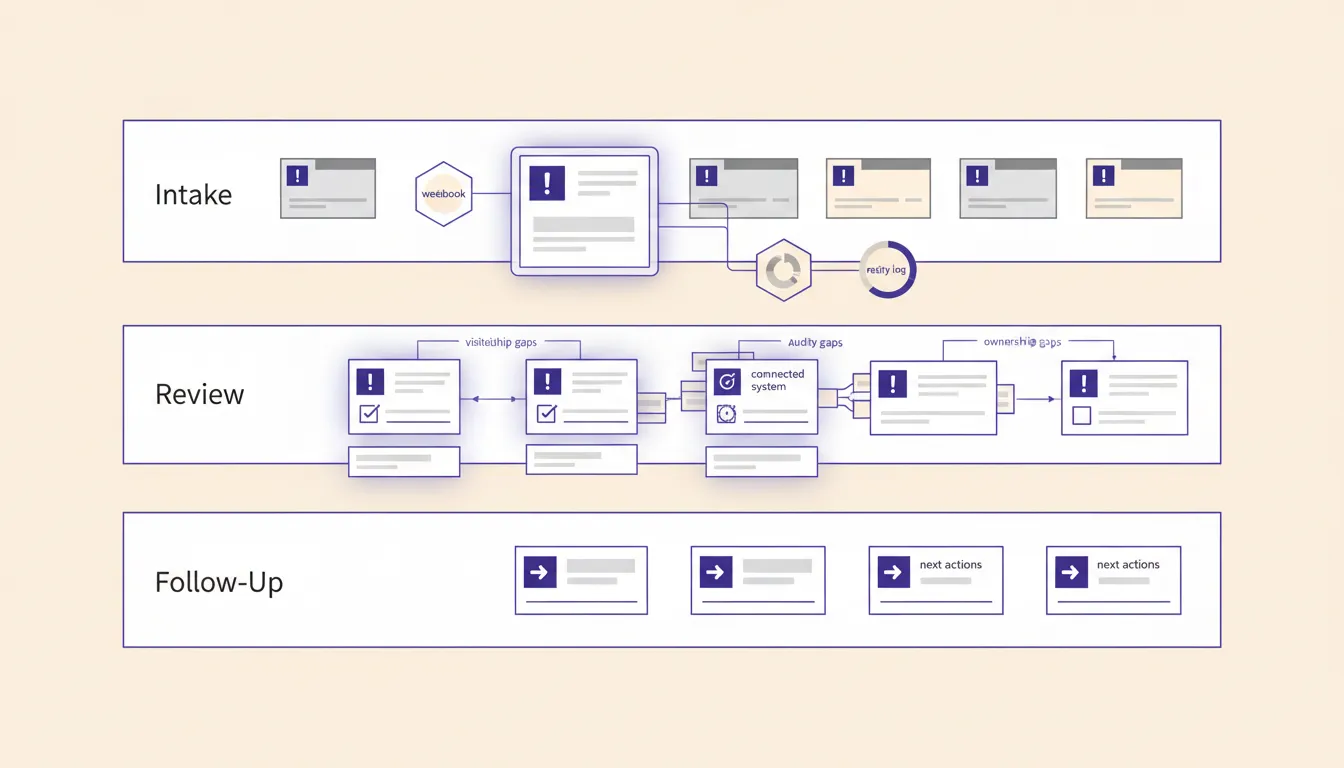
Many workflow projects fail because the team treats every issue as a visibility problem.
Visibility matters. Managers need to see stale leads, aging tickets, unfinished estimates, overdue approvals, and missing handoffs. But visibility does not fix unclear ownership.
If a task is visible but nobody owns the next decision, the board is not the bottleneck. The operating model is. If a record is visible in two systems and both teams believe their system is authoritative, the workflow tool is not the bottleneck. The source-of-truth rule is. If a request enters through five channels with no intake standard, dashboards will show chaos more neatly, not reduce it.
A useful workflow management review separates the problem type:
- Visibility gap: The work exists, but leadership cannot see it in time.
- Ownership gap: The work exists, but no one clear person owns the next decision.
- Execution gap: The owner is clear, but the handoff, reminder, data, or system support is weak.
- Exception gap: The normal path works, but unusual cases disappear.
- Proof gap: Work is marked done without evidence that the promise was met.
Each gap points to a different fix. Visibility gaps may need reporting or alerting. Ownership gaps need role and status design. Execution gaps may need workflow automation. Exception gaps need escalation lanes. Proof gaps need fields, attachments, approvals, or audit trails.
That is why the workflow optimization scorecard should come before a long implementation plan. It helps decide whether the next move is cleanup, automation, integration, or a smaller pilot.
Separate routine flow from exception flow
Workflow management has two jobs. It should move routine work efficiently, and it should make exception work impossible to ignore.
Routine work follows known rules. A complete lead should route to the right owner. A qualified candidate should move to scheduling. A service request with all required fields should create the right task. A completed job should trigger the billing step. These paths are good candidates for automation once the rules are stable.
Exception work is different.
A lead has missing information. A customer is angry. A candidate is qualified but unavailable. A vendor missed the response window. A job is complete in the project board but not ready for invoicing. A manager needs to approve a risky message before it leaves the company.
Those items should not sit beside routine tasks with the same priority and the same reminders. They need their own lane, owner, threshold, and review cadence.
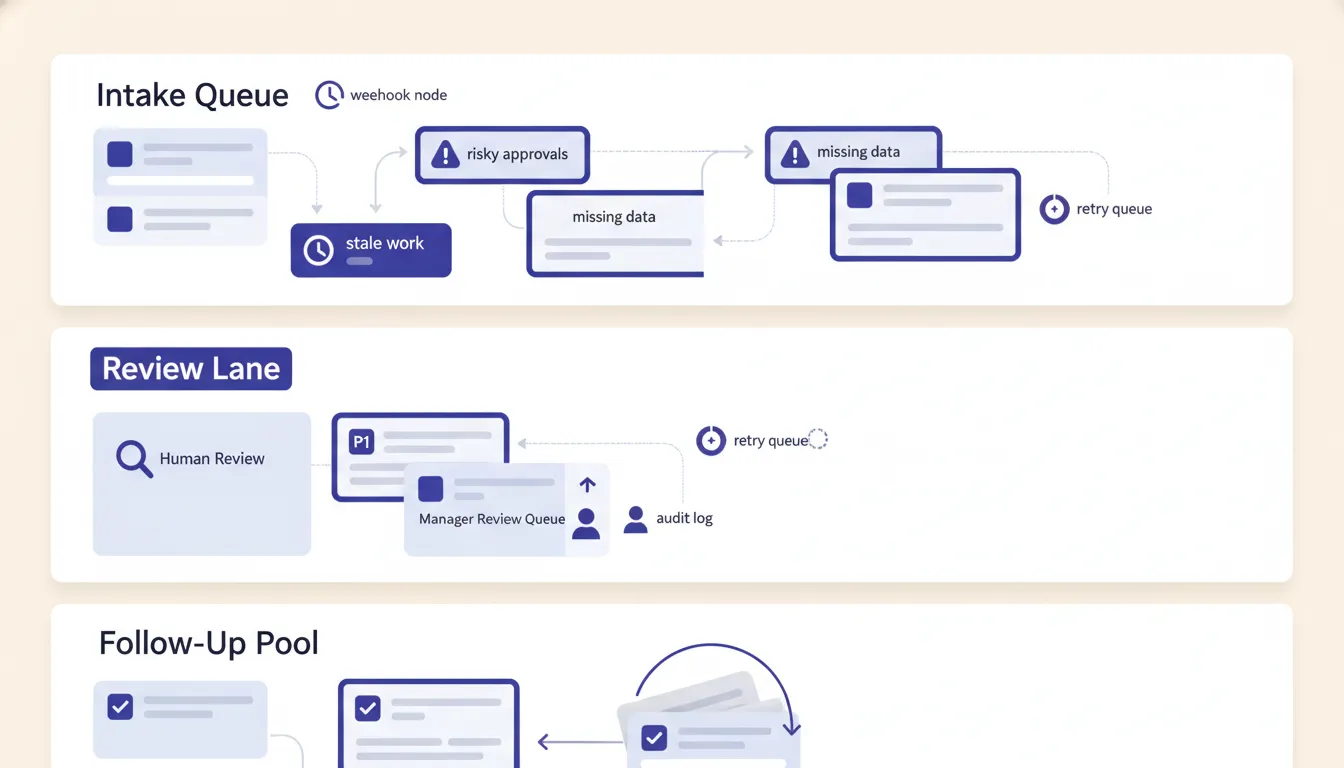
The exception lane should define:
- Which conditions create an exception.
- Which role owns the review.
- What context must be shown before a decision.
- Which actions can be automated.
- Which actions require approval.
- What proof is recorded after the decision.
This is where automated workflow benefits become measurable. The gain is not that software touched more tasks. The gain is that fewer customers chase status, fewer employees guess, fewer managers rescue invisible work, and fewer handoffs depend on memory.
Do not buy workflow software before the source-of-truth decision
The most expensive workflow management mistake is buying a tool before deciding which records matter. Even broad process standards such as ISO 9001 point back to the same operator concern: repeatable work needs defined responsibilities, evidence, and improvement loops.
A CRM may own the lead. A project management system may own the job. Accounting may own invoice status. A scheduling system may own appointments. A shared inbox may own customer communication. None of that is a problem if the handoff rules are explicit.
It becomes a problem when every team believes its tool is the source of truth.
Before buying or rebuilding workflow software, define the source-of-truth model:
- Which system owns intake?
- Which system owns customer or account identity?
- Which system owns operational status?
- Which system owns financial status?
- Which system owns communication history?
- Which system shows management exceptions?
A home builder does not need a prettier lead list if the real issue is that sales, selections, production, and billing each track the job differently. The same logic behind CRM for home builders applies broadly. Operators need systems that track the work promise, not just the first contact.
Once the source-of-truth model is clear, implementation gets safer. A workflow tool can route tasks. An integration can sync records. An AI assistant can summarize context. A dashboard can show stale work. But each system has a role, and each handoff has a rule.
For contractor teams with field work, estimates, dispatch, and office follow-up, this is also why AI automation for trades contractors should begin with operating flow rather than generic automation ideas.
Where AI fits in workflow management
AI can make workflow management more useful, but only when it has boundaries. The same governance logic appears in the NIST AI Risk Management Framework: teams need clear context, risk awareness, and controls before automated systems are trusted inside operations.
Good uses include:
- Classifying inbound requests.
- Summarizing customer or candidate history.
- Flagging stale records.
- Drafting next actions for approval.
- Comparing mismatched statuses across systems.
- Preparing a manager review queue.
- Explaining why a workflow item is blocked.
Poor uses include letting AI decide ownership, hide exceptions, send high-risk messages without approval, or resolve conflicting records without a source-of-truth rule.
This is the difference between responsible workflow support and automation theater. AI should reduce manager search time, improve follow-up quality, and surface operational risk. It should not become another invisible layer that nobody owns.
When the model is clear, implementation can be narrow. A team may need a queue, a status model, an integration, a daily exception report, or a lightweight n8n workflow. The implementation matters, but it should follow the operating design. If that is the next bottleneck, n8n consulting can help translate the model into a workflow that is observable, recoverable, and tied to business outcomes.
A practical workflow management review
Use this review before starting a workflow management project:
- Pick one business promise that is currently leaking.
- Name the intake source and source of truth.
- Name the owner for each step and exception.
- Define the handoff rule between systems or roles.
- Define what creates a stale item.
- Define what creates an exception.
- Define the proof of completion.
- Decide which parts should be automated, assisted, reported, or left human.
The output should be simple enough for a manager to use. If the review produces a complicated diagram nobody can operate, it has missed the point.
A useful workflow management model gives operators three things: fewer invisible handoffs, faster exception review, and better proof that the business kept its promise. Software can support that model. It should not replace it.
FAQ
Frequently asked questions
01What does workflow management mean for operators?
Workflow management means the rules, systems, owners, and proof points that move work from intake to completion. For operators, the goal is not just task visibility. The goal is reliable handoffs, clear exceptions, and fewer promises lost between tools.
02Is workflow management software enough to fix broken processes?
Usually not. Software can make work visible, but it cannot decide which system owns the truth, who owns exceptions, or what proof means. Those decisions should be made before implementation.
03Where should a workflow management project start?
Start with one painful promise such as lead response, dispatch, candidate follow-up, billing closeout, or vendor coordination. Map the intake source, owner, handoff rule, exception lane, and proof field before changing tools.
04How can AI help workflow management?
AI can classify requests, summarize context, flag stale records, draft next actions, and prepare manager review. It should support a defined workflow model rather than decide ownership or risk on its own.