Field note
Updated Oct 10, 2026
Dealership Texting: How It Should Work
Dealership texting works best when it helps you reply fast, make the next step clear, and save the conversation where your sales process can use it. It should not be random messages from a personal phone or a stream of vague follow ups.

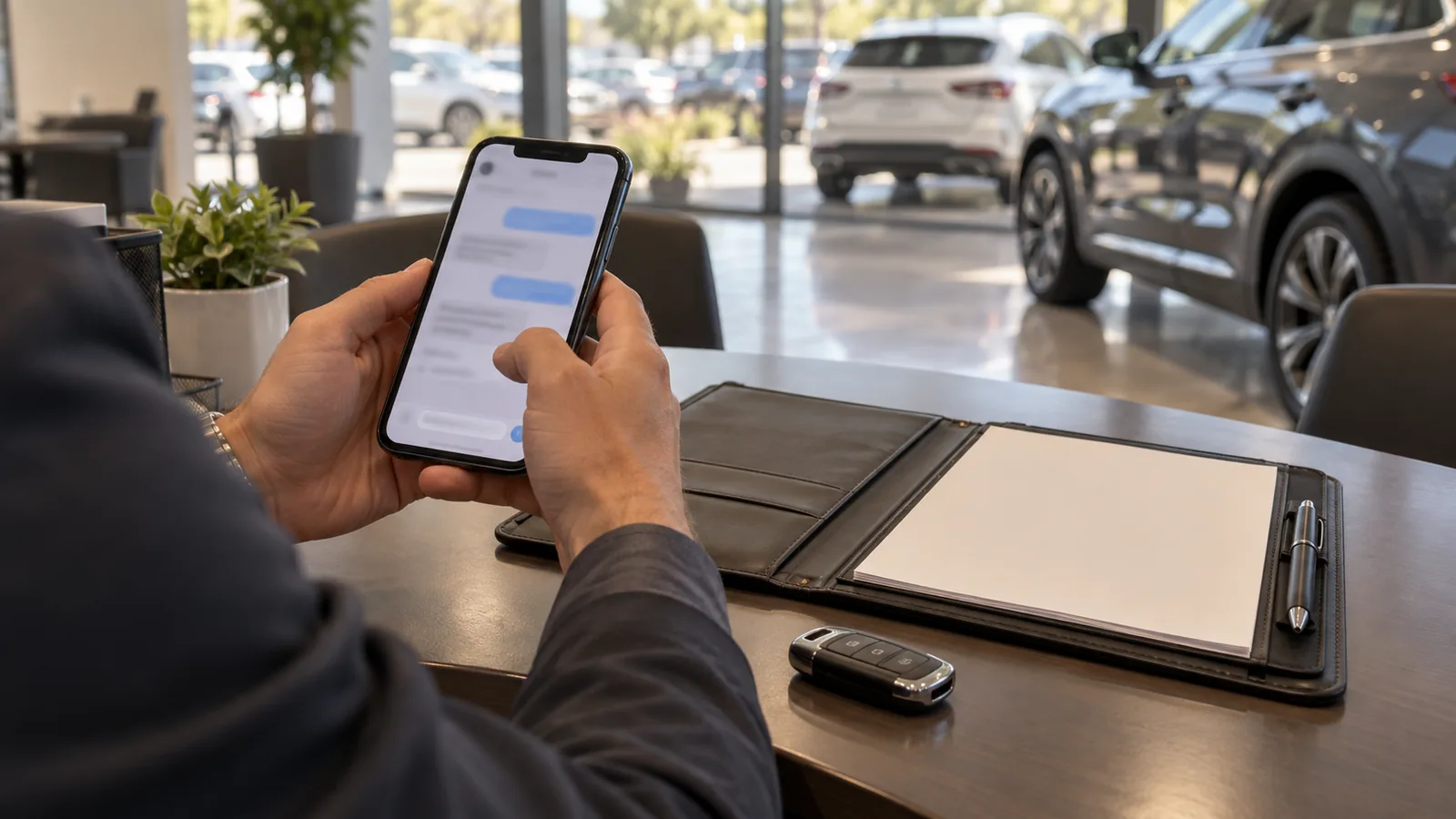
Dealership texting works best when it helps you reply fast, make the next step clear, and save the conversation where your sales process can use it. It should not be random messages from a personal phone or a stream of vague follow ups.
Use texting for web leads, missed calls, appointment reminders, trade-in questions, finance next steps, and no-reply follow up. Keep each message short, useful, and tied to one clear action.
By Damian Moore
Dealership texting in plain English
Dealership texting means sending text messages between your store and shoppers, leads, or customers about sales and follow up. For a used car dealer, that can include a reply to a form lead, a missed call message, an appointment reminder, or a quick answer about a vehicle.
Auto dealership text messaging works because many shoppers can answer a short text faster than they can take a call. But the value is not just the text itself. The value comes from knowing who replied, what they asked, and what should happen next.
A good sms dealership setup keeps the conversation connected to the lead, not trapped on one person’s phone.
Where texting helps a dealership most
Texting helps most when timing matters and the next step is simple. Missed calls and web leads are two common places where a fast, clear reply can keep the conversation moving.
Use dealership texting for:
- New web leads asking about a vehicle
- Missed calls when staff are busy
- Appointment reminders before a visit
- Trade-in questions, such as photos, mileage, or payoff details
- Finance next steps, such as asking if the buyer wants to talk through options
- No-reply follow up after a shopper goes quiet
The goal is not to text everyone all day. The goal is to give the shopper an easy way to answer and give your staff a clear next action.
What a good dealership text should say
A good dealership text is short, clear, and easy to answer. It should tell the shopper who you are, why you are texting, and what you need from them.
Most good texts have four parts:
- Your name or store name
- The vehicle or reason for the message
- One clear question or next step
- A simple way to reply
For example, do not write, “Just following up.” That makes the shopper work too hard.
Write something like, “Hi, this is Damian at the store. I saw your request on the 2021 Camry. Are you looking to see it today or tomorrow?”
That message is clear. It gives the shopper a choice. It also helps your staff know what to do next.
Dealership texting examples by situation
Use these examples as a starting point. Change the words so they sound like your store, but keep each text focused on one next step.
| Situation | Useful text example |
|---|---|
| New web lead | Hi, this is Damian at the store. I saw your request on the 2020 Accord. Is there a time today I can answer questions or set up a quick look? |
| Missed call | Hi, this is Damian at the store. I missed your call a few minutes ago. Were you calling about a vehicle, a trade, or financing? |
| Trade-in question | Hi, I can help with the trade. Can you send the mileage and a few photos when you have a minute? |
| Appointment reminder | Hi, this is a quick reminder for your visit today to see the SUV. Does the time still work for you? |
| Finance next step | Hi, I can help with the next finance step. Do you want to talk through payment options before you come in? |
| No reply | Hi, just checking once more on the Camry. Are you still interested, or should I close the loop for now? |
The pattern is simple. Name the reason, ask one question, and make the reply easy.
What to avoid with dealership texting
Dealership texting should not become spam or random follow up. If the shopper did not ask for help, does not know why you are texting, or keeps getting the same message, the process is broken.
Avoid these common problems:
- Sending vague texts like “Any update?”
- Sending too many messages with no clear reason
- Texting from personal phones with no record of the reply
- Letting two people message the same lead at once
- Leaving staff unsure who owns the next step
- Ignoring the texting rules that apply to your store
Keep the message useful. Keep the timing reasonable. Keep the reply connected to the customer record or sales task.
How texting should connect to lead follow up
Text replies should tie back to your lead record, task list, or sales process. If a shopper replies “tomorrow works,” someone needs to see it, own it, and move the lead to the right next step.
A simple flow can look like this:
- A shopper sends a form lead on a vehicle.
- Your system or staff sends a short text asking when they want to talk or visit.
- The shopper replies with a time or question.
- A task is created for the right person.
- The lead moves to the next step, such as appointment set, trade info needed, or finance follow up.
If your dealer systems do not talk to each other well, I often look at simple connection points first. That may include a lead form, a sheet, a CRM, or a dealer system export. I wrote more about this in DMS integration with n8n and CSV exports.
For dealers that need a clearer follow up process after a text, this also ties into sales pipeline software for independent dealers.
How I can help
I help used car dealers find where leads slow down, where replies get missed, and where follow up depends too much on memory. Dealership texting is often one part of that bigger workflow.
With an X-Ray scan, I review how a lead comes in, how it gets answered, where the reply goes, and what tells staff to take the next step. I look for simple fixes first, such as routing missed calls, saving text replies, creating follow up tasks, or connecting forms to the sales process.
If the setup needs custom automation, I can also help as a workflow automation consultant.
If you want texting to support your sales process instead of creating more loose ends, start with automation for used car dealers. You can use the X-Ray scan or contact form to show me how leads move now, and I will look for the places where missed calls, web leads, texts, and follow up should connect.
FAQ
Frequently asked questions
01What is dealership texting?
Dealership texting is the use of text messages between your store and shoppers, leads, or customers. It can help with new leads, missed calls, appointment reminders, trade questions, and follow up. The messages should be saved and tied to the sales process.
02How should a dealership text a new lead?
Text the shopper soon, keep it short, and mention the vehicle or request. Ask one clear question, such as whether they want to see the car today or talk through details first. Do not send a vague message that makes them guess why you are texting.
03What should a dealership text after a missed call?
Send a simple message that says you missed the call and asks what they needed. For example, ask if they were calling about a vehicle, trade, or financing. This gives the shopper an easy way to restart the conversation.
04How can car dealers keep text replies from getting lost?
Do not leave replies trapped on one phone. Connect messages to the lead record, task list, or sales process so the right person can see them. Each reply should have an owner and a next step.
05Can dealership texting connect to sales follow up?
Yes. A text reply can trigger a task, update a lead status, or move the shopper to the next step. That is where texting becomes more useful than a stand-alone message.