Field note
Jul 28, 2026
AI automation manager: the operator ownership test
An AI automation manager should own workflow outcomes, approval boundaries, exceptions, cost, and recovery. Use this operator test before assigning or hiring the role.

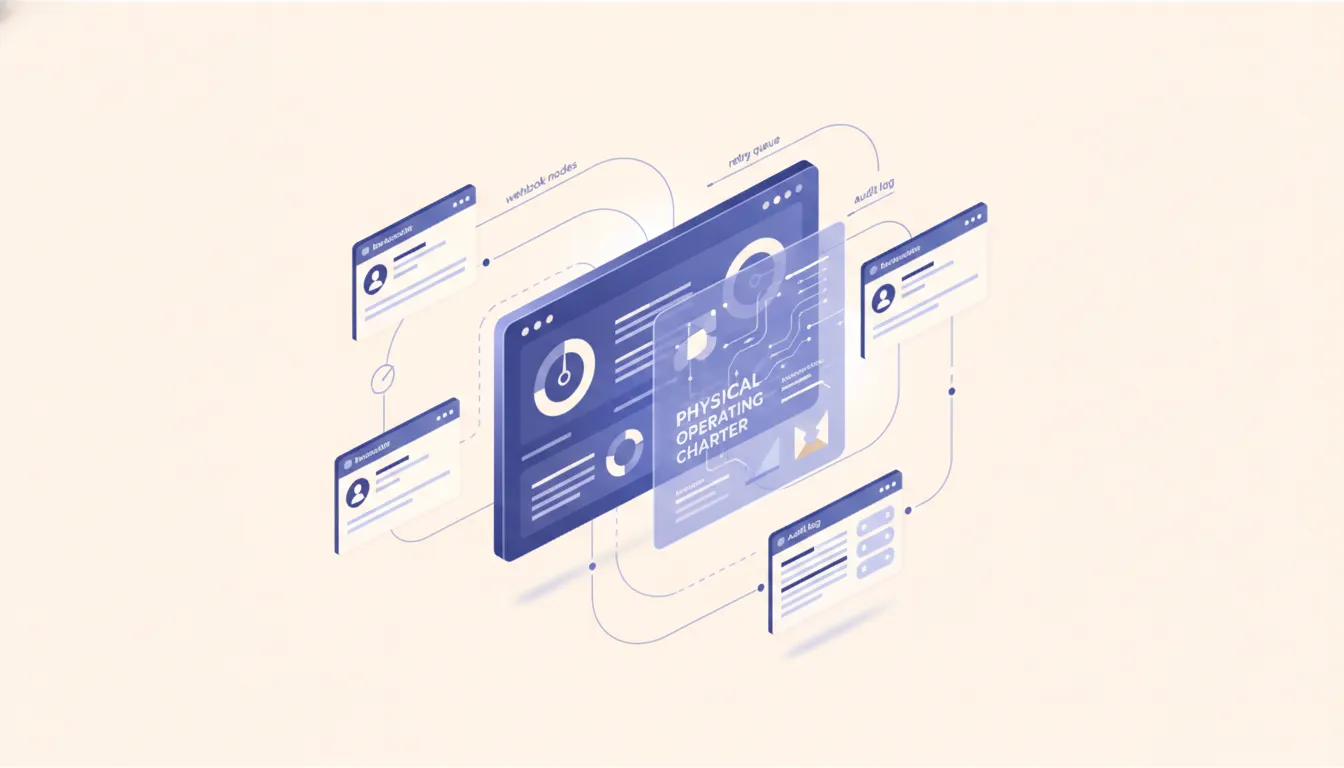
An AI automation manager should make automated work easier to trust, easier to stop, and easier to improve. The role is not a tool collector. It is the named owner for the business outcomes, approval boundaries, exceptions, costs, and recovery plans around automation.
I have built more than 500 production-grade workflows. The pattern I keep seeing is simple: the first workflow can survive with a builder watching it closely. The fifth or tenth workflow cannot. At that point, the business needs somebody to manage the operating system around the builds, not just keep adding more builds.
On one monitoring project, the starting point was 20 accounts with zero automation. A person could check them once or twice per day because logging into every account took too long. The controlled target was four or five checks per day with monitoring running around the clock. That increased coverage, but it also created a new management job. Somebody had to own credentials, limits, alerts, missed checks, false alarms, and the decision to stop the system.
My rule is that automation without visibility becomes a black box. If nobody can explain what the system did, why it did it, how much it cost, and what happens next when it fails, the business does not have automation management. It has unattended software.
Start the AI automation manager with one operating promise
The role should begin with a promise the business already cares about.
Examples include:
- Every qualified lead receives the right response within the agreed window.
- Every completed job reaches billing with the required evidence.
- Every customer request reaches one accountable owner.
- Every candidate handoff preserves status, consent, and next action.
- Every management report reconciles to the systems that own the records.
That promise keeps the manager tied to an outcome. Without it, the role can drift into software administration, vendor calls, prompt editing, and dashboard maintenance without improving the operation.
My business process automation work starts with the lane of work, because the manager needs to know where the promise begins, where it ends, and which handoffs can break it. The first question is not, "Which AI should we use?" It is, "Which business result will this workflow be responsible for, and who owns the result when the normal path fails?"
This is also why I define an AI agent workflow for operators around one promise, approval gates, and proof before I let an agent act. The manager carries that discipline across every workflow in the portfolio.
Give the role an automation ownership charter
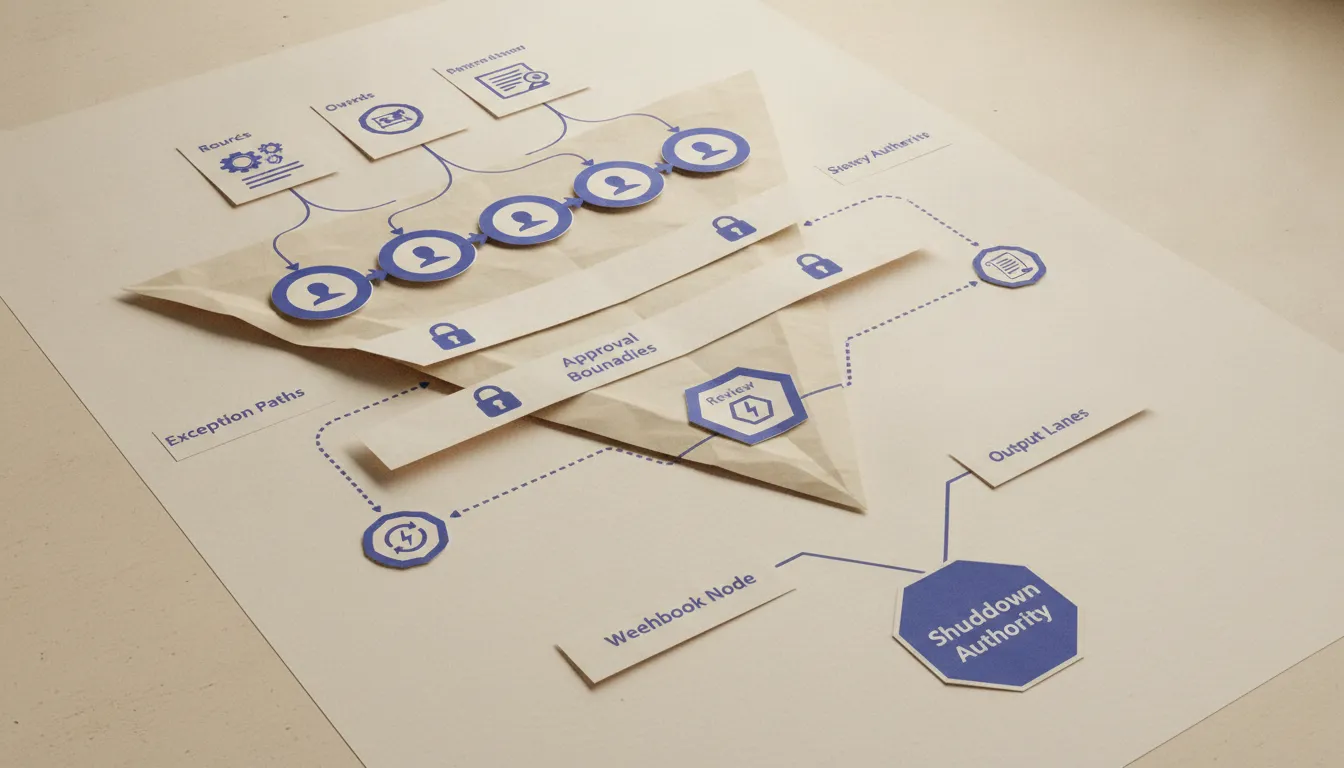
An AI automation manager needs a written charter. A job title without authority creates one more person who can see the problem but cannot fix it.
I put six responsibilities in the charter.
1. Business outcome
The manager names the result, baseline, target, review window, and evidence. "Automate intake" is not an outcome. "Route every complete intake to one owner within ten minutes and surface incomplete records for review" is an outcome.
2. Source records
The manager declares which system owns the customer, job, invoice, candidate, approval, or other business record. This is a business process architecture decision, not a technical preference. If two tools can change the same status without a winning rule, the automation will eventually copy uncertainty faster.
3. Approval boundaries
The charter identifies what can happen automatically, what needs review, and what always stays with a person. Customer messages, money movement, legal commitments, record deletion, access changes, and unusual exceptions deserve explicit boundaries.
The manager also owns the approval packet. A vague message that says "Approve?" is not enough. The reviewer needs the source, proposed action, relevant history, reason for escalation, and exact consequence of approval.
4. Exception ownership
Every workflow creates exceptions. The manager defines the categories, routing rules, response time, backup owner, and closure evidence. A red badge with no owner is decoration.
5. Change and cost control
The manager approves production changes, records what changed, tests the new behavior, and keeps a rollback path. The same person should understand recurring software costs, model usage, data vendors, failed retries, and any volume limit that can interrupt the workflow.
I do not want cost control to mean turning off useful work after the bill arrives. I want budgets and volume limits designed into the system before a runaway loop or broad data pull creates the surprise.
6. Stop and recovery authority
The manager must know how to pause the workflow, revoke access, preserve the current state, replay safe work, and tell operators what happened. If only the original builder can stop the system, the business does not own it yet.
The same ownership standard applies to security. CISA's Secure by Design guidance puts ownership at the executive level and treats customer security as a business requirement, not an optional technical feature. For an automation manager, that means access, logging, credential control, and safe deployment belong in the operating charter.
Know when the role is actually needed
Not every small business needs a full-time AI automation manager. One narrow workflow with one owner and a reliable partner may only need a weekly review by an operations leader.
I would assign a named manager when three or more of these conditions are true:
- Several live workflows cross teams or departments.
- Customer-facing actions are drafted or sent automatically.
- Multiple systems can change the same business record.
- Exceptions wait in Slack, email, spreadsheets, or personal memory.
- Nobody can explain monthly automation cost by workflow and outcome.
- Production changes happen without a test and rollback record.
- Permissions belong to former employees, personal accounts, or outside builders.
- A failed workflow can delay revenue, delivery, hiring, payment, or compliance work.
- Leadership receives activity reports but cannot verify the business result.
- Operators work around the automation because they do not trust it.
The answer can be an internal operations leader with protected time, a fractional owner, or a dedicated hire. The title matters less than authority and cadence. Somebody must be accountable for the whole lane.
If the business is still deciding where to begin, the AI Operations X-Ray is a practical first step. It can identify the handoff with the clearest value, the current owner, the source record, and the control gaps before a new role or large build is approved.
Separate the manager from the builder
The builder creates and changes the system. The manager decides what the system is allowed to own and whether it is producing the promised result.
One person can fill both roles in a small company, but the decisions should remain separate. The build should still have a written acceptance test, approval boundary, cost limit, and recovery drill. Otherwise the person who made the workflow is also the only person deciding whether it worked.
When an outside partner is involved, the manager should use the same control questions I recommend when evaluating AI automation companies:
- Who owns the code, accounts, data, and credentials?
- Which actions require approval?
- How are failures detected and escalated?
- What proves the destination accepted the right result exactly once?
- How does the business stop, recover, and change the workflow without vendor lock-in?
- Which outcome will improve, and how will we know?
I prefer systems the client owns. That means the business keeps the keys, but ownership has to be operational, not just contractual. A folder of code and a password list are not enough if nobody knows how the live workflow behaves.
Run a weekly automation control review
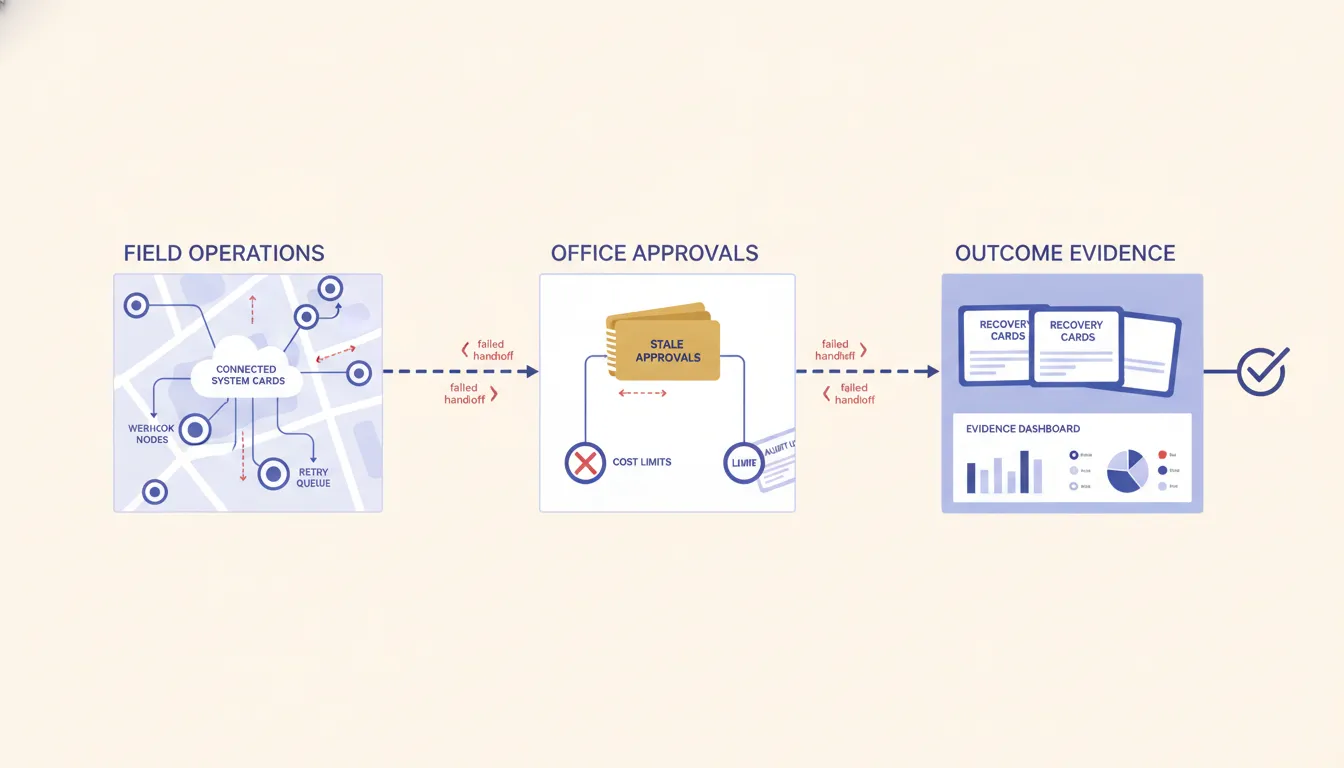
The AI automation manager needs a short operating cadence. I would run one weekly control review with the workflow owners and keep it focused on exceptions and decisions.
The review should answer:
- Which promised outcomes were met, missed, or impossible to verify?
- Which exceptions are open, how old are they, and who owns the next action?
- Which approvals are waiting, overridden, or being approved without enough context?
- Which records failed to reconcile with the source system?
- Which costs, retries, or volumes moved outside the expected range?
- Which workflow changes shipped, and what evidence passed before release?
- Which failure drill or access review is due next?
- Which workflow should be simplified, paused, or retired?
This is the practical management layer behind workflow management for operators. The meeting is not a tour of green run histories. It is a decision forum for unresolved risk and business performance.
The NIST AI Risk Management Framework is useful because it treats governance, mapping, measurement, and management as ongoing work around AI systems. The GAO AI accountability framework uses a similarly practical set of principles around governance, data, performance, and monitoring. For a small business, those ideas can become one charter, one exception queue, one scorecard, and one weekly review.
Measure the manager by control and outcomes
Do not reward the AI automation manager for launching the most automations. That creates a portfolio nobody wants to own.
I would use a scorecard with measures such as:
- Percentage of workflows with a named business owner and current charter.
- Percentage of promised outcomes that can be verified from source records.
- Number and age of open exceptions by business impact.
- Approval turnaround time and override rate.
- Duplicate, missed, or unreconciled records.
- Time to detect, stop, and recover from a failed workflow.
- Automation cost per completed business outcome.
- Percentage of production changes with test evidence and a rollback path.
- Operator adoption and documented workarounds.
- Workflows simplified, consolidated, or retired.
The score should make the operation calmer. Fewer unexplained exceptions, faster recovery, cleaner records, and better operator adoption are more valuable than a longer automation list.
When not to hire us for AI automation management
Do not hire us to add an AI automation manager when the process is still unclear. If the business has not chosen the source system, approval owner, exception rules, or success measure, a new manager will inherit ambiguity and spend the first months documenting it.
I would also tell you not to hire us when there is only one low-risk workflow, one clear owner, and little exception volume. Give the existing operations leader a written charter and a monthly control review first.
The role is also premature when leadership wants "more AI" but cannot name a business promise. Start with one lane, prove it, and let the management need emerge from real operating complexity.
An AI automation manager becomes valuable when automated work is important enough that the business cannot afford mystery. Give the role authority over outcomes, records, approvals, exceptions, cost, changes, and recovery. Then measure whether the operation becomes more dependable.
That is how automation turns from a set of impressive builds into infrastructure the business can actually own.
FAQ
Frequently asked questions
- 01What does an AI automation manager do?
- An AI automation manager owns the business performance and operating control of automated workflows. The role maps source records, sets approval boundaries, reviews exceptions, controls changes and spend, tests recovery, and proves that each workflow produces the intended outcome.
- 02When does a small business need an AI automation manager?
- A small business needs a named automation manager when multiple workflows cross teams or systems, customer-facing actions require approval, exceptions are accumulating, automation costs are hard to explain, or nobody can quickly stop and recover a failed workflow.
- 03Should an AI automation manager be technical?
- The manager needs enough technical fluency to question integrations, permissions, logs, retries, model behavior, and costs. The role does not need to write every workflow, but it must translate business rules into controls and hold builders accountable for evidence.
- 04How should an AI automation manager be measured?
- Measure the role by business outcomes, exception age, approval quality, recovery time, data accuracy, controlled spend, and adoption by the people doing the work. Do not use the number of automations as the main score.
Related reading
- AI agent workflow for operators
An AI agent workflow should begin with one business promise, clear ownership, approval gates, and proof before any agent is trusted to act.
- Workflow management for operators
Workflow management should give operators clear ownership, exception lanes, and proof of completion before it turns into another task board.
- Business process architecture for operators
Business process architecture helps operators decide which system owns the truth, which manager owns the exception, and which handoffs deserve automation.