Field note
Aug 22, 2026
AI governance platforms: the operator control test
Compare AI governance platforms by authority, evidence, incident response, and ownership so you can choose controls that survive real operations and change.

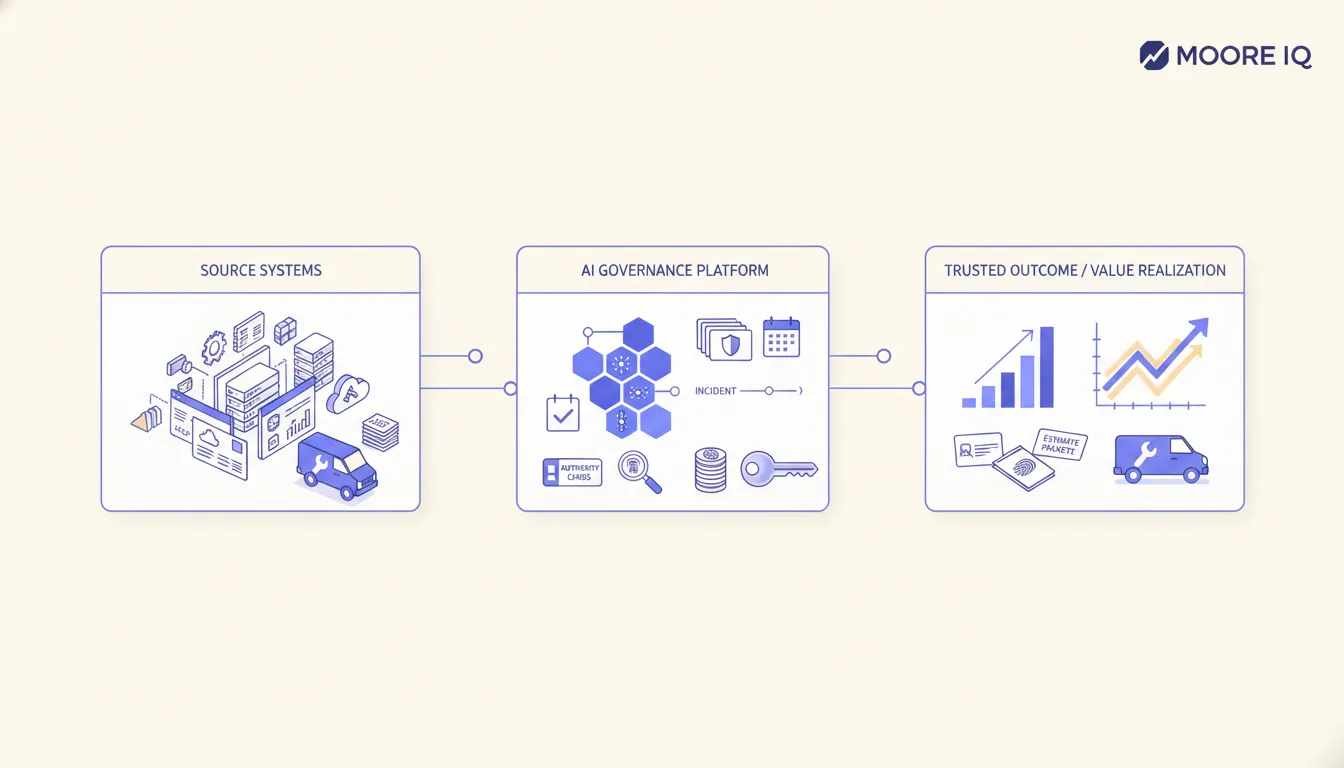
AI governance platforms should help an operator answer four questions: what AI is running, what it can do, who owns the result, and what happens when it is wrong. If the software cannot answer those questions for one live workflow, the rest of the demo is mostly expensive confetti. I have sat through enough tool tours to know the confetti usually gets its own slide.
My buying rule is simple: choose the governance boundary before choosing the platform. Start with the operating decisions, authority, evidence, and recovery you need. Then test whether the product can enforce that boundary across the systems you already use.
I learned this on a client platform built around one shared production database. During a governance cleanup, we moved roughly twenty tables into the systems that actually owned them and reduced the shared public area to seven canonical tables. The cleanup made ownership clearer, but one schema change caused a roughly three-minute outage across the whole platform because the schema was removed before it was taken out of the API exposure list.
The recovery was fast. The lesson was less comfortable. A technically small change had a platform-wide blast radius, and the original process did not make that risk visible enough before execution. We added a cardinal rule, a reviewed migration sequence, server-only audit and archive areas, a recovery procedure, and live API verification after every change.
That is governance in practice. It is not a policy document sitting next to the system. It is a set of operating controls that changes what the system is allowed to do.
Start with the governance job, not the product category
The market uses “AI governance” to cover several different jobs:
- Inventorying models, agents, prompts, datasets, and business workflows.
- Assigning owners and recording intended use.
- Classifying risk and mapping regulatory duties.
- Controlling access, data use, and action authority.
- Testing quality, bias, security, and failure behavior.
- Capturing decisions, approvals, changes, and evidence.
- Monitoring production behavior and policy drift.
- Managing incidents, rollback, and recovery.
Those jobs overlap, but they are not identical. A model-risk product may be strong at evaluation and weak at workflow authority. A data-governance product may know where information came from but not whether an agent was allowed to send it. A workflow platform may enforce approvals but provide weak evidence for a risk review.
NIST organizes AI risk work around Govern, Map, Measure, and Manage. I like that framing because governance runs through the whole lifecycle. It is not the last screen a compliance team opens after the build is already live.
Before comparing vendors, I use an AI operations scan to map the actual operating boundary. If the work spans several systems and handoffs, business process automation services should define the source of truth and owner before adding a governance layer.
Build one inventory that an operator can trust
Every serious platform starts with inventory, but “inventory” can mean anything from a manually maintained register to automated discovery across cloud accounts, code, APIs, and workflow tools.
I want every production entry to answer:
| Inventory field | Operator question |
|---|---|
| Business outcome | What result is this system responsible for? |
| Named owner | Who answers when the result is wrong? |
| Data sources | What information can it read and where did it come from? |
| Models and tools | Which providers and components affect the result? |
| Authority | Can it draft, recommend, update, send, approve, or spend? |
| Users | Who can operate, change, or override it? |
| Evidence | What logs and decisions prove what happened? |
| Recovery | How is it paused, rolled back, replayed, or restored? |
A platform that discovers technical assets but cannot connect them to a business owner gives me a better catalog, not governance. A spreadsheet can be enough for a small estate if it stays current and somebody owns it. An automated discovery layer becomes valuable when the number of systems, models, teams, and changes makes manual inventory unreliable.
The operator workflow test for AI agents is useful here. Start with one business promise and map the authority around it. The platform should represent that boundary without forcing the operator to translate the business into a pile of technical objects nobody outside IT understands.
Test authority before you test reporting
Governance software tends to demo reporting first because reports behave nicely in meetings. Authority is harder. It crosses identity, workflow tools, databases, model providers, and human approvals.
I separate authority into five levels:
- Read: the system can retrieve information.
- Draft: it can prepare an output but cannot release it.
- Recommend: it can propose a decision with evidence.
- Act with approval: it can execute only after a named approver accepts.
- Act autonomously: it can execute within a defined policy and limit.
The platform should show which level applies to each action, who can change it, and how that change is recorded. It should also support different authority by context. An agent may be allowed to tag a CRM record automatically, draft a customer message for approval, and never issue a refund.
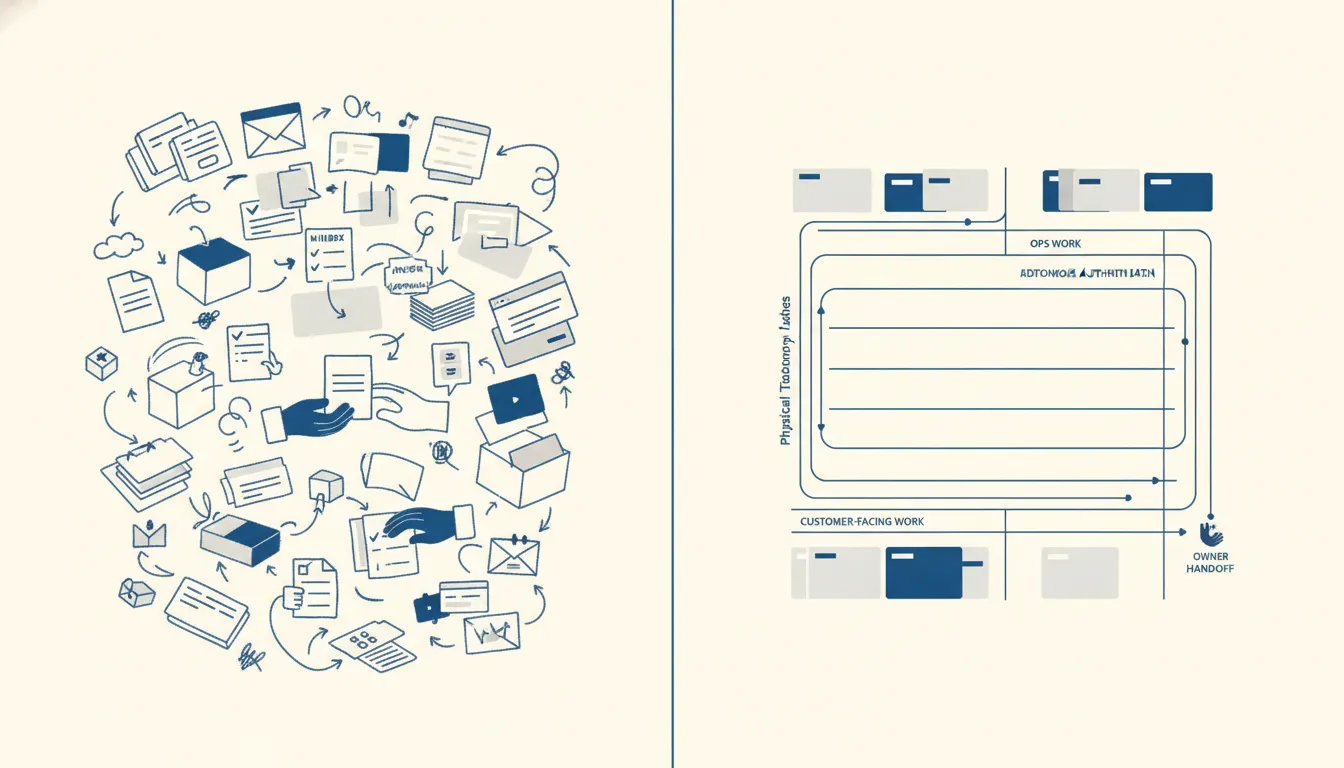
My opinion is that approval gates belong at the action boundary, not in a policy PDF. I have built workflows where legal claims required an explicit editor approval stage before publication. The important part was not a checkbox saying “human oversight.” The important part was that the workflow could not bypass the approval and that the decision was recorded.
A buyer should run the same test. Try to exceed an authority limit. Remove the approver. Change the model. Submit incomplete evidence. Confirm the system blocks the action visibly and tells the operator what to do next.
Demand evidence that survives an incident
A dashboard showing a green policy status is not enough. I want evidence that lets an operator reconstruct a real event.
For each important action, the platform should preserve:
- The request and the business context.
- The data and model versions used.
- The policy and authority that applied.
- The output or proposed action.
- The approval, rejection, or override.
- The actual downstream result.
- Any error, retry, rollback, or manual correction.
This matters because governance questions arrive after something changes. A customer disputes an output. A model provider updates behavior. A source record was wrong. A permission changed. A workflow retried twice and created a duplicate.
The silent failure test for accounting automation applies beyond finance. A system can complete every run and still be wrong. Reconciliation, expected counts, exception queues, and destination readback provide better evidence than a success badge from the tool that initiated the action.
Ask the vendor whether evidence can be exported in a useful format. Ask how long it is retained, who can alter it, and whether it includes downstream confirmation. If the business cannot take its own evidence with it, the platform is also a records dependency.
Run an incident drill during the pilot
A governance platform should help before, during, and after failure. The pilot is the right time to prove that.
Use one realistic incident:
- A required source field disappears.
- A model returns an unsafe or malformed result.
- An approval expires.
- A user attempts an action outside their role.
- A vendor endpoint is unavailable.
- A duplicate event reaches the workflow.
- A policy changes while work is queued.
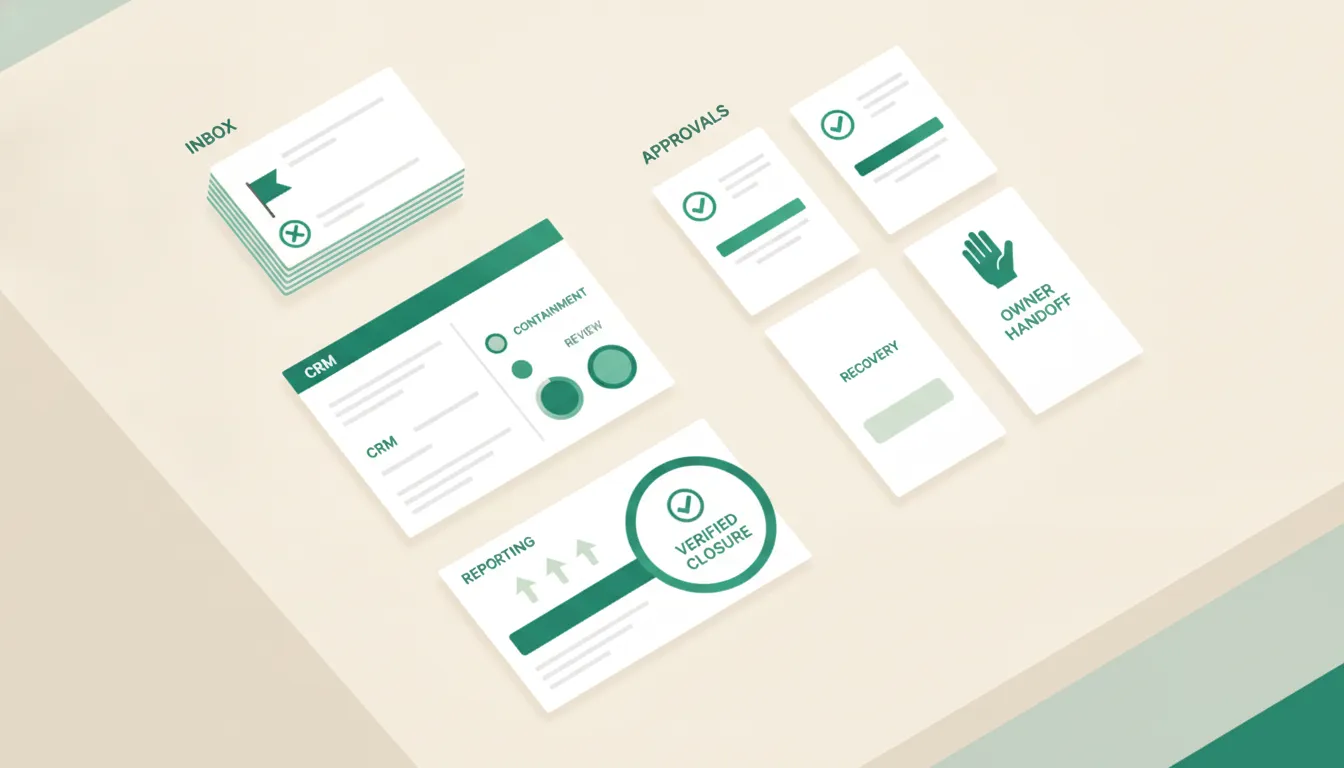
Then measure what happens. Does the system stop safely? Does it preserve the work? Does the right owner receive a useful alert? Can the operator see the affected records? Can the action be replayed without creating duplicates? Does the evidence explain the full path?
The NIST AI Risk Management Framework is voluntary, but it gives buyers a useful structure for this conversation. Regulation can add a separate duty. The European Commission began enforcing AI Act rules and new transparency requirements on 2 August 2026. A platform can support the evidence and controls, but qualified counsel still has to interpret which duties apply to the business and use case.
Compare AI governance platforms on seven buying tests
Current market pages such as Gartner Peer Insights' AI governance platform category can help build a vendor list. They should not choose the winner. I use seven tests against one live process.
1. Coverage
Can the platform represent the full workflow, including models, prompts, data, human decisions, external tools, and downstream actions? Blind spots become manual control debt.
2. Ownership
Can it assign a business owner, technical owner, risk owner, and approver without confusing them? The automation manager ownership test explains why one named internal operator still matters.
3. Authority enforcement
Can it enforce action limits across the real workflow, or does it only document them? Ask the vendor to demonstrate a blocked action and an approved action.
4. Evidence quality
Can an operator reconstruct what happened from request through destination? Test export, retention, tamper controls, and downstream confirmation.
5. Integration depth
Does it connect to the systems that create risk, or will the team maintain duplicate records manually? Count the unsupported surfaces before signing.
6. Incident response
Can the operator identify affected work, pause action, roll back safely, and verify recovery? Run the drill rather than accepting a slide.
7. Portability and cost shape
Can the business export inventories, policies, evidence, and history? Ask what happens when usage grows, new business units join, or a second model provider is added. The buying test for AI automation companies applies here too: ownership and recovery matter more than the polish of the demo.
Score each test as proven, partial, manual, or missing. “Available on the roadmap” is missing for the current buying decision.
When not to hire us or buy a platform
You do not need us or an AI governance platform because a board member heard the phrase at a conference. You may not need either when the business has a few low-risk workflows, one accountable owner, narrow authority, good access controls, clear logs, and a tested incident process.
Start with a maintained inventory, named owners, written authority levels, approval gates, change records, and one recovery drill. Use systems you already own if they can enforce the control.
Buy a dedicated platform when manual governance stops being reliable: discovery is incomplete, changes are frequent, evidence is scattered, several teams share models and data, risk classifications differ, or reporting duties consume real operating time.
Do not buy software to avoid making ownership decisions. The platform cannot decide which source is authoritative, which risk is acceptable, or who should approve a customer-facing action. Those are management decisions.
My final decision rule
I would shortlist AI governance platforms only after mapping one live workflow from request to downstream result. Then I would run a pilot that proves inventory, authority, evidence, incident response, and export.
The winning product is not the one with the longest control library. It is the one that fits the operating boundary, blocks the wrong action, records the right evidence, and leaves a named operator able to recover the system.
Governance is successful when it changes behavior before the incident. If it only produces a report afterward, I have bought documentation of risk rather than control of it.
FAQ
Frequently asked questions
- 01What do AI governance platforms do?
- They help teams inventory AI systems, assign owners, document risk, enforce policy, collect evidence, monitor changes, and manage incidents. The exact boundary varies, so I test the platform against a real workflow before treating the feature list as proof.
- 02Does a small business need an AI governance platform?
- Not always. A small team with a few low-risk workflows may be better served by a clear inventory, named owners, approval gates, access controls, and an incident runbook in systems it already owns.
- 03How should I compare AI governance platforms?
- I compare them on inventory coverage, authority controls, evidence quality, integration depth, incident handling, portability, and operating ownership. I also require a pilot using one live process and one realistic failure drill.
- 04Can an AI governance platform guarantee compliance?
- No. It can support documentation, control enforcement, monitoring, and evidence collection, but the business still owns legal interpretation, policy decisions, data quality, user behavior, and the correctness of each deployment.
- 05What is the first AI governance control to implement?
- Start with a complete inventory that names the business outcome, owner, data, model, tools, authority, users, and recovery path for every production AI system. Unknown systems cannot be governed.