Field note
Sep 30, 2026
Go high level A2P registration: approved is not live
Go high level A2P registration clears the carrier gate, not your launch. Check consent, number approval and workflow proof before releasing customer messages.

Go high level A2P registration verifies your business and texting campaign for U.S. local-number messaging, but I do not call the system live until the right customer event produces the right text. I build these systems, so my bias is toward delivery proof rather than a green badge. Badges are easier to photograph.
I cover the registration-to-release boundary as part of my GoHighLevel development work. The useful question is not just whether the application was approved. It is whether the appointment reminder, reply alert or follow-up now works for the person depending on it.
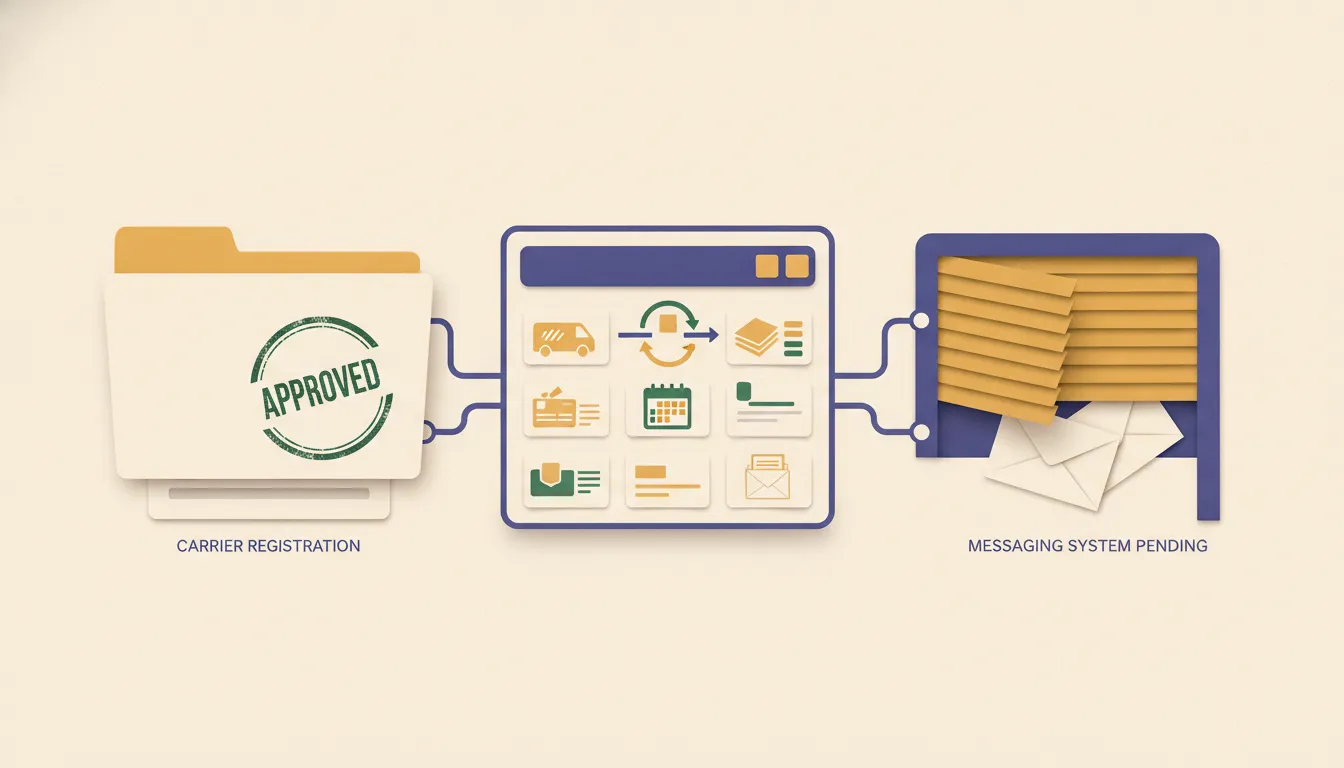
What does GoHighLevel A2P registration actually approve?
I separate business identity from message purpose. The Brand identifies the sender. The Campaign describes what that sender will text and how recipients consent. HighLevel provides the submission flow, while carriers and registration partners decide approval, as its Brand and Campaign registration documentation explains.
For standard local numbers sending business SMS or MMS to U.S. recipients, this is the A2P 10DLC route. I identify the number type first because toll-free verification is different. Buying a number, seeing a successful Brand submission and receiving Campaign approval are not interchangeable milestones.
I had carrier approval and a text on my own handset while all 24 workflows were still in Draft. That was a real client build, not a hypothetical checklist. The carrier requirement had been met. The appointment system had not been released, deliberately, because the business rules still needed agreement.
That experience is why I call this the approved-but-not-live failure mode. A status can be accurate and still answer the wrong question. I can truthfully say the number is verified without claiming that tomorrow's customer will receive a reminder.
My rule is to describe exactly what passed. Registration passed. A manual text arrived. The workflow remains in Draft. Those sentences protect the owner from planning around an automation that is not running yet.
What will registration cost, and who pays?
I separate registration charges from the running cost of the messaging system. HighLevel's current A2P pricing reference, updated September 24, 2026, lists an initial Low Volume Standard bundle at $22.50 and a High Volume Standard bundle at $64. Monthly campaign charges and message usage are separate.
I check the amount shown in Trust Center before submitting because provider prices change. I would not reuse a fee from a previous client setup as today's quote. Nor would I turn one quick historical approval into a promised turnaround for someone else's business.
The less visible question is whose payment method carries those charges. On my build, the client billing page was not giving me the evidence I needed, even though registration had been charged. I treated ongoing billing ownership as unresolved rather than assuming the client would receive the usage bill.
For an operator, I want a named account owner, a confirmed billing arrangement and an agreed scope before release. I also want the team to understand that a registration fee does not purchase an unlimited texting program or replace the platform subscription. My implementation scope is separate and depends on the systems and acceptance work involved.
What should I prepare before registration?
I start with the business records and the real customer journey, not with the form's prefilled answers. In my registration, the suggested business name was the trading name rather than the legal entity associated with the EIN. I corrected that before submission. I do not describe it as a carrier rejection we fixed, because it never reached that stage.
For a Standard U.S. Brand, I compare the legal name and EIN against the official records. I check the address, authorized contact and the public site's explanation of any trading-name relationship. A familiar logo is not enough evidence that every part of the submission identifies the same sender.
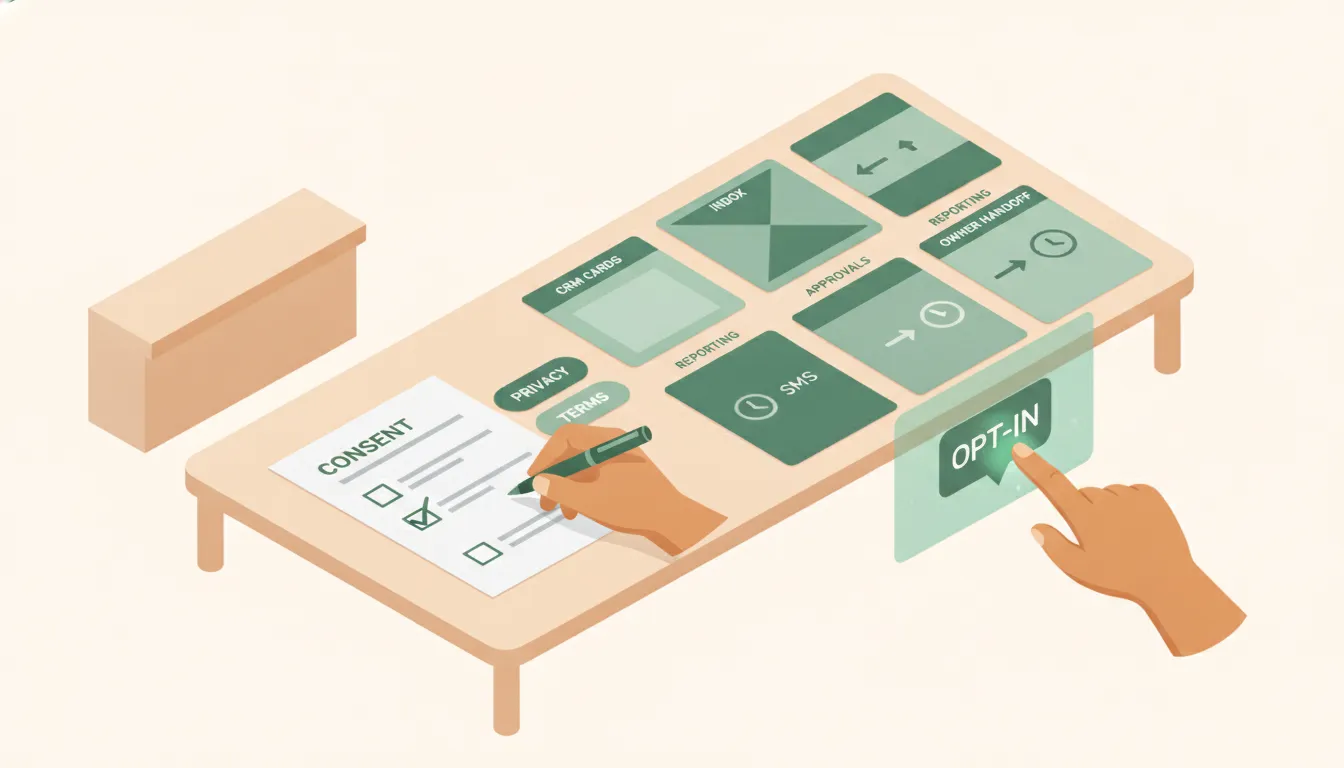
Then I walk through the opt-in experience as a visitor. I open the actual form or widget, read the choice the customer sees, and follow the Privacy Policy and Terms links. I compare that wording with the campaign description and sample messages. If we promise appointment reminders in one place and promotional texts in another, I stop and resolve the mismatch.
HighLevel's 2026 approval guidance makes a distinction worth preserving: a phone field can be required, but SMS consent must remain optional. It calls for separate marketing and non-marketing choices, no preselected consent boxes, and communication based on the choices actually made.
I do not treat a completed phone field as permission to send everything. For legal wording and jurisdiction-specific obligations, I involve the business's counsel. Carrier registration is not a substitute for that review.
How do I get the registration running without confusing it with launch?
My sequence is short enough for an owner to use as an acceptance checklist. The current HighLevel help pages handle the field-by-field screens; I use the sequence below to keep responsibility clear.
- Confirm the registration route. I establish the number type, sender and intended recipients before choosing the Brand path. I use the business's accepted identity records rather than guessing from its website branding.
- Make the consent journey real. I check the published website, actual opt-in, policies, campaign purpose and sample messages together. I do not create a compliance-only page that customers never encounter.
- Submit through Trust Center. I use Settings, Phone System, Trust Center, complete the applicable Brand and Campaign flow, and resolve the compliance-review findings before submitting.
- Read the actual status. If a campaign is pending, I monitor it rather than making a duplicate. If it is rejected, I read each required fix and correct the underlying inconsistency before resubmission.
- Verify the number after approval. I check that the sending number is linked to the approved campaign and displays A2P Verified. I do not stop at the Brand status.
- Release only the tested workflow. I review the publication state, action state, event context, consent checks, owner and billing before authorizing customer traffic.
The website can be a hidden part of this work. On my build, a performance setting delayed the consent widget until someone interacted with the page. I changed that loading behavior and then the compliance review passed. The lesson is not to disable every performance feature. It is to verify the exact opt-in experience the reviewer and the customer can actually reach.
I also found phone-collecting forms in more places than the initial page under discussion. I now trace the relevant customer entry points before claiming the consent journey is covered. Fixing one visible form is not evidence that the rest of the site agrees with it.
How do I judge whether the messaging system is ready?
I use four questions rather than one completion percentage:
- Is this the same business everywhere? I want identity, website, campaign and consent wording to agree.
- Did this recipient choose this message type? I want a recorded choice, not an assumption based on a populated phone field.
- Does the event supply the facts the message promises? I want the correct appointment or contact context, not merely valid-looking merge fields.
- Who owns release, failures and the bill? I want named responsibility before automated sends begin.
Here is the distinction I use at handoff. These are proposed acceptance checks, not a claim that every row passed on that client project.
| Check | Evidence I ask for | What it does not prove |
|---|---|---|
| Brand and Campaign | Approved states in Trust Center | Every number is linked |
| Sending number | Correct association and A2P Verified label | A workflow is published |
| Consent | Actual choice for this message purpose | All future message types are permitted |
| Workflow release | Intended version and actions enabled | The right event supplies the message fields |
| Recipient result | Event-triggered text read on a handset | Every branch and exception works |
| Operating ownership | Named support and billing owner | Failures will never happen |
This is the same boundary I use in business process automation: completing a platform task and completing a business process are different deliverables. I would rather hand over a precise partial result than label the whole system done because its easiest check is green.
Why can an approved number still send the wrong message?
In that build, I reviewed two internal SMS alerts triggered when a customer replied. The wording included the appointment time, but the reply trigger did not carry the appointment context those fields needed. The merge-field spelling was not the problem. The message was asking the event for information it did not supply.
I found this through a trigger-context audit before release. I am not claiming we observed a failed customer text or measured a production failure rate. I changed both alerts to direct the assigned owner to the contact for the appointment time, then saved and reloaded them to confirm the corrections persisted.
That was a bounded fix. Changing how the business recognizes an appointment confirmation would have been a different decision. I did not need to redesign the entire process just to stop an internal alert from promising a time it could not safely show.
The same pattern appears in CRM handoffs between customer and order records. A record exists somewhere in the account, but that does not mean the particular event has the correct record attached. I ask which record produced this message, not just whether the account contains a matching name.
I am also careful with test buttons. In the interfaces I inspected, a test SMS took a destination number and a workflow test selected a contact. Neither gave me an appointment event. A blank appointment field in that test could not settle what a real booking trigger would do.
What should I test before sending to customers?
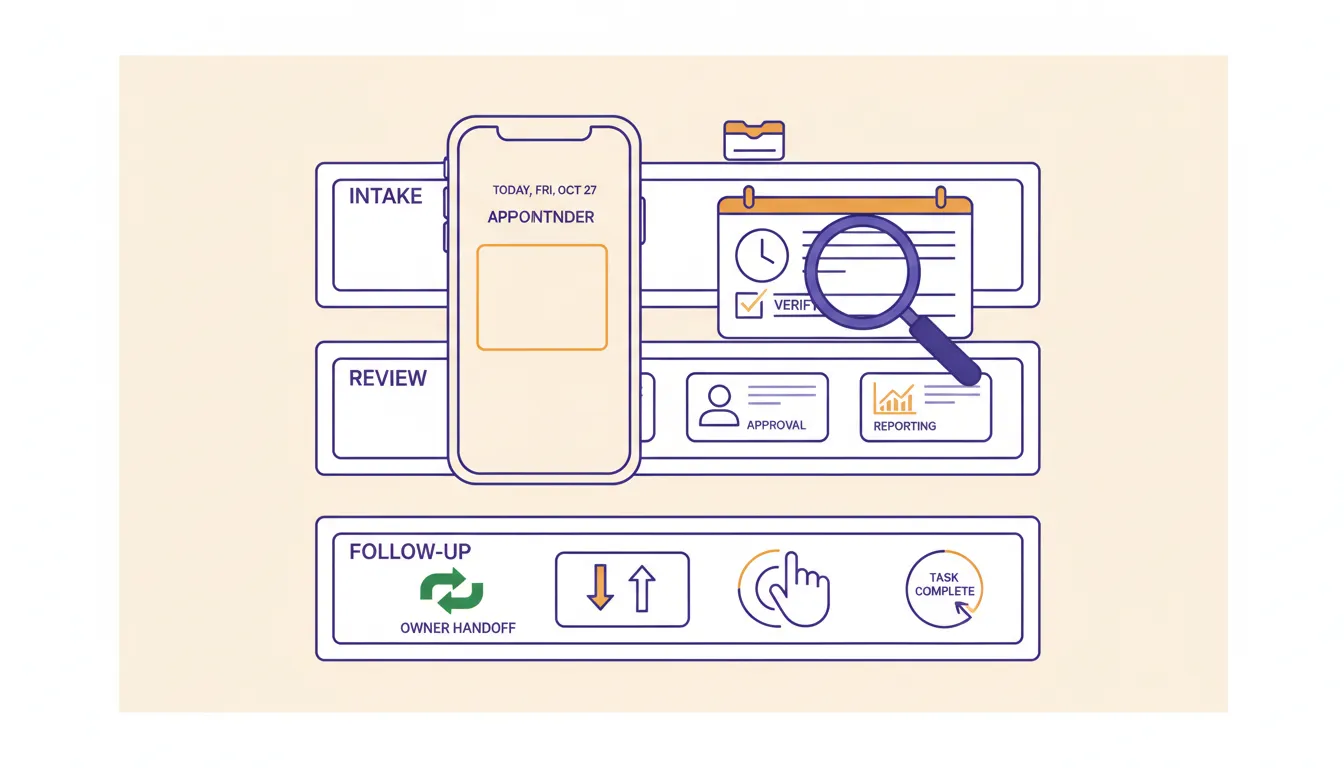
I test the business event in a tightly limited lane, using a consenting test recipient and explicit release permission. For a booking reminder, I want the real booking path, the intended sender, the right appointment and the actual received text. I read the result rather than accepting a successful workflow run as the whole answer.
I record the expected message, the received message and the event that caused it. I check the name, time, location, destination and whether another workflow produced a duplicate. If the test cannot exercise a branch, I mark that branch unproven instead of extrapolating from the easiest path.
On the same build, a disabled reminder action was disabled to prevent duplicate sending, not because registration was pending. I left it disabled. That is why I do not bulk-enable every action with a warning label after A2P approval. The reason an action is off matters more than the color of its toggle.
My release record is plain: what was tested, what remains in Draft, what is intentionally disabled, and who can authorize the next change. I want the owner to be able to pause the right workflow without disabling unrelated operations. For a new provider relationship, I would put those expectations into the workflow delivery acceptance discussion before work starts.
When not to hire us for this
You do not need to hire me if your business identity is clear, your consent process matches your messaging, and the only remaining task is a straightforward registration submission. I would use HighLevel's current documentation and support route first. I cannot buy a carrier approval decision or guarantee its timing.
I am more useful when the problem crosses boundaries: a migrated CRM, an outside website, uncertain consent history, multiple reminder workflows, ambiguous billing or a handoff nobody can prove. That is implementation and operating-risk work, not a premium form-filling service.
If you do hire someone, I would evaluate their proof and ownership plan rather than their promised approval speed. Ask what will be demonstrated on a handset, which workflows will remain off, and who investigates a missing reminder after handoff.
My verdict is simple: go high level A2P registration is necessary for the relevant messaging route, but approval is not your launch receipt. I call the system ready when the authorized event produces the correct message and the operator knows what is running.
FAQ
Frequently asked questions
01How do I get A2P verified in GoHighLevel?
I start in Settings, Phone System, Trust Center with the correct business identity and real consent process. After Brand and Campaign approval, I confirm that the sending number is linked and displays A2P Verified. I keep workflow release separate from registration.
02What is required for A2P registration?
For a Standard U.S. Brand, I prepare the legal business name and EIN, business details, authorized contact, website, messaging purpose and samples, plus evidence of the actual opt-in process. I check that the consent language, Privacy Policy and Terms agree with what the campaign will send.
03How much does it cost to get A2P approved?
HighLevel's September 24, 2026 pricing reference lists a $22.50 initial Low Volume Standard bundle and a $64 High Volume Standard bundle. Monthly campaign charges and messaging usage are separate. I check the current Trust Center amount before submission rather than quoting a historical client bill.
04What does it mean to be A2P verified?
It means the sending number has the required registration association for the approved messaging route. I do not treat it as proof that a workflow is published, consent is recorded for every contact, or appointment details render correctly.
05Why is my campaign approved but messages are not sending?
I check the sending number's association, workflow publication, enabled actions, enrollment event, consent restrictions and the specific message error. I do not submit another registration until the evidence points to a registration problem.
06Do toll-free numbers use this same registration?
No. HighLevel documents a separate toll-free verification process. I identify the number type before choosing the registration route.