Field note
Aug 3, 2026
Open source AI agent: the practical operator ownership test
An open source AI agent should be judged by ownership of code, data, credentials, decisions, exceptions, and recovery, not by a public repository alone.

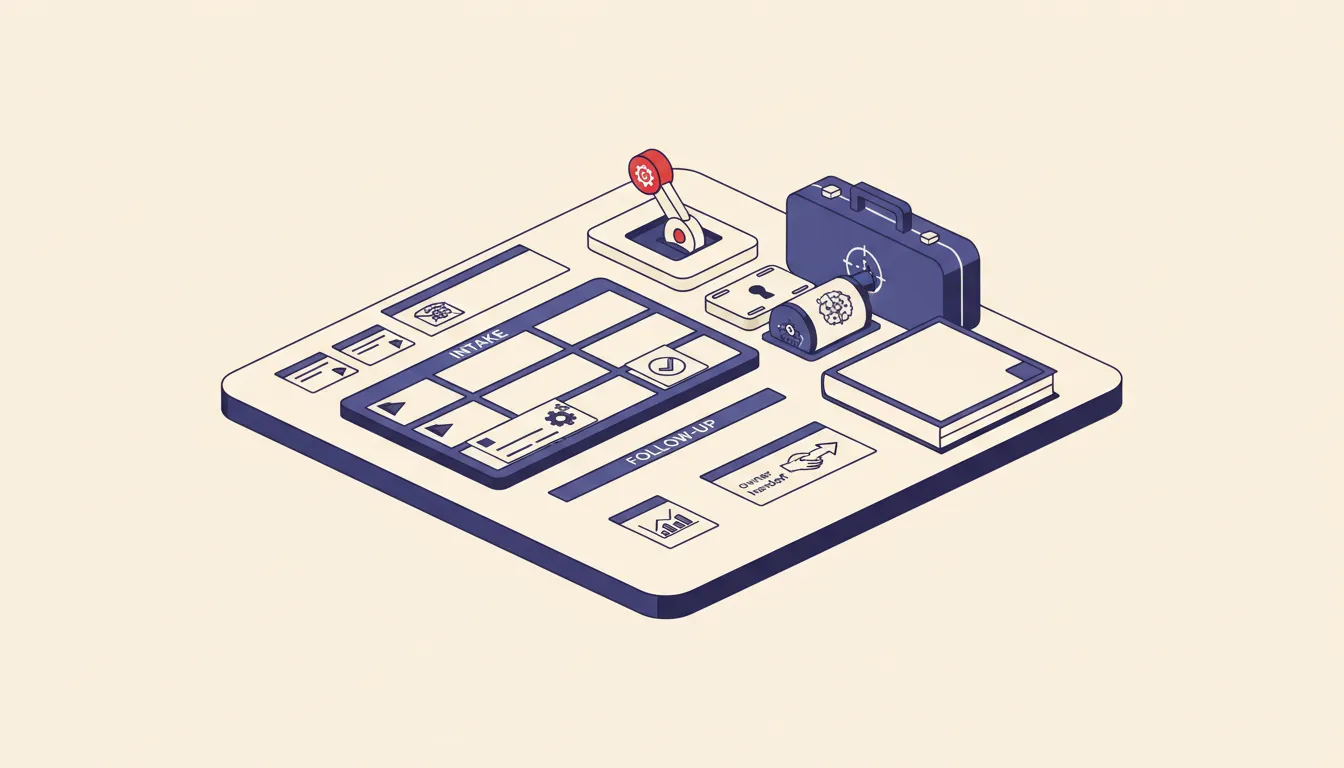
An open source AI agent should give the business more control, not a new black box with a public repository attached.
A public repo is not a magic ownership receipt. If it were, half the internet would come with an operating manual, which it does not.
The buyer question is not only whether the code can be viewed. It is whether the business can inspect what the agent receives, control what it may do, change the rules, protect the credentials, stop a bad run, recover the business record, and keep operating when the original builder is unavailable.
That is the test I use before an open source AI agent touches a production workflow.
Define open source in buyer terms
The Open Source AI Definition focuses on the freedoms to use, study, modify, and share an AI system, including access to the preferred form for making modifications. That is a useful starting point.
It is not the whole operating answer.
An agent is usually a stack of components:
- Agent application code.
- Model and model access.
- System instructions and task prompts.
- Tool connectors and permissions.
- Business data and retrieval indexes.
- Memory and state.
- Scheduler or event triggers.
- Logs, alerts, and exception records.
- Hosting, backups, and deployment configuration.
- Runbooks for stop, repair, rollback, and recovery.
A buyer can have open application code while still depending on a closed model API, proprietary connector, vendor-hosted memory service, or builder-owned deployment account. That may be a reasonable design. It should not be described as full operating ownership.
Open code is not the same as operating ownership.
I separate two questions:
- What is open enough to inspect and modify?
- What is owned well enough to operate and recover?
The first is a licensing and access question. The second is a business continuity question.
Start with one business promise
I do not begin with a framework shortlist. I begin with one sentence:
Every valid request reaches the right records, receives the right level of review, completes only an allowed action, and leaves proof the operator can verify or recover.
That turns the agent into business process automation built around an outcome. It forces the team to define the request, source records, owner, authority, exception, and closure proof before debating models or orchestration libraries.
An open source agent may summarize a meeting, qualify a lead, prepare a report, inspect a document packet, or reconcile records. The operating promise should describe what the business needs at the end, not what the model does in the middle.
My AI agent workflow field note uses the same structure: one promise, named ownership, approval gates, and proof before the agent earns authority.
Without that structure, open source can make customization easier while leaving accountability just as unclear.
Treat uncertainty as an operating state
On one meeting-processing workflow, I used a lower-cost model to handle the clear routing decisions. When confidence landed around five or six on a ten-point scale, the workflow sent the item to Slack for a person to approve. If any portion failed, it also sent an immediate alert instead of leaving the team waiting for a result that was never coming.
That design mattered more than whether the model or orchestration component carried an open license.
The useful control was the boundary:
- Clear cases could continue.
- Uncertain cases had a named review lane.
- Failed cases produced a visible exception.
- A person could approve, correct, or stop the next action.
- The system preserved enough context to explain why the item was there.
I want uncertainty represented as data, not hidden inside a confident sentence. The record should show the evidence used, the proposed action, the missing information, the confidence or rule that triggered review, and the person who owns the decision.
The NIST AI Risk Management Framework organizes AI risk work around governing, mapping, measuring, and managing. My operator version is direct: define the context, measure how the agent behaves in that context, and keep a named person responsible for the decisions the model cannot safely own.
Inspect every ownership layer separately
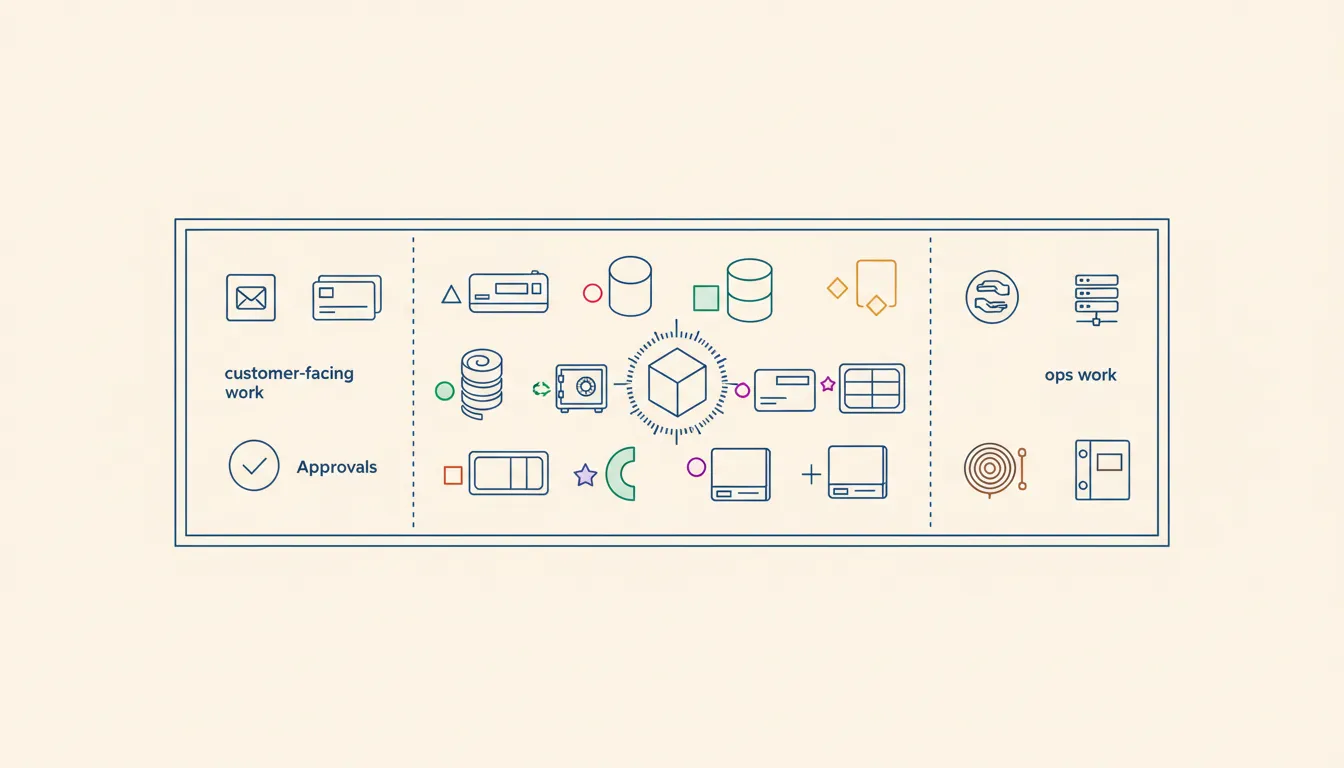
A buyer should not accept one broad answer to “Who owns the agent?”
I use an ownership map:
| Layer | Buyer should control | Proof to request |
|---|---|---|
| Code | Repository access and modification rights | Business-owned repository and license inventory |
| Model | Ability to change provider or approved model | Model configuration and fallback plan |
| Data | Source records, retrieval data, retention rules | Export, deletion, and provenance procedure |
| Credentials | API keys, service accounts, and rotation | Business-owned secret store and access list |
| Instructions | System prompt, policies, and task rules | Versioned prompt and change history |
| Tools | Allowed actions and permission boundaries | Tool manifest and least-privilege roles |
| State | Queues, memory, checkpoints, and case status | Schema, backup, and restore test |
| Operations | Logs, alerts, costs, and service health | Operator dashboard and alert runbook |
| Recovery | Stop, rollback, correction, and replay | Completed recovery drill |
This is also how I evaluate an AI automation company. My operator buying test for AI automation companies asks what the business receives at handoff and whether the team can see failures, change rules, export data, and recover without the builder.
The business does not need to replace every reliable system to gain this control. If the CRM, accounting platform, document system, or project tool already owns valid records, modernizing the handoffs around the existing systems can be safer than forcing the agent to become a second source of truth.
Keep the agent inside explicit authority boundaries
An agent may be able to call a tool. That does not mean it should have permission to use every action that tool exposes.
I define authority in stages:
- Read approved records.
- Organize, extract, and classify.
- Draft or recommend with evidence.
- Execute a narrow reversible action.
- Execute a consequential action only after the lane has earned explicit authority.
The exact boundary depends on the workflow. A draft report is different from a sent customer message. A proposed CRM update is different from deleting a record. A prepared invoice packet is different from approving payment.
The tool layer should enforce the boundary even when the model asks for more. The model should not be the only control protecting the business from the model.
I also want separate credentials for separate jobs. An agent that reads documents does not automatically need permission to send email. An agent that prepares a sales update does not automatically need permission to change pricing. Narrow accounts and narrow tools make both mistakes and investigations easier to contain.
The OWASP Top 10 for LLM Applications names risks that matter directly here, including prompt injection, sensitive information disclosure, excessive agency, and unbounded consumption. Open code does not remove those risks. It gives the operator a better chance to inspect and change the controls, provided the deployment is actually owned and maintained.
Test recovery before trusting autonomy
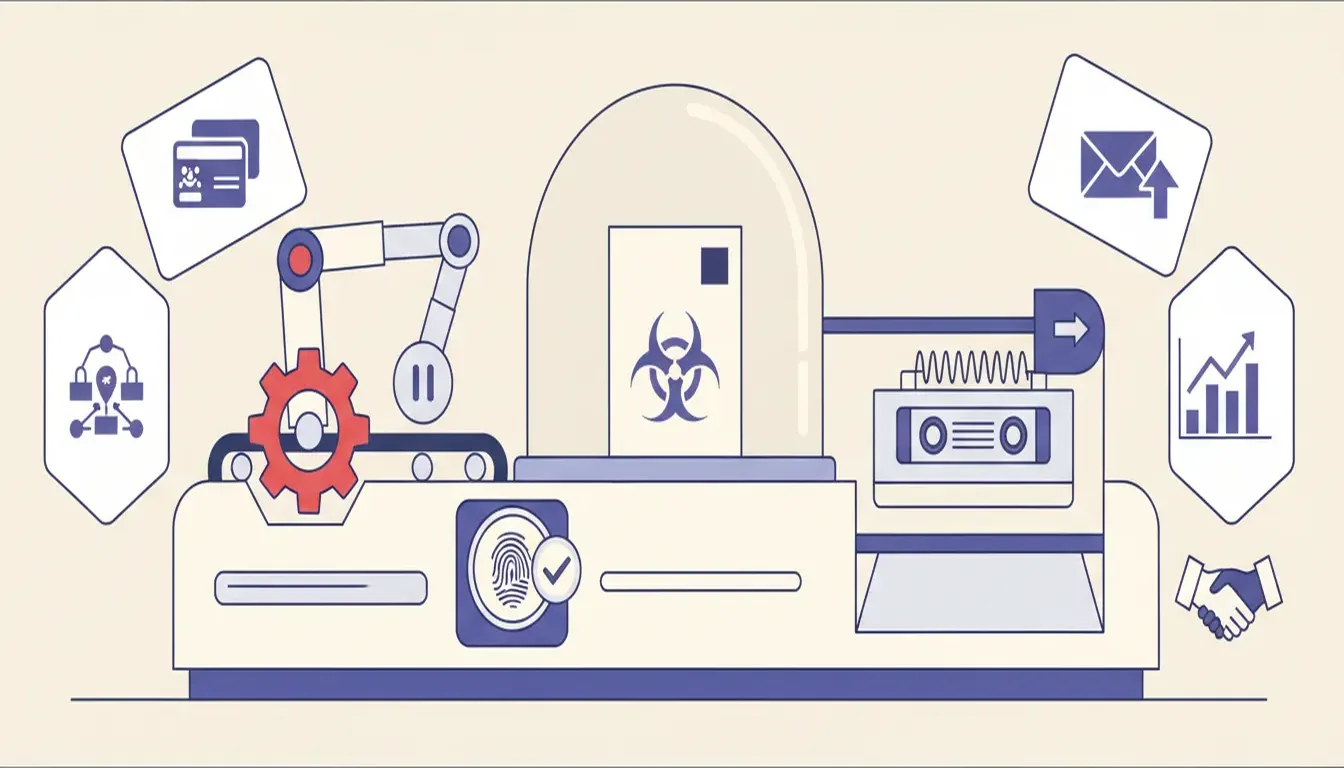
I do not accept an open source AI agent because it completed a clean demo.
I run a failure drill:
- A normal request completes once and leaves proof.
- The same request arrives twice.
- Required source data is missing.
- A document contains an instruction that conflicts with policy.
- The model returns an invalid or uncertain result.
- A tool rejects the requested action.
- A credential is rotated during the workflow.
- A model provider or local model becomes unavailable.
- Usage or cost crosses the operating limit.
- The agent begins an action that must be stopped.
- The operator corrects the source, rolls back the partial result, and replays the case without duplication.
The operator should perform this drill. Watching the original builder fix the environment proves that the builder can recover it. It does not prove that the business owns it.
The recovery record should show what happened, what was affected, which action was stopped, what changed, who approved the correction, and what confirmed the business outcome afterward.
That is the same standard I use in a broader business automation software buying test. A system earns wider use after it proves visibility, stop controls, and safe recovery under real failure conditions.
Measure the cost of the whole operating system
Open source can reduce license dependence. It does not remove operating cost.
The buyer still needs to account for:
- Hosting and storage.
- Model inference or API usage.
- Monitoring and alerting.
- Credential and access administration.
- Security updates and dependency review.
- Prompt and policy changes.
- Connector maintenance.
- Evaluation and regression testing.
- Backup and restore work.
- Human review of exceptions.
- Documentation and staff training.
I do not use that list to argue against open source. I use it to keep the comparison honest.
A hosted product may include some of those responsibilities in the subscription. A self-hosted agent may give the business more control and portability, but somebody still has to own updates, backups, alerts, and recovery. The right choice is the one whose operating burden matches the importance of the workflow and the team's ability to support it.
My AI operating system model for operators is useful here. The agent is one worker inside a larger system of records, permissions, queues, approvals, and proof. Buying the worker does not finish the operating design.
Use an operator procurement scorecard
Before approving an open source AI agent, I score these questions:
- Business outcome: Is the completed promise defined?
- Openness: Which components can be inspected and modified?
- Ownership: Are code, data, credentials, prompts, and deployment in business-owned accounts?
- Portability: Can the model, host, or connector be changed without rebuilding the entire lane?
- Authority: Are allowed and prohibited actions enforced outside the prompt?
- Evidence: Can the operator see inputs, decisions, tool calls, approvals, and outcomes?
- Exceptions: Does uncertainty reach one named owner with enough context to act?
- Security: Are untrusted content, sensitive data, permissions, and usage limits controlled?
- Cost: Can the business see cost per completed outcome and set limits?
- Recovery: Can the team stop, correct, roll back, and replay safely?
- Handoff: Can someone other than the original builder maintain the system?
A candidate does not have to be perfect at every layer. The buyer does need an honest map of what is owned, what remains dependent, and what failure the team is accepting.
What I would automate first
I would not begin with a general agent that can access every system.
I would choose one narrow lane:
- Prepare a weekly operating brief from approved records.
- Classify an intake and route uncertain cases.
- Compare a document packet with a checklist.
- Reconcile source and destination records.
- Draft a customer update for approval.
- Prepare an exception queue for a manager.
Then I would define the source records, authority, owner, limits, exceptions, and closure proof. The first version should run beside the current process long enough to expose missing rules.
The AI Operations X-Ray is the closest starting point when several candidate lanes compete for attention. I use it to rank the work by business value, repetition, data readiness, approval risk, and recovery difficulty before an agent gets access to production tools.
When not to hire us for an open source AI agent
Do not hire us for an open source AI agent when the real goal is to avoid naming an owner.
I would also pause when:
- The business cannot define the completed outcome.
- No reliable source record exists.
- The team wants “open source” only as a cheaper label.
- Nobody will own updates, credentials, alerts, or backups.
- The agent needs broad permissions before a narrow lane has been tested.
- Leadership wants the model to absorb financial or customer accountability.
- The buyer will not run a failure and recovery drill.
- Success means installing a framework rather than improving an operating result.
In those conditions, the first project is operating design. Define the promise, records, authority, owner, exception path, and review rhythm. Then decide whether an open source agent is the right worker for the job.
An open source AI agent earns production trust when the business can inspect it, constrain it, operate it, and recover it. Start with one outcome. Own every layer that matters. Keep authority explicit. Prove the failure path. Expand only after the operator can run the system without the person who built it.
FAQ
Frequently asked questions
01What is an open source AI agent?
An open source AI agent combines an AI model with instructions, tools, memory, and an execution loop using components that can be inspected and modified under open terms. Buyers should verify which components are actually open and which still depend on a hosted model, vendor service, or proprietary connector.
02Does open source mean the business owns the AI agent?
No. Ownership also requires control of deployment, data, credentials, prompts, tool permissions, logs, backups, documentation, and recovery. A public repository alone does not transfer those operating assets.
03Should an open source AI agent run fully automatically?
Not at first. Let it read, organize, classify, draft, and recommend before granting narrow execution rights. Financial changes, customer commitments, destructive actions, and uncertain cases should remain approval-gated.
04How should an operator test an open source AI agent?
Test normal work plus prompt injection, missing data, stale records, duplicate requests, model failure, tool rejection, cost spikes, credential rotation, stop controls, rollback, and replay. The operator should perform the recovery drill without relying on the original builder.