Field note
Aug 30, 2026
Procurement automation software: the operator buying test
Procurement automation software should preserve approval authority, source records, and delivery proof. Use this operator test before buying or building.

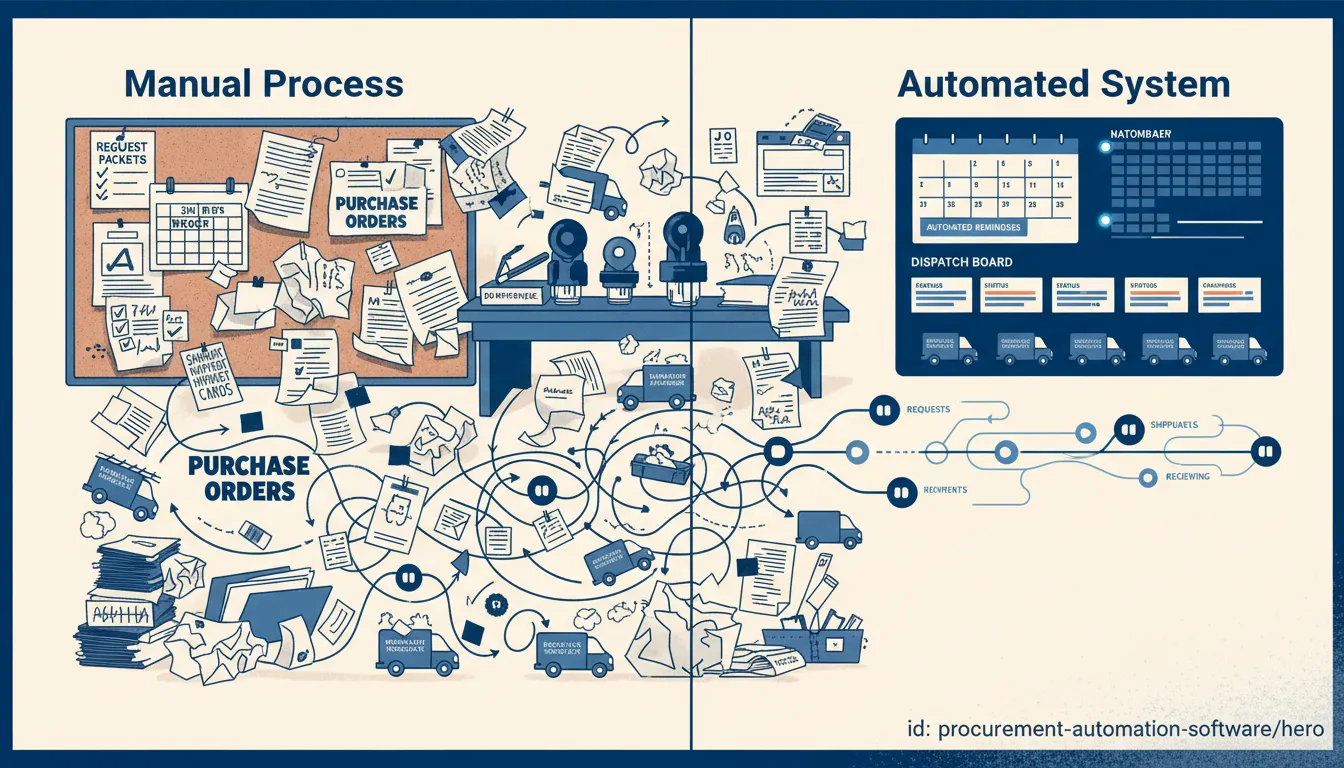
Procurement automation software should make the path from request to received order easier to control. It should not turn a messy purchasing process into a faster mess with nicer dropdowns. I have managed to build enough of those dropdowns to know they are rarely the hard part.
On one procurement brief I reviewed, the requested system had to connect sourcing, product presentations, approvals, a procurement spreadsheet, inbox updates, and order tracking from shipment through delivery.
The inbox could be checked every minute for messages that matched agreed criteria. That sounds like the automation. It was not. The real design question was what the system could do after it found a message, which record it should trust, and which person still owned the decision.
My rule is simple: automate the administration, not the authority.
Map the procurement lane before choosing software
Procurement begins before a purchase order and ends after somebody confirms what actually arrived.
A practical lane may include:
- A department submits a purchase request.
- The request is checked for required fields and budget context.
- Approved vendors or sourcing options are identified.
- Product details move into a comparison or presentation.
- A named owner approves the selection and terms.
- The purchase order or approved order is created.
- Vendor messages and shipment updates are monitored.
- The receiving team confirms quantity, condition, and location.
- Exceptions are resolved before finance processes the obligation.
- The final records and proof are retained for review.
That is why I treat procurement as business process automation, not as one isolated software category. Purchasing touches requesters, managers, procurement, vendors, receiving, operations, contracts, finance, and leadership.
Before I buy or build anything, I write one operating promise:
Every approved request becomes a traceable order, a verified receipt, and a clean finance handoff without losing the source records or decision owner.
That sentence gives the system a boundary. It also exposes where the current process is vague.
If the team cannot explain who approves a purchase, which record contains the approved terms, or what counts as proof of receipt, software selection is early. The first job is to define the lane.
Decide which record has authority
Procurement data repeats itself everywhere.
A request form has one description. A product presentation has another. A vendor quote has a price and lead time. A spreadsheet contains the selected item. An email changes the shipment date. A purchase order contains the approved quantity. A receiving note says what arrived.
The automation needs a source-of-truth map for each important field:
| Field | Authoritative record | Owner when it conflicts |
|---|---|---|
| Business need and requester | Approved purchase request | Department owner |
| Vendor status | Approved vendor record | Procurement owner |
| Product and selected option | Approved comparison or selection record | Requester and procurement |
| Price and quantity | Approved purchase order or contract | Purchasing authority |
| Terms and exceptions | Signed agreement or approved exception record | Contract or finance owner |
| Shipment status | Vendor or carrier evidence | Procurement coordinator |
| Quantity and condition received | Receiving record | Receiving or operations owner |
| Invoice and payment state | Accounting system | Finance owner |
This is business process management for operator control applied to purchasing. The architecture is not just arrows between applications. It is a set of decisions about authority, ownership, timing, and proof.
I do not let the workflow silently choose the newest field or the easiest field to extract. When two records disagree, the conflict becomes an exception with a person attached.
Separate administrative work from purchasing authority
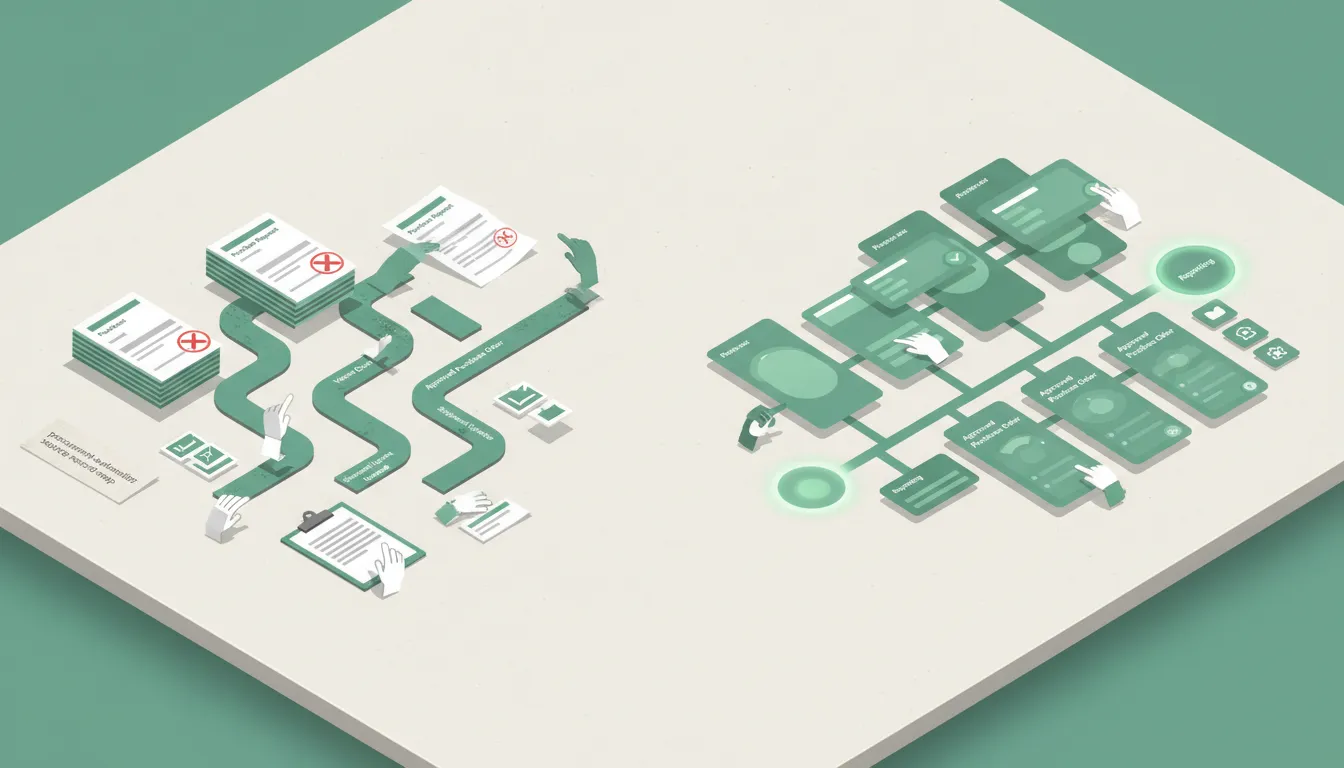
Procurement automation software can safely handle a lot of repetitive work:
- Validate required request fields.
- Extract product details from a presentation or quote.
- Add approved information to a procurement spreadsheet.
- Match messages to the correct vendor and order.
- Draft a comparison packet.
- Remind an owner about an overdue approval.
- Check shipment updates on a schedule.
- Create a receiving task before delivery.
- Prepare a weekly exception report.
That does not mean the same system should approve a new vendor, accept a price increase, change payment instructions, waive a contract term, or release money.
NIST SP 800-53 includes controls for separation of duties and least privilege. I use that same operating principle in procurement. The workflow should receive only the authority required for its job.
I define the boundary in plain language:
- The system may read approved inboxes and records.
- It may prepare product and order data.
- It may update low-risk status fields with evidence.
- It may route requests to the correct approval owner.
- It may not create a new authority rule for itself.
- It may not accept changed payment details without independent verification.
- It may not treat silence as approval.
- It may not hide who approved an exception.
The NIST AI Risk Management Framework is useful when AI classifies products, summarizes quotes, or drafts recommendations. Govern the role, map the context, measure the behavior, and manage the risk. In operator language, show the inputs, the rule, the confidence, and the person who owns the next decision.
Build exception lanes before adding autonomy
Most procurement risk lives outside the clean request.
I want named lanes for:
- Missing business need, owner, budget, quantity, or delivery date.
- Vendor not approved or vendor record duplicated.
- Quote price differs from the approved selection.
- Lead time changes after approval.
- Product specification changes before order.
- Contract term or renewal language needs review.
- Shipping address or payment detail changes.
- Partial, damaged, late, or misrouted delivery.
- Invoice arrives before receipt is confirmed.
- Order appears delivered but nobody can find it.
Each exception needs the source packet, a plain-language reason, one owner, the allowed decisions, a due time, and proof of closure.
A red status cell is not an exception process. If nobody owns it, the system has only moved uncertainty into a prettier queue.
This is where contract management automation controls matter. Vendor terms, approved prices, renewal dates, and exception authority should not live only in an inbox while procurement software guesses what the business intended.
Connect receiving proof to accounts payable
Procurement does not finish when a carrier says delivered.
The business still needs to know what arrived, where it went, whether it matched the approved order, and whether finance can rely on the record.
A useful receiving packet includes:
- Purchase order or approved order reference.
- Vendor and delivery location.
- Expected product, quantity, and date.
- Actual quantity and condition.
- Partial shipment or substitution notes.
- Photos or signed receiving evidence when useful.
- Name of the person confirming receipt.
- Open exception and current owner.
The IRS recordkeeping guidance identifies invoices, receipts, and paid bills as supporting documents for business records. I want procurement automation to preserve that evidence chain, not replace it with a few extracted fields.
The handoff into AP automation controls should be explicit. Procurement proves what was approved and received. Accounts payable validates the obligation, approval, posting, payment, and reconciliation. Those responsibilities touch, but they should not collapse into one invisible workflow.
A system that sees a delivered status and automatically treats an invoice as payable has skipped the most important question: did the business receive what it approved?
Test failure cases before a wider rollout
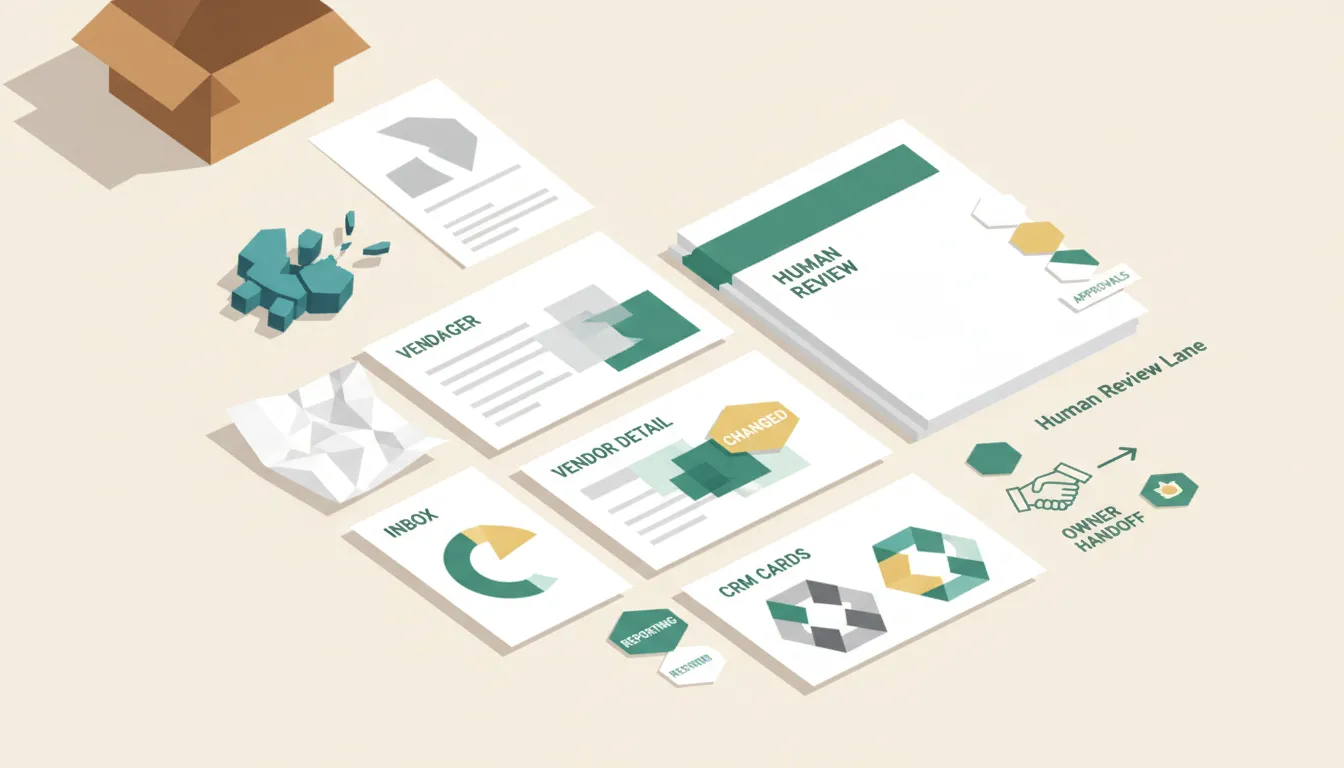
A clean order demo proves almost nothing.
I test a narrow purchasing lane with real owners and cases that should stop:
- A complete request that should route normally.
- A request missing a required owner or delivery date.
- A vendor quote with a price different from the approved selection.
- A message that looks relevant but belongs to another order.
- A changed bank or remittance detail.
- An approval above the current owner's authority.
- A partial shipment with one damaged item.
- A destination update that fails after approval.
- A pause, correction, and safe replay.
- A received order that must match the finance handoff.
I want the operator to perform the stop and recovery steps. Watching the builder recover a workflow is not the same as owning it.
The system should also prevent duplicate actions. Reprocessing the same vendor message or approved request after a timeout should not create another purchase order, another spreadsheet row, or another receiving task.
A green automation run is not proof. The accepted order, verified receipt, resolved exceptions, and correct downstream records are proof.
Replace less when the current stack still works
A procurement platform can be the right answer when the business needs supplier management, catalogs, sourcing events, approvals, purchase orders, receiving, analytics, and finance integration in one governed environment.
But replacement is not my default.
If the existing inbox, spreadsheets, shared drive, accounting platform, and vendor portals contain usable records, I often start with legacy system modernization. A controlled layer can validate requests, move approved product data, watch messages, route exceptions, and preserve proof without forcing the whole team through a migration first.
That first build may cover one department, one vendor class, or one order type. Good. A small lane makes the control model easier to prove.
When not to hire us for procurement automation
You do not need us if the problem is only a cleaner form, a basic approval notification, or a standard feature already available in the software you own. Configure the existing tool and keep the process simple.
You may need a custom layer when the operating promise crosses several systems, the approval rules are specific to the business, and the proof needs to survive every handoff.
The operator buying test
Before choosing procurement automation software, give each line a named owner:
- Scope: Which procurement lane are we controlling first?
- Trigger: What starts a valid request?
- Required data: What must be present before sourcing or approval begins?
- Source of truth: Which record wins for need, vendor, product, price, terms, shipment, receipt, and payment state?
- Authority: Who can approve each amount, vendor class, term, and exception?
- Automation boundary: What may the system read, prepare, update, or route?
- Exception path: What must stop, and who owns the next decision?
- Receiving proof: What confirms the order arrived correctly?
- Finance handoff: Which records make the obligation ready for AP review?
- Recovery: Who can pause, correct, and replay the lane safely?
- Reporting: Which exceptions and outcomes should leadership review every week?
- Maintenance: Who owns the rules after launch?
Even federal acquisition recordkeeping frames contract files around documenting the basis for decisions and actions in FAR 4.801. A private business does not need federal procedure. It does need enough evidence that a qualified operator can understand why a purchase moved, who approved it, what arrived, and what happened next.
If those answers are blank, do not start with a software demo.
Start with the AI Operations X-Ray. Map the request, approval, order, delivery, and finance handoffs. Find the point that leaks the most time, money, or proof. Control that lane first, then decide whether procurement automation software should replace the stack, wrap the stack, or stay out of the way.
FAQ
Frequently asked questions
- 01What is procurement automation software?
- Procurement automation software manages repeatable work across purchase requests, sourcing, approvals, purchase orders, vendor communication, receiving, and reporting while preserving authority and evidence.
- 02What should a business automate first in procurement?
- Start with one narrow lane that has stable rules and visible pain, such as request intake, approval routing, product data entry, order-status monitoring, or receiving exceptions.
- 03Should procurement automation approve purchases automatically?
- Only within a documented authority boundary. Price exceptions, new vendors, changed payment details, unusual terms, and high-risk purchases should remain behind named human approvals.
- 04When is procurement software replacement unnecessary?
- Replacement may be unnecessary when the existing inbox, spreadsheet, accounting platform, and vendor systems still hold usable records. A controlled automation layer can connect the handoffs first.